
General News
Benue, Imo GBV Survivors Get Skills to Rebuild Livelihoods, Boost Leadership

From Dooshima Terkura, Makurdi
A total of 30 women survivors of Gender-Based Violence (GBV) from conflict-affected communities in Benue and Imo states have received training in business development, financial management and leadership to strengthen their economic independence and participation in community affairs.
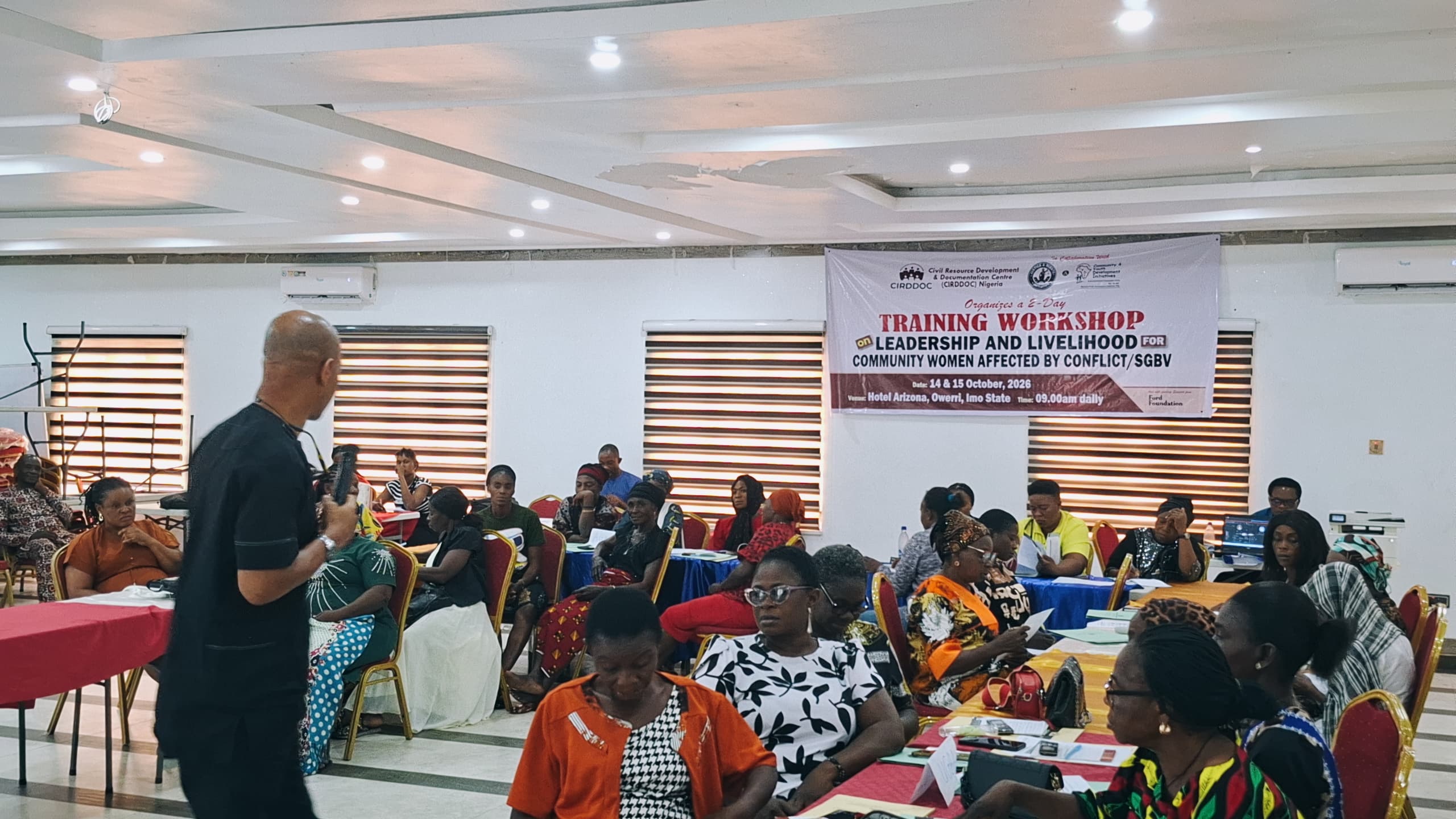
The women participated in a two-day Leadership and Livelihood Training Workshop organised by the Civil Resource Development and Documentation Centre (CIRDDOC), in collaboration with Community and Youth Development Initiatives (CYDI) and Justice Rights Initiatives (JRI), with funding support from the Ford Foundation.
The workshop, held from October 14 to 15, 2026, in Owerri, Imo State, brought together 15 women from each state to equip them with practical skills to overcome economic challenges, understand their rights and rebuild their livelihoods.

The training focused on improving participants’ knowledge of gender-based violence, women’s rights, personal safety, protection mechanisms and available support services.
It also provided practical guidance on identifying viable business opportunities and managing small enterprises.

The workshop further sought to build practical skills in livelihood selection, business planning, financial management, savings and reinvestment. It also aimed to improve participants’ confidence, leadership abilities and communication skills, while encouraging their participation in community decision-making.
Another objective was to promote personal safety, peer support, cooperation and collective approaches to addressing livelihood challenges.
During the sessions, the facilitators, Benjamin C. Mbakwem, a Human and Community Development Consultant, and Nnennaya Enyinna, ensured that participants learnt how to attract and retain customers, maintain product quality, calculate profits, control business costs, save and reinvest earnings to ensure business sustainability.
The participants were also trained in budgeting, financial planning and the importance of separating business capital from household expenses to improve financial discipline and protect their investments.
Beyond livelihood development, the workshop addressed the different forms of gender-based violence, the effects of stigma and discrimination on survivors, and the importance of seeking assistance through appropriate protection and support services.
Participants also engaged in group discussions, role-play and practical exercises to strengthen their communication, negotiation, problem-solving and leadership skills, with emphasis on building confidence and promoting women’s participation in community decision-making.
The workshop further encouraged collective approaches to economic empowerment through savings groups, cooperatives and peer-support networks.
These platforms can help women share experiences, address common challenges and expand their business opportunities.
A key outcome of the workshop was the development of individual 90-day business and leadership action plans by participants. The plans outlined their livelihood priorities, implementation strategies, anticipated challenges and the support needed to achieve their objectives.
To ensure the practical application of the knowledge acquired, CIRDDOC, CYDI and JRI recommended continued mentoring, technical assistance, business management support and regular monitoring of participants’ progress.
The organisations also called for stronger referral systems to connect survivors with appropriate GBV protection services and measures to encourage women’s safe and inclusive participation in community meetings, advocacy and decision-making.
They noted that sustained follow-up and support would be necessary to assess the impact of the training, identify obstacles to implementing participants’ plans and document progress in their economic and social empowerment.
The workshop represents part of the organisations’ efforts to strengthen the resilience of women affected by conflict and gender-based violence by helping them develop sustainable livelihoods, regain confidence and contribute more actively to the development of their communities.