
Politics
Ombugadu’s Campaign Ignites Political Momentum in Nasarawa Ahead of 2027

By David Odama
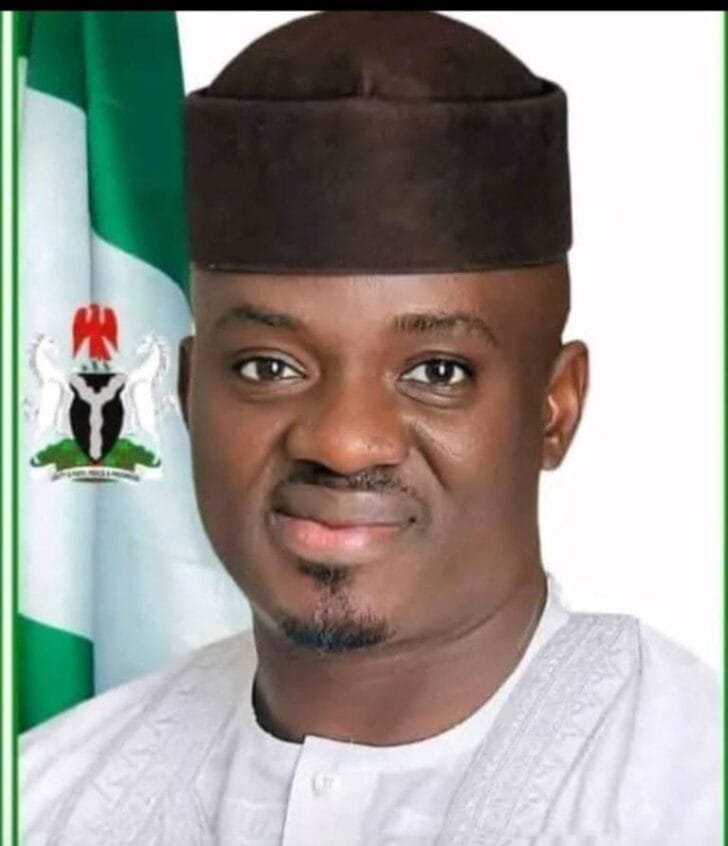
The commencement of the governorship campaign by the Peoples Democratic Party (PDP) candidate in Nasarawa State, Rt. Hon. Emmanuel David Ombugadu, has injected fresh momentum into the state’s political landscape, setting the stage for an increasingly competitive contest ahead of the 2027 governorship election.
As political activities gather pace, the people of Nasarawa State appear increasingly conscious of their power to shape the state’s political direction, with expectations mounting for leadership that can translate campaign promises into practical solutions to the challenges confronting ordinary citizens.
In assessing leadership, the true measure of a public figure goes beyond the number of speeches delivered or promises made during electioneering. It lies in the ability to identify with the people, understand their pressing needs, engage meaningfully with communities and demonstrate a genuine commitment to addressing their concerns.
It is against this backdrop that Ombugadu’s campaign tour of Keana, Awe and Lafia local government areas in the Southern Senatorial District has attracted political attention, providing an opportunity for the PDP to consolidate its grassroots structures, mobilise supporters and strengthen its prospects ahead of the 2027 polls.
The rallies, which drew political leaders, party stakeholders and supporters to the ancient communities of Keana, known for its salt heritage, Awe and the state capital, Lafia, also offered the opposition party a platform to assess its level of acceptance and reinforce its political machinery across the zone.
Beyond the immediate objective of mobilising votes, the campaign carries wider implications for the PDP’s electoral calculations, particularly as the party seeks to strengthen the position of its Southern Senatorial candidate, Dr. Mike Omeri Agbo, and other candidates contesting various elective positions.
However, the significance of the campaign should not be measured solely by the size of the crowds or the enthusiasm displayed at rallies. Its real value will ultimately depend on the substance of the messages delivered, the credibility of the proposed solutions and the extent to which the party can convince voters that it understands their everyday challenges.
One of the major issues highlighted during the campaign was security, particularly the need to create an environment in which farmers can access their farmlands and conduct their economic activities without fear of attacks or other threats.
In a state where agriculture remains a major source of livelihood for thousands of households, the security of farming communities is directly linked to food production, rural incomes and the stability of the local economy. Any administration seeking to improve living standards must therefore treat the protection of lives and property as a fundamental responsibility rather than a peripheral campaign issue.
The relationship between security and economic development is especially important in rural communities, where insecurity can disrupt farming seasons, restrict movement, undermine local trade and deepen poverty. For this reason, the ability of any incoming administration to develop an effective security framework will be a major consideration for voters in 2027.
Ombugadu also outlined development priorities covering human capital development, job creation, infrastructure, education, healthcare, unemployment and poverty alleviation. These are critical areas that require sustained attention if Nasarawa State is to expand economic opportunities and improve the welfare of its growing population.
His emphasis on tourism and cultural development equally raises important questions about how the state can maximise its natural attractions, historical sites and traditional festivals to generate revenue, promote local enterprise and create employment opportunities for young people.
Nasarawa possesses communities with distinct cultural identities and economic potential. With appropriate investment, infrastructure, publicity and private-sector participation, tourism could complement agriculture and other productive sectors in diversifying the state’s economy. Such an approach, however, would require a clearly defined policy framework supported by funding, institutional coordination and measurable implementation targets.
Electricity infrastructure also deserves prominent attention in the state’s development conversation. Reliable power supply is no longer merely a matter of convenience; it is essential to commercial activities, healthcare delivery, education, communication and the productivity of households and businesses.
Small-scale enterprises, in particular, depend on affordable and reliable energy to remain competitive, create jobs and contribute to local economic growth. Any proposed intervention in this sector must therefore be accompanied by practical strategies for expanding access, supporting productive use of electricity and working with relevant stakeholders to address existing gaps.
The broader message emerging from Ombugadu’s campaign is the need for a development approach that recognises the interconnected nature of security, infrastructure, economic empowerment and social welfare. These challenges cannot be addressed effectively in isolation, as poor roads can limit access to markets and hospitals, insecurity can discourage investment, and unemployment can aggravate poverty and social vulnerability.
For a state with rural communities, expanding urban centres and developing commercial corridors, a balanced development agenda must recognise the needs of every area. Keana, Awe and Lafia, despite their different characteristics, all require sustained investment in roads, water supply, healthcare, education, electricity and security to support economic activities and improve living conditions.
The campaign has also renewed attention to the responsibility of political parties to maintain continuous engagement with citizens beyond election periods. Voters increasingly expect political leaders to demonstrate an understanding of local realities and to explain not only what they intend to achieve but also how they plan to achieve it.
Ombugadu’s promise to sustain engagement with communities and address their concerns across Nasarawa State presents an opportunity for the PDP to build a broader development platform around the expectations of residents. His appeal to voters to support his restoration agenda in 2027 will, however, require more than political mobilisation. It must be supported by clear priorities, realistic financing arrangements, institutional capacity and a credible plan for implementation.
A critical assessment of campaign promises is therefore necessary. There is an important distinction between expressing a commitment to solve a problem and guaranteeing that the problem will be resolved. While campaign engagements provide an opportunity for candidates to communicate their intentions, the public must also examine the feasibility of their proposals, the resources required and the mechanisms for measuring progress.
For Nasarawa State, the challenge is to ensure that political competition produces practical ideas capable of improving public services, expanding economic opportunities and strengthening confidence in government. The electorate deserves a contest centred not only on personalities and party affiliations but also on policies, competence, accountability and demonstrable results.
As the 2027 governorship election approaches, Ombugadu’s campaign offers the PDP an opportunity to present its vision, test its grassroots strength and persuade voters that it can provide an alternative approach to governance.
Whether the momentum generated by the rallies will translate into broader electoral support remains to be seen. Ultimately, the campaign’s lasting significance will depend on its ability to move beyond political enthusiasm and present a coherent, measurable and sustainable development agenda that responds to the real needs of Nasarawa’s people.