
Politics
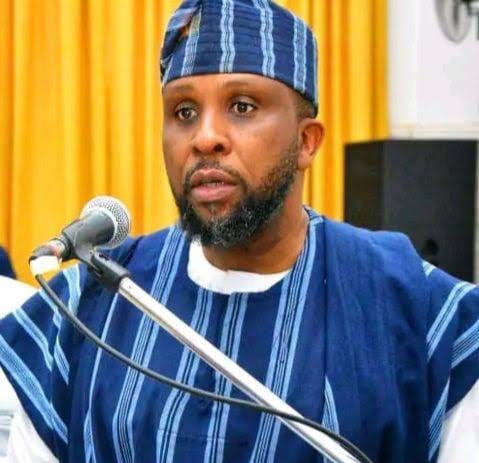
2027: Jonathan Gbefi Gaza and the Quest for Equity, Fairness and Justice in Nasarawa

By Okpashi Odama
As the 2027 governorship election approaches, Nasarawa State faces an important political question that goes beyond individual ambition, party affiliations and the struggle for political power: how can the state build a more inclusive political system in which its diverse communities have a fair sense of belonging and opportunity?
For a state as ethnically and culturally diverse as Nasarawa, the question of equity in political representation deserves serious consideration. Democracy is not merely about who wins an election; it is also about creating an environment in which every component of society feels recognised, respected and adequately represented.
Since its creation in 1996, Nasarawa State has continued to evolve politically, producing leaders from different backgrounds. However, the debate over the equitable distribution of political opportunities, particularly the governorship, remains a significant issue in the state’s political discourse.
The argument for fairness is not necessarily a demand for entitlement by any particular ethnic group. Rather, it is a call for a political arrangement that recognises the diversity of the state and encourages a broader sense of participation in its leadership.
Nasarawa’s political landscape includes several ethnic nationalities, among them the Eggon, Mada and Alago. These communities, alongside other groups, constitute important parts of the state’s social and political identity. Their diversity should be viewed as a source of strength rather than a basis for political competition and exclusion.
A sustainable political system must therefore encourage dialogue, mutual understanding and a reasonable distribution of leadership opportunities. Where communities perceive that access to political power is consistently uneven, concerns about marginalisation can emerge, potentially weakening the spirit of unity required for collective development.
This is why the 2027 governorship contest presents an opportunity to reconsider the place of equity and inclusion in Nasarawa’s political future.
Section 14(3) of the 1999 Constitution of the Federal Republic of Nigeria, as amended, establishes the principle of federal character and seeks to prevent the dominance of persons from a few states or particular ethnic or sectional groups in government. Although this provision does not expressly prescribe a rotational governorship arrangement among Nasarawa’s ethnic groups, its broader philosophy of inclusiveness offers a useful framework for political reflection.
Beyond constitutional considerations, fairness and political accommodation remain essential ingredients of democratic stability, particularly in societies characterised by ethnic, cultural and religious diversity.
It is against this background that the growing conversation around Rt. Hon. Jonathan Gbefi Gaza and his possible emergence as a governorship contender in 2027 deserves attention.
The argument being advanced by his supporters is that Nasarawa needs a more inclusive political arrangement in which communities that feel underrepresented can have a stronger opportunity to participate in the highest level of state leadership.
For them, Gaza’s political aspiration represents more than an individual’s desire to occupy the Government House. It is being presented as an opportunity to advance the broader conversation about fairness, political accommodation and equal participation.
The emerging debate also provides an opportunity for stakeholders, particularly in Nasarawa West, to engage in constructive discussions about the future of political representation in the state.
Such discussions should not be driven by ethnic hostility, political bitterness or the desire to discredit individuals from other communities. Rather, they should be anchored on dialogue, mutual respect and the recognition that every community has a legitimate stake in the future of Nasarawa.
The Labour Party platform could provide the political vehicle through which Jonathan Gaza’s aspiration is presented to the electorate. Ultimately, however, the strength of his ambition will depend on his ability to articulate a credible vision, demonstrate leadership capacity and convince voters across the state’s political and social divides.
The 2027 election should therefore be an opportunity to expand the conversation beyond the traditional contest for political power. It should also be about what kind of political culture Nasarawa wants to build for future generations.
For Jonathan Gbefi Gaza and those advocating his emergence, the central message is that fairness should not be treated as a favour granted by political power holders. It should be recognised as an important democratic value that strengthens unity, builds confidence and encourages a sense of belonging among the people.
Nasarawa does not need a politics of exclusion or confrontation. It needs a politics of accommodation, dialogue and shared responsibility.
The ultimate decision belongs to the electorate. But the conversation about equity, justice and inclusive leadership is one that the state cannot afford to ignore as it approaches another defining political transition in 2027.