
General News
Breaking: Blackout looms in Plateau, Bauchi, Borno and four others as NISO announces extended outage schedule.

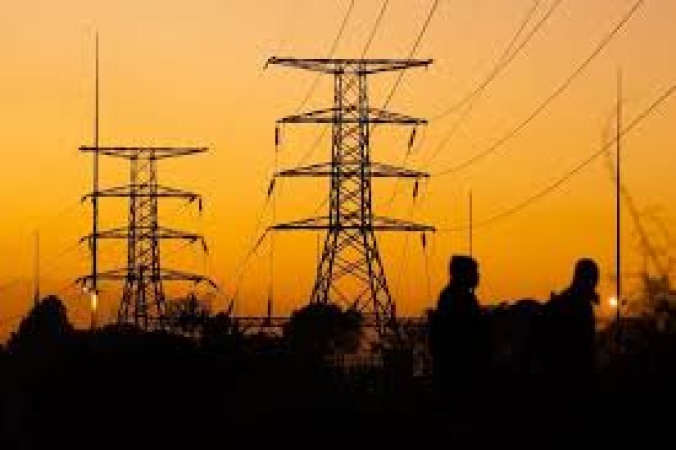
The Nigerian Independent System Operator (NISO) has announced that seven states will experience weeks of disrupted electricity supply following a planned outage on the Jos–Gombe 330kV transmission line.
In a public notice issued on Thursday, NISO stated that the outage will run from April 9 to May 22, 2026.
The operator explained that the disruption will occur weekly from Thursday to Sunday between 9:00 am and 6:00 pm to allow for the installation of Optical Ground Wire fibre optic infrastructure along the transmission corridor.
The affected states are Plateau, Gombe, Bauchi, Borno, Adamawa, Taraba, and Yobe.
According to NISO, the upgrade forms part of ongoing efforts to modernise the national grid and improve operational efficiency through enhanced Supervisory Control and Data Acquisition systems, Energy Management Systems, and telecommunications capabilities.
“The outage is necessary to facilitate the installation of Optical Ground Wire fibre optic infrastructure along the line,” the notice stated, adding that the project will strengthen real-time monitoring, fault detection, load balancing, and overall energy delivery in the region.
Although alternative supply arrangements will be implemented, the operator warned that consumers in the affected states should expect reduced electricity supply during the outage periods.
It noted that electricity will be rerouted through available 132kV transmission lines, but capacity constraints may lead to service disruptions across feeders and substations.
“Due to inherent network constraints and limited capacity on these lines, customers may experience reduced power supply and service limitations within the stated outage window,” the statement added.
NISO said it is collaborating closely with stakeholders, including distribution companies and the Transmission Company of Nigeria, to minimise the impact of the outage.
The development highlights ongoing challenges within Nigeria’s power transmission network, where infrastructure upgrades often result in temporary disruptions due to limited redundancy and capacity constraints.
However, the operator maintained that the project will yield long-term benefits such as improved electricity reliability, faster fault response, enhanced grid coordination, and better integration of generation and load data.
It also noted that the fibre optic installation will strengthen the telecommunications backbone required for modern power system operations.
While apologising for the inconvenience, NISO appealed for public understanding, stressing that the upgrade is essential to achieving a more stable and efficient electricity supply across the affected region.