Exclusive Interview
Personality interview:Veteran Educationist Dr. Noma Laments Falling Standards in Nigeria’s School System, warns of looming crisis

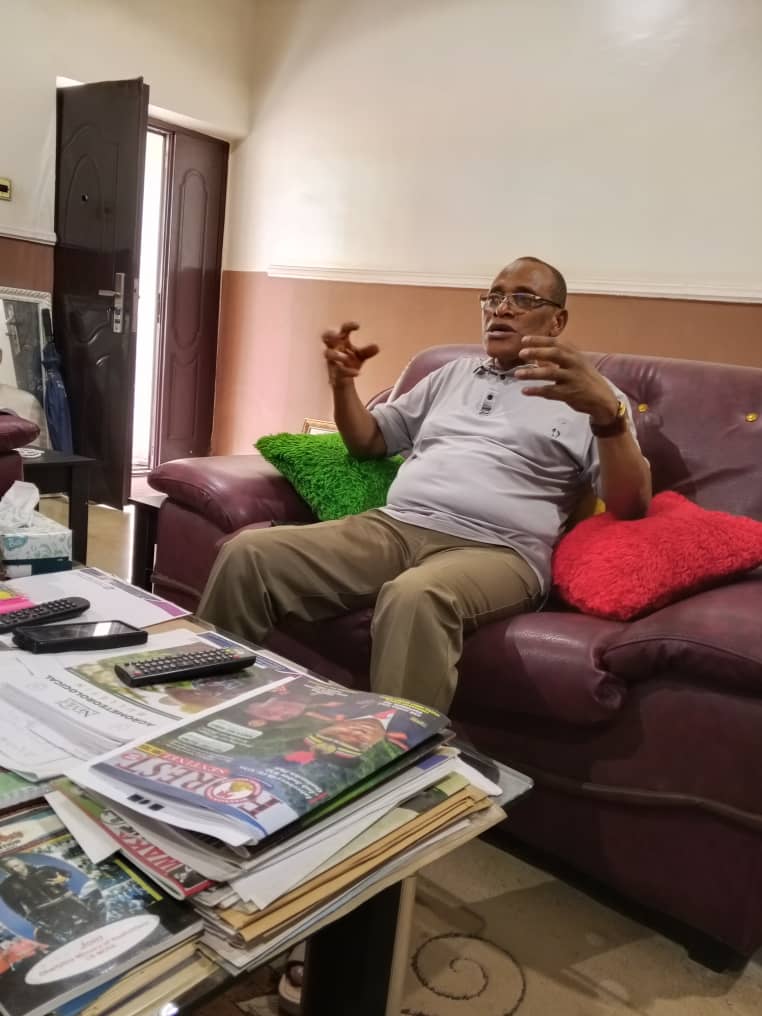
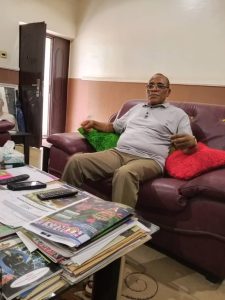
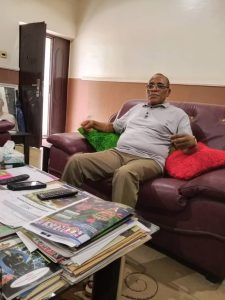
Dr. Adamu Jatau Noma, PhD, mni, is an experienced educationist and administrator whose career spans several decades within the Federal Capital Territory (FCT) education system. His journey—from classroom teaching to top administrative roles—demonstrates a strong commitment to education, discipline, and national development.
In this personality interview, he shares insights into his background, career path, and his candid assessment of Nigeria’s education sector.
Early Life and Background
Q: Who is Dr. Adamu Jatau Noma? What is your correct name?
Dr. Noma:
My name is Dr. Adamu Jatau Noma. I am a teacher by profession. I was born around 1963 in a village within the Area Councils of the Federal Capital Territory. I had my primary education at Local Education Authority Primary School, Wuse, which is now the site of Wuse Market.
Educational Journey
After completing my primary education in 1974, I proceeded to Government Teachers College, Abuja—now located in Suleja and known as Suleman Barau Technical College.
I later attended the Federal College of Education, where I obtained my NCE. I furthered my studies with a Bachelor’s degree in Geography Education, followed by a Master’s degree and a PhD in Geography.
I was also selected to attend the National Institute for Policy and Strategic Studies during the administration of former President Goodluck Jonathan.
Early Career and Teaching Experience
After my training, I completed my National Youth Service in Benue State and later taught at Government Secondary School, Gwada, in Niger State.
By 1985, I returned to the FCT under the Ministry of the Federal Capital Territory and was posted to Women Teachers College, Kuje—now Government Science Secondary School, Kuje—where I taught Geography with strong dedication.
In 1990, I became Vice Principal at Government Secondary School, Dangara.
Public Service and Key Appointments
Throughout his career, Dr. Noma was seconded to several important roles due to his performance:
Political Bureau (1986) as Principal Monitoring Officer in Kuje Area Council
Centre for Democratic Studies during the Babangida era as Principal Training Officer
1991 National Population Census as Principal Training Officer
Local Education Authority as Secretary
He later served as:
Education Secretary in the FCT
Assistant Monitoring Officer (Special Programmes)
Secretary, FCT Agency for Mass Education (2008–2010)
Secretary, FCT Secondary Education Board and later Acting Chairman
Member, FCT Universal Basic Education Board (2012–2020) until retirement
Passion for Teaching and Personal Philosophy
I have always had a passion for academics and teaching. Even today, if given the opportunity, I would gladly return to the classroom. I live a simple life—teaching is not just a profession for me; it is a calling.
Teaching Then and Now
Q: How would you compare teaching in your time and now?
Dr. Noma:
There is a clear difference. In the 1980s and earlier, teaching was driven by passion. Teachers arrived before students and stayed after school to prepare lessons.
Personally, I used portable boards to prepare diagrams and maps in advance so classroom time would be more effective. Teachers also invested personal resources—I bought topographical maps and sourced geological samples like rocks and minerals to enhance learning.
Today, many teachers lack both subject mastery and proper teaching methods. The level of commitment has declined significantly.
Recognition and Innovation
In 1989, I was recognized as one of the best teachers in the FCT, although there was no formal reward system at the time.
I introduced practical teaching tools such as geographical gardens, weather instruments, and physical geography models—many of which were later adopted by other schools.
State of Education in Nigeria
Q: What is your assessment of the education system today?
Dr. Noma:
The situation is quite unfortunate. Students now pay between ₦70,000 and ₦80,000 in public junior secondary schools despite the free education policy.
Many schools are in poor condition with little or no renovation. There is also a serious shortage of teachers—some schools operate with just two to four teachers, especially in rural areas.
Teachers lack instructional materials and are not financially supported to provide them.
Policy Concerns and Systemic Issues
One major issue is the extension of the retirement age to 65 years or 40 years of service. Many senior teachers remain in administrative roles and no longer teach, yet they occupy positions that limit the recruitment of younger teachers.
This has created staffing shortages and weakened classroom learning.
Insecurity and Access to Education
Insecurity continues to affect school attendance, particularly in rural areas. Even where conditions have improved, fear still discourages parents from sending their children to school.
During my time, we addressed this by bringing schools closer to communities rather than expecting children to travel long distances.
Decline in Educational Quality
The quality of graduates today is troubling. I have encountered graduates who cannot demonstrate basic knowledge in their fields, which points to deeper systemic problems in teacher training and higher education.
Changing Teacher-Student Relationships
In the past, teachers served as mentors and role models. Today, professional boundaries are weakening, with increasing cases of inappropriate relationships between teachers and students.
Economic hardship has also contributed to the decline in professional ethics.
Final Thoughts
The education system is at serious risk. Without urgent intervention, the long-term consequences will be severe. While the damage may not be immediately visible, its effects will become clear within the next 20 years.
Those responsible must act now to restore quality, discipline, and integrity to the system.