
General News
Benue Govt Records 250 Suspected Lassa Fever Cases, 45 Confirmed, 10 Deaths

From Dooshima Terkura, Makurdi
The Benue State Government has raised the alarm over what it described as a devastating outbreak of Lassa fever in the state, disclosing that out of 250 suspected cases reported so far, 45 have been confirmed positive, with 10 cumulative deaths recorded.
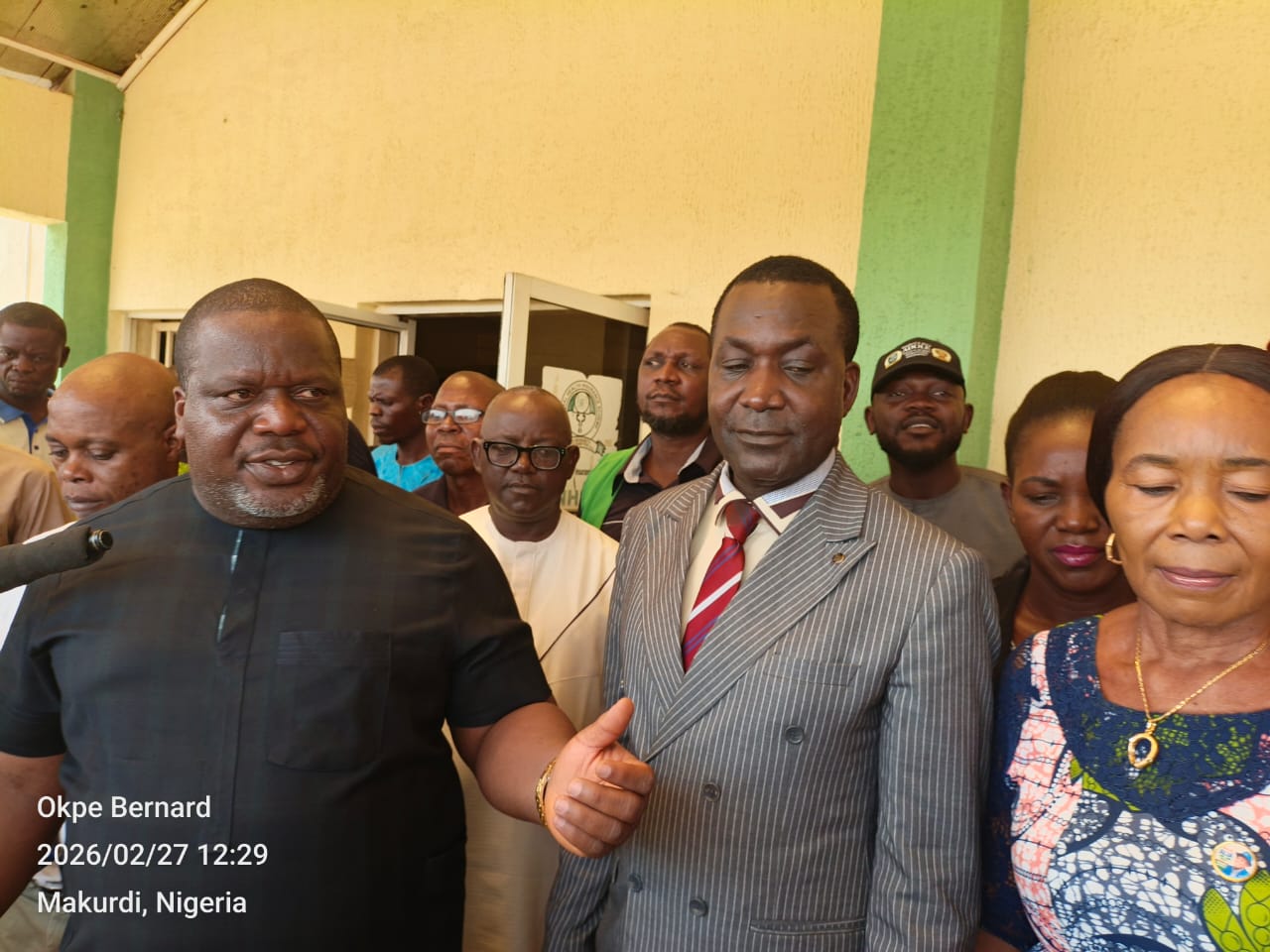
The State Epidemiologist, Dr. Msuega Asema, made this known when the State Commissioner for Health and Human Services, Dr. Paul Ogwuche, visited isolation centres at the Benue State University Teaching Hospital (BSUTH) in Makurdi and the Federal Medical Centre Apir, where affected patients are currently receiving treatment.
Dr. Asema explained that the figures are particularly worrisome as they involve a significant number of health workers, including five medical doctors, four nurses, two community extension workers, and one hospital porter. She lamented the growing rate of infection among health personnel in the state.
Speaking at both facilities, Dr. Ogwuche urged residents not to panic over the statistics. He noted that the state government had declared a viral outbreak on February 3 and has since intensified efforts to contain the spread.
According to him, the visit was aimed at showing solidarity with patients and reassuring them that they are not alone, adding that the government is doing everything possible to ensure their speedy recovery and safe return home.
“We have also come to assess the situation on ground. So far, five doctors and other health workers are involved in this infection. This is human-to-human transmission, and the gap appears to be infectious-prevention lapses. We are here to evaluate how the centres are operating and determine the next steps to quickly contain the outbreak in our state.
“Yes, the data may appear threatening, but I want to assure residents that the state government under Governor Hyacinth Alia is fully committed to ensuring that this situation is brought under control as soon as possible,” he said.
Ogwuche announced that surveillance officers have already been deployed across the 23 local government areas of the state to strengthen monitoring, contact tracing, and community engagement aimed at curbing further spread of the virus. He appealed to individuals experiencing symptoms to report immediately to designated health facilities for early diagnosis and treatment.
He commended health workers for their dedication and sacrifice and sympathised with families who lost loved ones, assuring them of the government’s continued commitment.
Earlier, the Chief Medical Director of BSUTH, Dr. Stephen Hwande, while updating the commissioner on measures taken to contain the outbreak, appreciated the visit and stated that the hospital has put in place adequate measures to manage the situation. He urged residents to strictly adhere to infection prevention protocols.
He, however, called for urgent intervention to upgrade the state’s isolation centres with patient monitors, improved waste management systems, and other essential equipment, including the establishment of a functional emergency laboratory within the centre for on-site testing.
The Chairman of the Medical Advisory Committee at BSUTH, Prof. Michael Agbir, described the current situation as unusual compared to previous years. He disclosed that between January and February 2026, the hospital recorded 28 admissions, with 17 confirmed cases on admission and three deaths.
At the Federal Medical Centre Apir, the Chief Medical Director, Prof. Joseph Kontor, represented by Dr. Uche Azuka, conducted the commissioner and his entourage round the molecular laboratory where Lassa fever tests are conducted, as well as the isolation centre. He noted that the laboratory also provides diagnostic services for COVID-19, chickenpox, cholera, hepatitis B and C, and other molecular tests.
Prof. Kontor lamented that inadequate power supply continues to hamper effective service delivery at the isolation centre. He explained that reliance on public power makes it difficult to conduct tests consistently and obtain timely results, and appealed to the Benue State Government for intervention.
He further urged the government to support the hospital with consumables and Personal Protective Equipment (PPE), noting that patients are currently being treated and discharged free of charge.
“The Lassa fever outbreak affects all of us. When it was first reported and the isolation centre at the teaching hospital was shut down, most patients were referred to Keffi in Nasarawa State. That informed our decision to activate this centre. However, managing these patients is placing a heavy financial burden on us.
“In some states, there is a cost-sharing arrangement where the government pays 60 percent and patients cover 40 percent. Sustainability without funding is a major challenge. Funds must come either from government or patients. Previously, we provided everything, but that is no longer feasible. There must be a clear policy on the management of patients at isolation centres. If treatment is to be fully free, it should be clearly stated. If patients are to bear part of the cost, that should also be made clear. The Federal Medical Centre Makurdi needs the support of the state government,” Kontor said.
The Coordinator of the Isolation Centre and Head of Clinical Services at FMC, Dr. Michael Odoh, disclosed that 10 patients are currently receiving treatment at the facility, including two suspected and eight confirmed cases. Of the confirmed cases, four are health workers—two nurses, one doctor, and a porter—all of whom are responding well to treatment.
“Apart from those currently at the isolation centre, three doctors are in self-isolation and are also responding well to treatment,” Odoh added.