
Crime
UN Report: 1,932 Killed Despite Decline in Bomb Attacks

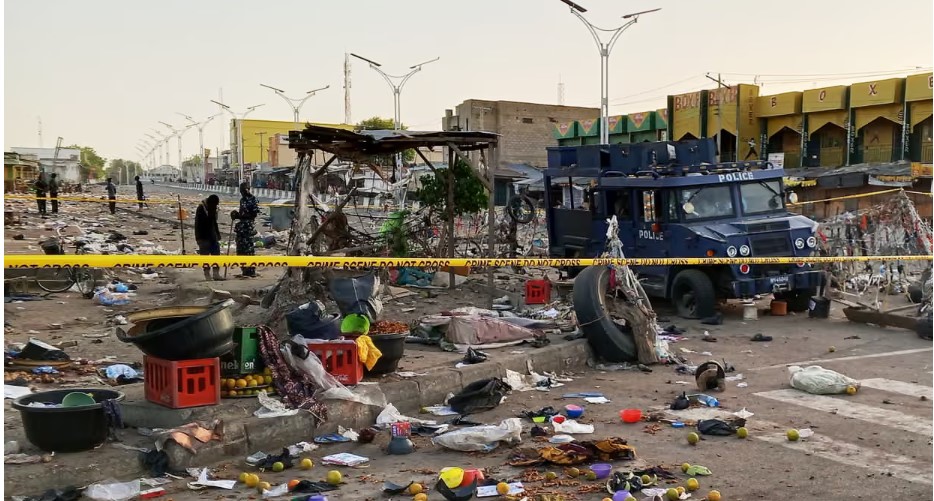
A new United Nations report has revealed that at least 1,932 people lost their lives across Borno, Adamawa and Yobe states between April and June 2026, highlighting the continued human cost of the Northeast insurgency despite a notable reduction in bomb and improvised explosive device (IED) attacks.
The figures are contained in the United Nations Office for the Coordination of Humanitarian Affairs (OCHA) 2026 Second Quarter Humanitarian Access Snapshot, which assessed humanitarian conditions across the three conflict-affected states.
According to the report, while explosive-related violence declined during the period, intensified military operations against non-state armed groups led to fresh retaliatory attacks targeting civilian communities, displaced persons and humanitarian workers.
OCHA recorded 60 explosive ordnance incidents during the quarter, compared to 67 within the same period in 2025. IED-related incidents also dropped from 65 to 54, while civilian casualties caused by explosives fell sharply from 163 to 54.
The UN attributed the reduction to sustained joint military operations by the Armed Forces of Nigeria and United States forces, particularly in northern and central parts of Borno State, as well as reduced civilian movement in high-risk locations.
However, the report warned that insurgents responded with renewed attacks on communities including Monguno, Damasak, Damboa, Bama, Konduga, Marte, Dikwa, Kukawa, Mobbar and Gwoza in Borno State, Gujba in Yobe State and Madagali in Adamawa State. Many of the affected communities were hosting recently relocated residents, further worsening the humanitarian situation.
The deteriorating security environment also disrupted aid delivery. OCHA said health and nutrition services were suspended in Dapchi, Bursari Local Government Area, following repeated attacks by armed groups, while humanitarian operations in Madagali and Chibok were either suspended or significantly scaled back after fresh raids.
Aid workers were also affected during the period. The report disclosed that a truck transporting relief materials was looted near Gubio in April, while two staff members of a non-governmental organisation were abducted in Monguno in June.
In another incident, a relief truck returning to Maiduguri after delivering supplies to Damasak struck an IED near Kareto, leaving the driver critically injured, although troops successfully repelled the attack.
Beyond insecurity, OCHA identified flooding, poor infrastructure and bureaucratic restrictions as major challenges to humanitarian operations. A bridge collapse in Rann following heavy rainfall cut off access to vulnerable communities, while security restrictions on fertiliser movement delayed farming activities at the start of the planting season. Humanitarian agencies later secured approvals to facilitate fertiliser distribution to farmers in hard-to-reach communities.
The report also noted that rising fuel prices linked to the Middle East conflict increased transportation costs for aid agencies, while additional administrative requirements imposed by state authorities slowed the movement of humanitarian supplies.
OCHA concluded that although military operations have reduced the threat posed by explosive devices, persistent insecurity, attacks on humanitarian workers, climate-related disruptions and bureaucratic bottlenecks continue to hinder humanitarian access and leave millions of vulnerable people across Nigeria’s Northeast at risk.