
General News
Abuja To Lagos? Ayodele’s 2027 Prediction Sparks Debate

L
Primate Elijah Ayodele, leader of the INRI Evangelical Spiritual Church, has claimed that President Bola Tinubu could relocate Nigeria’s capital from Abuja to Lagos if he wins the 2027 general election.
Ayodele made the claim in a video posted on X, according to a report by Daily Post. President Tinubu, who is the candidate of the ruling All Progressives Congress (APC), is seeking a second term in the election.
According to the cleric, Lagos would undergo major changes if Tinubu wins a second term, adding that the nation’s capital could be moved to Epe, Lekki, or another location within Lagos.
The claim, however, has generated questions over its feasibility, as relocating the nation’s capital would require a constitutional amendment.
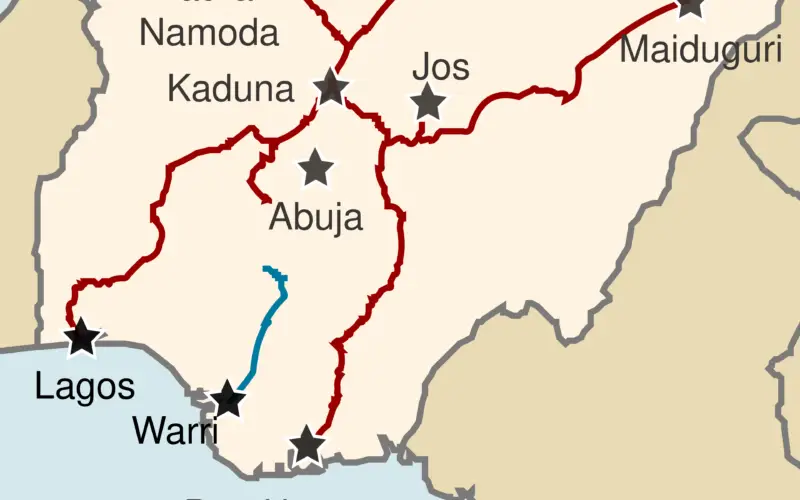
Nigeria’s capital was moved from Lagos to Abuja following the decision of the military government led by General Ibrahim Babangida after the failed April 22, 1990 coup led by the then Lieutenant Colonel Gideon Orkar. The relocation was completed on December 12, 1991.
One of the reasons cited for the relocation was the congestion in Lagos, which was said to have caused significant human suffering, severe traffic gridlock, loss of productive man-hours and substantial economic losses.
Earlier, in 1976, the Justice Akinola Aguda Panel established by the Federal Military Government of General Murtala Mohammed had recommended Abuja as the site for a new national capital. Implementation was delayed by the enormous cost and challenges associated with moving government operations to what was then largely undeveloped land.
The relocation was eventually carried out in phases. Ahead of the return to democratic rule in 1999, Abuja’s status as the Federal Capital Territory was further entrenched in the 1999 Constitution, as amended.
Section 297 of the Constitution provides that there shall be a Federal Capital Territory, Abuja, with boundaries defined in Part II of the First Schedule.
For the capital to be relocated back to Lagos, the constitutional provision would therefore have to be amended. Such a process would require substantial support in the National Assembly and among the State Houses of Assembly.
Under the 1999 Constitution, constitutional amendments generally require specified supermajority votes in both the Senate and the House of Representatives, as well as approval from at least 24 of the 36 State Houses of Assembly, before presidential assent.
The political numbers involved could make such a move difficult. Of the 469 members of the National Assembly, 207 are from the North-East, North-West and North-Central geopolitical zones.
With Abuja located in the North-Central region and serving as a geographically central capital, any attempt to relocate the capital to Lagos could face strong opposition from lawmakers and stakeholders across several regions.
Political observers therefore believe that any move to return Nigeria’s capital to Lagos could generate significant political controversy and potentially trigger a major national debate.