
Business and Economy
Dangote Refinery raises petrol price again, moving the gantry rate to ₦1,200 per litre.

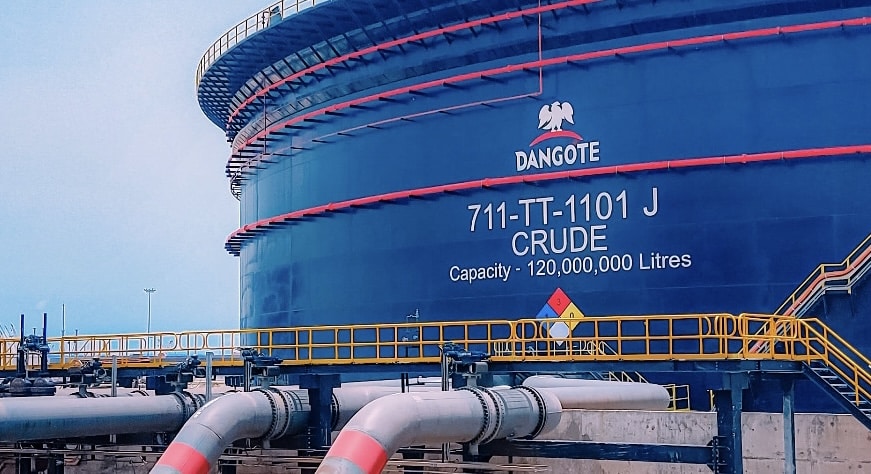
Dangote Petroleum Refinery has increased its petrol price at the gantry from ₦1,185 to ₦1,200 per litre.
The new price took effect on Wednesday, August 26, 2026, according to a notice issued to customers by the refinery’s Group Commercial Operations on Tuesday.
The refinery also increased the price for coastal deliveries from ₦1,562,265 per metric tonne to ₦1,582,380 per metric tonne.
In the notice titled “PMS Price Change Communication (N1,185 per Litre To N1,200 Per Litre),” the company stated that the new prices would apply to both gantry and coastal supplies from August 26.
Customers were directed to submit their existing Authorisation to Collect documents for repricing before loading could resume.
The refinery said customers should return all ATCs for repricing, after which new volume contracts would be issued for immediate resumption of loading.
The latest adjustment represents a ₦15 per litre increase in the refinery’s gantry price and is the second price increase in less than a week.
On August 21, Dangote Refinery had increased its gantry price from ₦1,165 to ₦1,185 per litre.
The latest increase comes despite a decline in international crude oil prices. On Tuesday, West Texas Intermediate traded at $82.13 per barrel after falling by $2.88, representing a 3.39 per cent decline.
Brent crude also dropped to $88.37 per barrel, losing $3.80, or 4.12 per cent, while Murban crude fell to $92.71 per barrel after declining by $8.73, or 8.61 per cent.
The latest petrol price could increase pressure on pump prices as marketers factor in transportation, landing and other distribution costs. Average petrol prices are therefore expected to move towards ₦1,250 per litre.
Marketers and depot operators who received the refinery’s latest notice are expected to return their existing ATCs for repricing before collecting products under the new arrangement.
The price review comes amid increased uncertainty in the global oil market linked to the ongoing conflict between the United States and Iran.
Reuters reported that crude prices had fallen after investors considered the latest US sanctions on Iran less likely to threaten global oil supplies than a possible military escalation.
However, analysts cautioned that the decline in crude prices could be temporary, warning that prices could rise sharply if Iran responds with military action.
There are also concerns about possible disruptions around the Strait of Hormuz, a major route for global oil shipments. Reuters reported that only two commodity vessels crossed the waterway on Monday, the lowest daily figure recorded since early May.
The Strait of Hormuz previously carried about one-fifth of the world’s oil consumption, meaning any major disruption could significantly affect global supplies and prices.
The Dangote Group had not responded to enquiries about the latest petrol price increase as of the time of filing the report.