
General News
Atiku: FAAC Boom Is an Illusion, Nigerians Are Getting Poorer

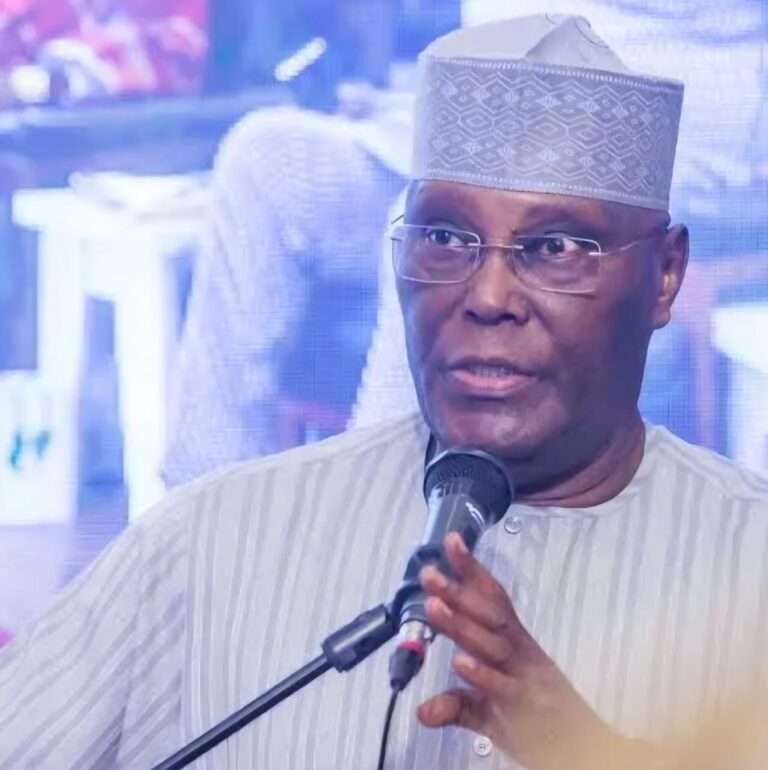
Presidential candidate of the African Democratic Congress (ADC), Atiku Abubakar, has criticised the Bola Tinubu administration, accusing it of disguising economic decline with bigger naira figures and presenting Nigerians with what he described as a monetary illusion.
Atiku, in a statement issued by his Senior Special Assistant on Public Communication, Phrank Shaibu, described the much-celebrated Federation Account Allocation Committee (FAAC) boom as fake prosperity.

According to him, the figures lose their meaning when measured against the exchange rate, inflation and Nigerians’ real purchasing power.
‘Bigger Naira, Smaller Value’
Atiku presented what he described as brutal arithmetic.

He said: “In 2019, FAAC distribution was approximately ₦7.85 trillion, worth about $25.6 billion at the prevailing exchange rate. By 2025, FAAC had risen on paper to approximately ₦21.9 trillion, yet its dollar value had fallen to roughly $14.6 billion. So while government parades almost three times as many naira, the underlying dollar value is more than 40 per cent lower.”
He added: “That is not an economic miracle. That is money illusion. You cannot batter the currency, allow inflation to ravage purchasing power and then wave bigger naira figures before Nigerians as evidence that the country has become richer.”

Atiku also used the minimum wage to illustrate his argument.
He said: “In 2019, ₦30,000 was worth roughly $83. By May 2023, that same ₦30,000 was worth about $65. Today, government boasts that the minimum wage has more than doubled to ₦70,000, yet at an exchange rate of around ₦1,320 to the dollar, that ₦70,000 is worth only about $53.
“That is Tinubu’s money illusion in its simplest form. The figure in your hand is bigger, but the value in your pocket is smaller.”
‘Where Is The Boom?’
The former Vice President urged Nigerians to assess the economy based on their everyday realities rather than government charts.
“If FAAC is truly booming, then where is the boom? Where is it in the price of food? Where is it in transport? Where is it in electricity, healthcare, housing, and jobs? Where is it in the purchasing power of salaries?
“Government cannot become richer on paper while the people become poorer in reality and then expect Nigerians to applaud the contradiction.”
Atiku also questioned why states that claim to be receiving more money remain heavily indebted.
He cited a September 2026 report based on Debt Management Office data, which showed that 12 states whose governors are rounding off their tenures have a combined debt burden of approximately ₦5.3 trillion, comprising ₦2.16 trillion in domestic debt and $2.33 billion in foreign debt.
“So spare Nigerians the victory parade. You cannot boast endlessly about unprecedented FAAC allocations while states remain heavily indebted, pension and gratuity obligations persist, contractors chase payments, and governments continue to carry enormous liabilities.
If the money is as unprecedented as we are constantly told, Nigerians have every right to ask: where has the money gone?”
‘Fiscal Discipline Only Against The Poor’
Atiku accused the Tinubu administration of applying fiscal discipline selectively, describing the approach as harsh on the poor but lenient on the powerful.
“You cannot defend concessions for the powerful, tolerate waste within government, and then suddenly become an apostle of fiscal discipline when ordinary Nigerians ask for relief from unbearable living costs.
Fiscal responsibility that operates only against the poor is not reform. It is cruelty dressed up in economic grammar.”
He concluded:
“Nigerians do not eat FAAC figures. They do not pay school fees with percentages. They do not buy medicine with press conferences, and they do not enter buses with government charts. They live in the real economy, and the real economy is measured by what their money can buy.
“More naira is not automatically more prosperity. Bigger figures do not mean bigger value.”