
Opinion
“Bleed France White”: From Verdun to Ukraine, Attrition’s Fatal Lesson

By Sam Agogo
The story of warfare across centuries is often the story of leaders convinced that endurance and bloodshed can bend nations to their will. In the early 20th century, Germany’s military high command believed it had discovered a formula to break France once and for all. A century later, Russia has embraced a similar doctrine against Ukraine, with equally devastating consequences. Both conflicts reveal the same truth: wars of attrition rarely destroy the enemy as intended; instead, they consume the aggressor itself.

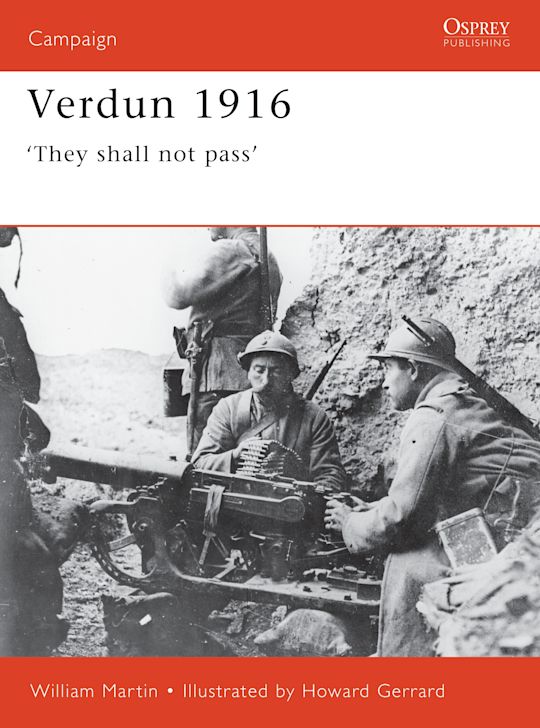
In 1916, German Chief of Staff Erich von Falkenhayn crafted a plan that would become infamous in military history. He argued that Germany could not achieve victory through sweeping maneuvers or territorial conquest, but by bleeding France into collapse. Verdun, a fortress city symbolic of French pride, was chosen as the battlefield. Falkenhayn declared that Germany would “bleed France white.” What followed was the Battle of Verdun, beginning on 21 February 1916 and lasting until 18 December 1916—a staggering 302 days, nearly 10 months of relentless fighting.
The German army hurled wave after wave of assaults, convinced that France would crumble under the weight of its own losses. But the plan backfired. France endured, and Germany itself was drained of strength. By the time the guns fell silent, Germany had lost more than 700,000 soldiers. The war of attrition had consumed the aggressor as much as the defender, leaving Germany weakened and vulnerable for the remainder of the war.

More than a century later, the echoes of Falkenhayn’s words reverberate in Eastern Europe. Russian President Vladimir Putin has repeatedly insisted that Moscow will exhaust Ukraine militarily until Kyiv submits. At his annual press conference, he vowed that Russia would achieve its aims “by armed means” if necessary, signaling a strategy built not on swift victory but on grinding down the opponent through relentless pressure. The parallels to Falkenhayn’s logic are striking: both leaders believed that by forcing their adversary into a prolonged struggle, they could break its will and secure triumph.
Yet history has shown the peril of such thinking. Just as Germany’s plan at Verdun drained its own army, Russia’s war in Ukraine has inflicted staggering losses on its forces. Western intelligence estimates that Russia has now suffered over 1.35 million casualties. And just as Verdun dragged on far longer than Falkenhayn anticipated, Russia’s war has stretched into a prolonged stalemate. The broader conflict began in 2014 with the annexation of Crimea, and the full-scale invasion launched in February 2022 has now lasted over 4 years. In total, the Russo-Ukrainian war has spanned more than 12 years, a grim testament to the futility of attritional warfare.

The comparison is stark. Verdun was meant to end France in less than a year, but instead it consumed Germany for nearly ten months and left it weakened. Russia’s war was meant to break Ukraine quickly, but instead it has dragged on for years, bleeding Russia itself. Both conflicts reveal the same truth: wars of attrition rarely achieve their intended goal. Instead of breaking the enemy, they often break the aggressor.
The human cost of these strategies cannot be overstated. At Verdun, soldiers lived in unimaginable conditions—mud-filled trenches, constant bombardment, and the ever-present stench of death. The French motto “Ils ne passeront pas” (“They shall not pass”) became a rallying cry, symbolizing defiance in the face of annihilation. In Ukraine, cities like Mariupol, Bakhmut, and Avdiivka have become modern symbols of endurance, where civilians and soldiers alike have faced relentless bombardment yet refused to yield.
Attrition warfare is not just a military tactic; it is a gamble with human lives. Falkenhayn gambled that France would collapse first, but it was Germany that bled itself dry. Putin gambled that Ukraine would fold under pressure, but it is Russia that has endured catastrophic losses. The lesson is timeless: wars of attrition are wars of self-destruction.
Falkenhayn’s Germany bled itself dry in 1916. Today, Russia faces the same fate in Ukraine. History does not merely repeat—it warns. And those who ignore its warnings risk bleeding themselves into defeat.
For comments, reflections, and further conversation:
Email: samuelagogo4one@yahoo.com
Phone: +2348055847364