General News
SDGs Office Advocates Stronger Support For Women, Girls To Drive National Development

BY ABUBAKAR YUSUF
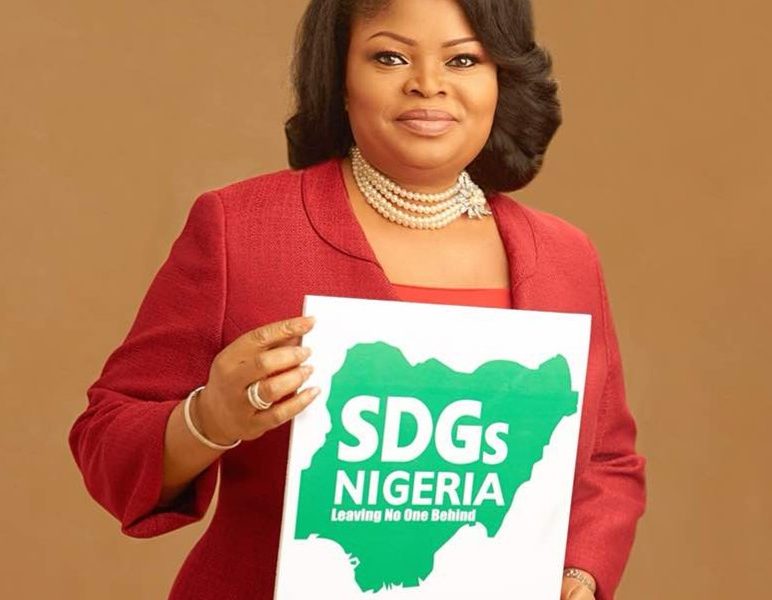
As part of efforts to strengthen women and girls’ emancipation, the Sustainable Development Goals (SDGs) Office under the leadership of the Senior Special Assistant to the President on SDGs, Princess Adejoke Orelope-Adefulire, has continued to create an enabling environment aimed at charting a new course towards achieving gender inclusion and empowerment in line with the United Nations development agenda.
Recognised as the backbone of families and society, women and girls continue to receive growing attention globally, especially within the framework of the 17 Sustainable Development Goals and international standards promoting equality and inclusion.
This explains why the celebration and commemoration of International Women’s Day (IWD), observed annually across the world, remains significant in promoting humanity, development, and social justice.
The popular saying that empowering women and girls amounts to empowering the entire family has continued to drive governments and private sector organisations to intensify efforts towards improving the welfare of women and girls.
Consequently, the SDGs Office has remained proactive in promoting women and girls’ development through investments, empowerment programmes, and strategic initiatives aimed at addressing local and global development challenges.
Given the resilience, achievements, and contributions of women and girls to national and global development, stakeholders insist that support for women must move beyond mere rhetoric to concrete actions and sustainable investments.
Aside from advocating the emancipation and empowerment of women and girls through various programmes and partnerships, the SDGs Office has also continued to encourage governments, private organisations, and public-spirited individuals to invest more resources and opportunities in women and girls.
This aligns with SDG 5, which focuses on achieving gender equality and empowering all women and girls. Observers note that progress in gender equality also contributes significantly to poverty reduction, improved education, better healthcare, economic growth, and social inclusion.
According to development experts, empowering women and girls remains one of the most effective ways to bridge development gaps and achieve sustainable growth.
With the commitment shown by the SDGs Office towards the welfare and empowerment of women and girls, many believe that communities, families, and nations stand to gain enormous social and economic benefits.
This commitment has continued to inspire more efforts locally and internationally towards supporting women and girls as essential drivers of good leadership, governance, and sustainable development.
Observers further maintain that the achievements of the United Nations Sustainable Development Goals may fall short without the active participation and inclusion of women and girls.
IWD 2026: Orelope-Adefulire Urges Greater Investment In Women, Girls
The Senior Special Assistant to the President on Sustainable Development Goals (SSAP-SDGs), Princess Adejoke Orelope-Adefulire, has called for increased investment in women and girls as a critical pathway to achieving sustainable development in Nigeria.
Orelope-Adefulire made the call in Abuja while commemorating International Women’s Day (IWD) 2026, joining the global community in celebrating the achievements, resilience, and contributions of women to national and global development.
The 2026 celebration is themed “Give To Gain,” encouraging individuals, governments, and institutions to invest more resources, opportunities, and support in women and girls to unlock broader societal progress.
According to a statement issued by her Special Assistant on Media, Publicity and Strategy, Desmond Utomwen, the presidential aide emphasised that empowering women remains central to achieving the Sustainable Development Goals, particularly SDG 5, which focuses on gender equality and the empowerment of all women and girls.
She noted that progress in gender equality produces positive effects across several development priorities, including poverty reduction, education, healthcare, economic growth, and social inclusion.
“International Women’s Day reminds us that empowering women and girls is not just a moral obligation but a development imperative,” Orelope-Adefulire stated.
“The theme ‘Give To Gain’ reinforces the reality that every investment made in women and girls yields significant benefits for families, communities, and nations.”
She also highlighted the commitment of the Federal Government under President Bola Ahmed Tinubu’s Renewed Hope Agenda towards strengthening gender inclusion, expanding economic opportunities for women, and promoting social protection programmes for vulnerable groups.
According to the statement, the administration’s policies and programmes aimed at inclusive growth and human capital development are helping to create more opportunities for women across various sectors of the economy.
Orelope-Adefulire further explained that gender equality is a major driver across the entire 2030 Agenda for Sustainable Development, stressing that no country can achieve sustainable development without the full participation of women.
“From education and health to economic empowerment and leadership, the role of women is indispensable in building a resilient and prosperous society,” she added.
The SSAP-SDGs also reaffirmed its commitment to promoting gender-responsive development initiatives across Nigeria through partnerships with government institutions, development partners, civil society organisations, and the private sector.
She explained that the Office has continued to support community-based interventions, empowerment programmes, and strategic initiatives designed to improve the livelihoods of women and girls nationwide.
Orelope-Adefulire therefore called for stronger collaboration among stakeholders to accelerate progress in gender equality and women empowerment.
“Achieving the SDGs requires a whole-of-society approach. Governments, private sector organisations, civil society groups, and citizens must all play their part in creating opportunities for women and girls to thrive,” she said.
She also encouraged Nigerian women and girls to continue breaking barriers, pursuing excellence, and contributing meaningfully to national development in governance, entrepreneurship, science, technology, media, and the creative industry.
According to her, building an inclusive society where women enjoy equal opportunities will further strengthen Nigeria’s development trajectory.
International Women’s Day is celebrated globally every March 8 to recognise the social, economic, cultural, and political achievements of women while advocating accelerated action towards gender equality.
Written by ABUBAKAR YUSUF via yus.abubakar3@gmail.com.