
International
Trump Hints at Breakthrough as Iran Deal Nears

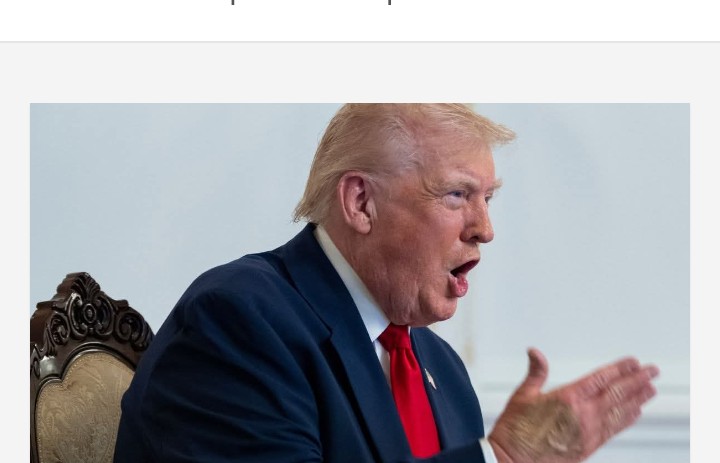
President Donald Trump has announced that a deal between the United States and Iran aimed at ending the Middle East conflict could be finalized on Sunday, with the strategic Strait of Hormuz expected to reopen immediately after the agreement is signed.
Earlier on Saturday, Iran suggested a different timeline but maintained that an agreement was close. Both parties, along with international mediators, expressed optimism that weeks of intermittent negotiations were approaching a successful conclusion.
Pakistan, a key mediator in the talks, said the agreement was closer than ever. Pakistani Prime Minister Shehbaz Sharif stated on X that the finalization of the deal was expected within 24 hours and would be signed electronically. He added that technical-level discussions would continue next week.
A statement from Pakistan’s foreign ministry also indicated that the signing was scheduled for Sunday.
The positive momentum emerged despite renewed tensions in the Strait of Hormuz, which Iran has blockaded since the early stages of the conflict, causing disruptions in global markets.
In a post on his Truth Social platform, Trump wrote: “The Deal is scheduled to get signed tomorrow, and immediately after it is signed, the Hormuz Strait is OPEN TO ALL.”
Since a ceasefire on April 8 halted the worst fighting, Trump has repeatedly suggested that an agreement was imminent, though negotiations have continued longer than expected.
Iranian Foreign Ministry spokesman Esmaeil Baqaei had earlier stated that the signing date had not been fixed and that it would not occur on Sunday. However, he acknowledged that a deal could still be reached in the coming days.
Despite the optimism, both sides have offered differing accounts of what the agreement contains, with each seeking to portray itself as emerging from the conflict in a stronger position.
Hormuz Dispute Remains Central
Iran has maintained that it will continue exercising control over the Strait of Hormuz, one of the world’s most important routes for oil and gas exports.
Since imposing the blockade, Tehran has required vessels to obtain authorization from its military before passing through the waterway and has established a new authority to oversee transit operations and collect tolls.
The United States responded by imposing its own blockade on Iranian ports.
US Central Command reported on Saturday that Iran launched multiple one-way attack drones targeting commercial vessels moving through the Strait. According to the military, all the drones were intercepted and destroyed by US forces.
Iranian Foreign Minister Abbas Araghchi said on Friday that the proposed agreement included the lifting of the US naval blockade.
He also stressed that administration of the Strait of Hormuz would not return to its previous arrangement, describing the waterway as one of Iran’s key deterrence tools.
The United States has repeatedly stated that continued Iranian control of the strait is unacceptable. Trump’s latest remarks did not address issues such as tolls or future management of the route.
Nuclear Programme Remains a Sticking Point
Another major issue in the negotiations is Iran’s nuclear programme, particularly its stockpile of highly enriched uranium, which is believed to have been buried following US strikes during an earlier conflict last year.
Iran insists its nuclear activities are peaceful and that it has the right to enrich uranium. However, the United States, Israel and several Western governments continue to suspect Tehran of pursuing nuclear weapons capability.
Araghchi said the only acceptable solution for Iran’s enriched uranium stockpile would be dilution within Iran.
Trump, who has defended the conflict as necessary to prevent Iran from acquiring nuclear weapons, has previously insisted that the uranium should be removed and destroyed.
In his Saturday post, Trump stated: “When all is calm, we will go in and get the Nuclear Dust… and downblend and destroy it, whether in Iran, or the United States.”
He added that he hoped the process would proceed quickly and smoothly but warned that alternatives remained available if negotiations failed.
Israeli Prime Minister Benjamin Netanyahu said Trump had assured him that any final agreement would include the removal of Iran’s enriched nuclear material.
Public Skepticism Persists
Despite diplomatic progress, skepticism remains among some Iranians.
Speaking in Tehran, 49-year-old Saeed Sadeghi said he did not believe a deal would be reached soon, adding that he did not trust the parties involved.
Iran’s Fars News Agency also released footage from the northeastern city of Mashhad showing dozens of protesters gathered outside a foreign ministry building on Saturday.
The demonstrators, many dressed in black chadors, chanted slogans against Foreign Minister Araghchi while waving red and black flags, reflecting opposition to the proposed agreement.