
Governance
FG Pushes Domestic Finance to Boost Nigeria’s Carbon Market

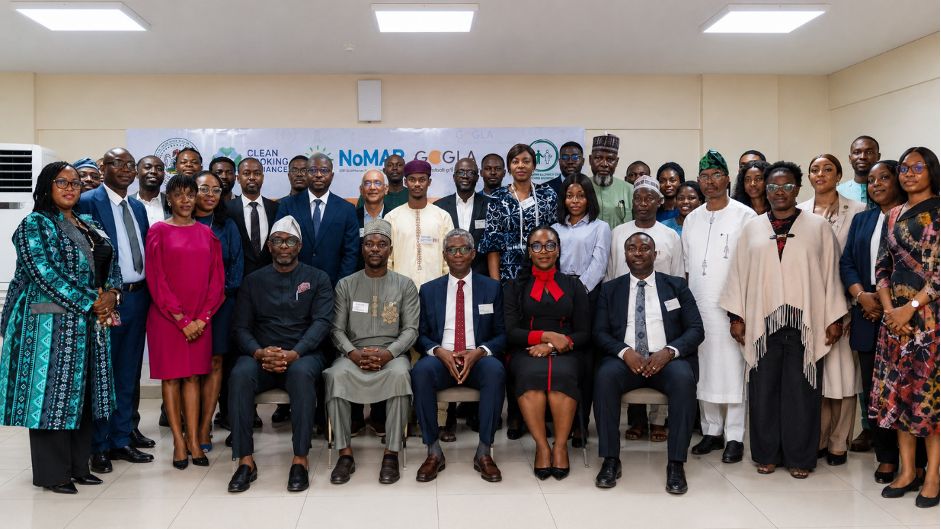
The Federal Government has said unlocking domestic finance is crucial to expanding Nigeria’s carbon market, stressing that communities cannot afford to wait years for international validation before accessing funds for climate projects.
The position was made known in Abuja during a stakeholders’ workshop convened under the Policy and Regulatory Innovations for Scaling Markets (PRISM) Nigeria Initiative.
PRISM Nigeria is a policy and regulatory engagement programme implemented by the Clean Cooking Alliance (CCA) in partnership with the Nigeria Off-Grid Market Acceleration Programme (NoMAP) and the Global Off-Grid Solar Association (GOGLA). The initiative is delivered in collaboration with the Office of the Senior Special Assistant to the President on Climate Finance and Stakeholder Engagement and the Nigerian Alliance for Clean Cookstoves.
The programme aims to integrate carbon markets into Nigeria’s domestic financial system, enabling carbon-linked revenues to be recognised as a credible and investable asset class. It also seeks to unlock local capital for clean cooking, Distributed Renewable Energy (DRE), and nature-based projects nationwide.
Delivering the keynote address, the Senior Special Assistant to the President on Climate Finance and Stakeholder Engagement, Mr. Ibrahim Shelleng, described the workshop as strategic and timely, noting that Nigeria must now move beyond policy development to implementation.
According to Shelleng, domestic finance promotes ownership and accelerates project delivery. He said communities should not have to wait two to three years for international validation processes before climate projects receive funding, urging greater reliance on locally generated finance.
He explained that climate finance is often wrongly perceived as international funding alone, stressing that it includes both domestic and international financing directed towards climate change mitigation and adaptation.
Also speaking, the Director of Energy, Transportation and Infrastructure at the National Council on Climate Change (NCCC), Mr. Michael Ivenso, said carbon markets present a major opportunity to finance Nigeria’s clean cooking transition, with the potential to benefit about 45 million people by 2030.
Ivenso said carbon credits must be structured as recognised tradable financial instruments to attract investment. He called for stronger participation by domestic financial institutions, adding that development finance institutions have a vital role in expanding the market.
He disclosed that since May, Nigeria has issued 25 Letters of Authorisation (LoA), a sovereign instrument that enables the monetisation of carbon assets.
According to him, a credible and transparent Monitoring, Reporting and Verification (MRV) system will be critical to ensuring the integrity of carbon assets and strengthening investor confidence.
He added that every tonne of emissions reduced must be accurately measured and verified.
Through research, regulatory mapping across Kenya and Nigeria, and extensive stakeholder consultations, PRISM has identified 15 priority regulatory interventions for Nigeria.
The proposed reforms target key financial regulators, including the Central Bank of Nigeria (CBN), the Securities and Exchange Commission (SEC), the National Insurance Commission (NAICOM), and the National Pension Commission (PenCom), alongside relevant ministries and market institutions.
PRISM Nigeria builds on the success of its first phase in Kenya, where engagement with financial regulators advanced discussions on recognising carbon revenues within banking, capital market, pension, and insurance frameworks.