
International
Oil surges as Middle East tensions deepen.

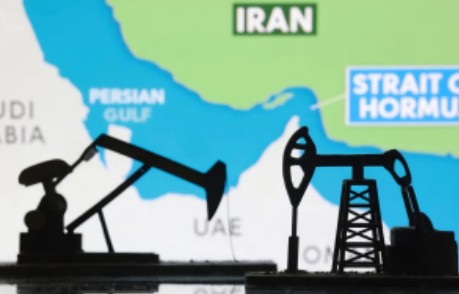
Oil prices rose by nearly $3 per barrel on Wednesday, July 29, 2026, after the United States and Saudi Arabia carried out joint strikes in Iraq, while U.S. forces intercepted Iranian ballistic missiles reportedly targeting American troops in the Middle East.
Brent crude futures gained $2.70, or 3.2 per cent, to trade at $86.79 per barrel as of 0645 GMT. U.S. West Texas Intermediate (WTI) crude also advanced by $2.65, or 3.3 per cent, to $81.91 per barrel.
Analysts at ING attributed the renewed strength in oil prices to heightened geopolitical tensions after the United States announced it had intercepted a surprise attack on its troops. They noted that the latest developments have reduced hopes for a quick de-escalation of the conflict in the Gulf region.
The United States and Saudi Arabia launched strikes against Iran-backed groups in Iraq, accusing them of carrying out drone attacks on Saudi oil facilities. In response, Iran described the accusations as a “major miscalculation.”
The military action followed an announcement by the U.S. military that it had successfully prevented a surprise Iranian attack on American troops stationed in the region.
Meanwhile, shipping activity through the Strait of Hormuz remained subdued, with only five commodity vessels passing through the strategic waterway on Tuesday.
According to Reuters, Oman presented Iran with a proposal backed by Gulf states for the joint management of the Strait of Hormuz, including a system of voluntary transit fees. However, a senior Iranian official said Tehran had rejected the proposal, reducing the prospects of an agreement over the vital route, which previously handled about one-fifth of global crude oil and natural gas shipments before the outbreak of the conflict.
Suvro Sarkar, Head of Energy Research at DBS Bank, told Reuters that Brent crude prices are likely to remain volatile in the near term, fluctuating between $80 and $100 per barrel as tensions in the Middle East continue to rise and ease intermittently.