
Opinion
Osun Under Siege: Adeleke Cries Rigging, Accuses Tinubu, Oyetola of Waging War Against His Government Ahead of August 15 Poll

By Sam Agogo
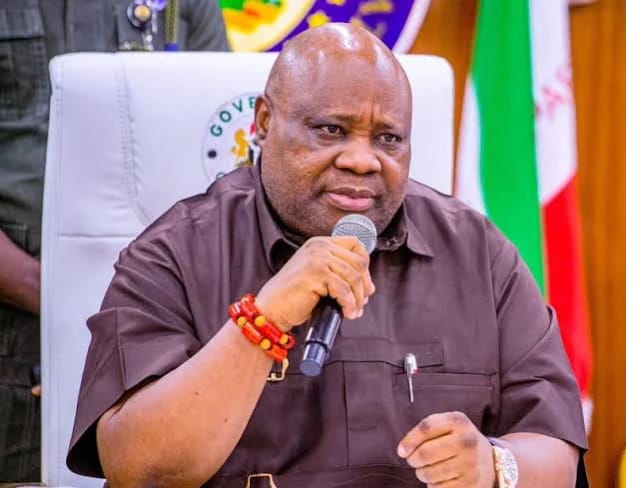
With eleven days left before the governorship election in Osun State, scheduled for August 15, Governor Ademola Adeleke has issued a series of forceful public accusations against the federal government, the Nigeria Police Force and his predecessor in office, alleging a coordinated effort to manipulate the outcome of the poll.


The immediate catalyst was the arrest of his Secretary to the State Government, Teslim Igbalaye, along with five others, following a police raid on his residence in the Oroki Estate area of Osogbo. Police said officers recovered in excess of four million naira in cash, permanent voter cards and a voter register, and that the suspects were under investigation for vote-buying. The Osun State Government disputed this account, characterising the operation as a politically motivated action intended to disable the senior ranks of Adeleke’s re-election structure. According to the government, the raid was led by a Deputy Commissioner of Police for Operations, with members of Igbalaye’s household reportedly removed to an undisclosed location, and it had been preceded by similar raids on the residences of about six commissioners. Igbalaye was later released, though the episode reinforced the governor’s position that the police command in the state had ceased to function as a neutral institution.
That position has since broadened into a far wider set of allegations. Addressing a National Peace Committee summit, Adeleke said he had considered boycotting the meeting altogether, citing sustained violence across the state over the preceding three months. He stated that his party, Accord, had lost eight members to gun attacks, with more than twenty others injured, and alleged that over eighty-six party members, including canvassers, ward coordinators and polling unit agents, had been arrested and, in several cases, transferred to detention facilities outside the state, in Abuja and Nasarawa, among them a sitting Accord candidate for the House of Representatives. He questioned why Osun residents were being held outside the state when both the Federal High Court and the State High Court are competent to hear such matters locally, characterising the pattern as police-sanctioned intimidation and appealing to the committee to press the Inspector-General of Police to secure the return of all detained persons.
Central to Adeleke’s allegations is Gboyega Oyetola, his predecessor as governor, whom he defeated in 2022. Oyetola was subsequently appointed to the federal cabinet and currently serves as Minister of Marine and Blue Economy. Adeleke told the peace committee that the violence had occurred at Oyetola’s direction, and questioned the basis on which a state Commissioner of Police might act on a federal minister’s instructions rather than the established civilian chain of command. He further named Senator Francis Fadahunsi and APC governorship candidate Munirudeen Oyebamiji as figures he holds responsible, calling at one point for economic sanctions and a visa restriction against them.
The APC has responded firmly. Its state campaign council has backed the police investigation into Igbalaye, maintaining that no individual is above the law, and has more recently described Adeleke’s allegations against Tinubu and Oyetola as unfounded, a narrative it says the governor has constructed in anticipation of electoral defeat. The Adeleke campaign, in turn, has submitted a formal complaint to the National Human Rights Commission in Abuja and visited the Force Intelligence Response Team headquarters to press for the release of detained supporters. Campaign spokesperson Pelumi Olajengbesi alleged that officers under outgoing Commissioner of Police Ibrahim Gotan had aligned themselves with the APC, and separately questioned the redeployment of a new Commissioner of Police, Samuel Etaifo, ahead of the election. APC figures have in turn called on Etaifo to ensure impartial conduct, underscoring how central the commissioner’s role has become to both sides’ anxieties.
A longstanding grievance concerns statutory allocations to local government. Adeleke has accused the Tinubu administration of withholding funds due to Osun’s thirty local government areas, a dispute originating from a 2022 local government election under Oyetola’s administration, in which the APC won every seat. When fresh elections conducted by Adeleke’s administration produced PDP-aligned officials, the Attorney-General of the Federation directed in March 2025 that all allocations to Osun’s councils be withheld pending resolution of the matter. By mid-2026, a review of Federal Accounts Allocation Committee data indicated that more than two hundred billion naira had been withheld, notwithstanding a Supreme Court ruling, delivered six to one, that described the withholding as a breach of the constitution and directed that allocations be paid directly to the councils. The federal government has continued to withhold the funds regardless. Adeleke says the state has had to draw on its own resources for close to a year to meet local government payroll obligations, including for teachers and health workers across 332 primary healthcare centres, and residents have staged protests at bank branches over the matter. The Osun APC rejects the governor’s characterisation, maintaining that allocations are being paid correctly.
Adeleke’s campaign has raised a further objection concerning the composition of the APC’s campaign structure itself. In a formal statement, the governor’s campaign team criticised the ruling party for including the Minister of State for Defence, Bello Matawalle, among the members of the APC National Campaign Council assembled for the Osun governorship election. The campaign team described the arrangement as a misplaced priority, arguing that it was inappropriate for a serving defence minister to devote his attention to partisan campaign duties at a time when the country continues to face severe and widespread national security challenges. Matawalle has separately commented publicly on Osun’s local government dispute, calling on security agencies to maintain law and order in the state. The governor’s campaign regards both his campaign role and his public interventions as evidence that federal authority, including figures with direct responsibility for national security, has been directed in support of the APC’s effort to regain a state it lost in 2022 and considers strategically significant ahead of 2027. The APC has been explicit about the stakes, with national chairman Nentawe Yilwatda describing Osun as a test of the party’s organisational strength and announcing a 276-member campaign council, chaired by Imo State Governor Hope Uzodimma, to coordinate its efforts across the state.
Adeleke says his supporters have not responded in kind to the attacks against them, framing their restraint as respect for the rule of law, and has continued appealing to Tinubu, whom he says is not personally responsible for the unlawful withholding of funds, to intervene directly. It is a careful distinction that lets him press his case against the machinery around the president without formally implicating Tinubu himself, even as his references to the 1983 Ondo State crisis and calls for sanctions against named federal officials suggest where he believes ultimate responsibility lies. Fourteen political parties have since signed a peace accord facilitated by the National Peace Committee, with INEC chairman Professor Joash Amupitan urging full compliance, though its durability remains uncertain amid continuing allegations of vandalised campaign materials and disputed police neutrality.
What has received comparatively limited national attention is the broader significance of the Osun contest. Commentators and opposition parties preparing for 2027 have largely treated it as a localised dispute, a reading that may understate its relevance. The arrest and relocation of party officials without local arraignment, the prolonged withholding of council funds despite a Supreme Court ruling, the deployment of a sitting defence minister into partisan campaign duties, and the disputes over police neutrality could reasonably be read as indicative of practices that may recur in other states considered strategically important ahead of the next general election. Whichever way August 15 is resolved, the events surrounding it in Osun warrant closer and more sustained national attention than they have thus far received.
*For comments, reflections and further conversation, email samuelagogo4one@yahoo.com or call +2348055847364*
Continue Reading