_By Sam Agogo_
The freezing of the Osun State Government’s accounts by the Economic and Financial Crimes Commission (EFCC) is not just a bureaucratic action—it is a political earthquake with implications far beyond the borders of the state.
At its core, this move represents the dangerous weaponization of federal institutions to achieve political ends, undermining the very foundations of Nigeria’s democracy.

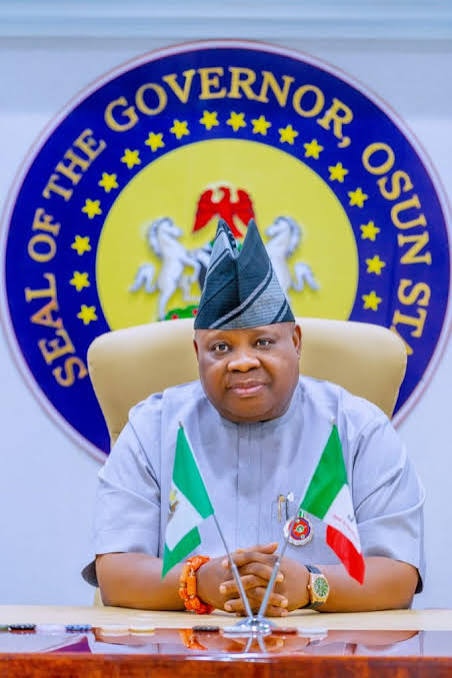
By cutting off access to funds, the Osun Government has been left paralyzed. Workers wait for salaries, projects grind to a halt, and essential services are disrupted. Governance has been reduced to survival. The timing of this action, barely ten days before a governorship election, makes it difficult to see it as anything other than a calculated attempt to weaken the state and pave the way for federal dominance. Accord Party leaders have openly accused EFCC of acting to benefit the ruling APC, describing the freeze as unconstitutional and promising to challenge it in court.But the freezing of accounts is only one of the many challenges Osun has faced during this election season. Reports show that dozens of Governor Ademola Adeleke’s supporters have been arrested, many transferred from Osun to Abuja without trial. Some detainees were allegedly pressured to defect to the APC, while others languished in correctional centres far from home. Even senior government officials were targeted, with the Secretary to the State Government arrested for simply mobilising citizens ahead of the polls.Violence has also marred the campaign. Independent monitors documented politically motivated killings, assassinations of party supporters, and clashes between rival groups. Campaign offices were vandalised, billboards destroyed, and thugs openly brandished weapons in public. Citizens live under intimidation, unsure whether their votes will count in an environment dominated by arrests, assassinations, and financial strangulation.History shows that Osun is not the first state to face such treatment. In 2008, Rivers State accounts were frozen during investigations into alleged corruption, sparking outrage and legal challenges. In 2018, Benue State faced a similar freeze, which the Court of Appeal later ruled could only last 72 hours without judicial approval. Each case triggered constitutional debates about whether EFCC has the authority to shut down a state’s treasury, given that Sections 120–125 of the Constitution place financial oversight under state assemblies and auditors, not federal agencies. Public backlash forced EFCC to retreat, but the pattern has resurfaced in Osun today.The implications are profound. Governance is paralyzed: salaries cannot be paid, pensions are delayed, contractors are stranded, and public services grind to a halt. Constitutionally, the move raises serious questions about federal overreach. Courts have emphasized that EFCC cannot unilaterally freeze government accounts beyond a temporary stop order without judicial approval. Yet the Commission continues to test the boundaries of its authority, often at politically sensitive moments.The broader danger is that this tactic could become a template for future elections. Freezing accounts, prosecuting state officials, arresting supporters, and weaponizing institutions tilt the playing field, making elections meaningless. Democracy thrives on fairness and accountability, but when institutions are manipulated, what remains is authoritarianism dressed in democratic clothing.The international community must also pay close attention to what is happening in Osun. Nigeria is Africa’s largest democracy, and the erosion of democratic norms here has continental and global implications. If federal institutions can be deployed to cripple opposition-controlled states without consequence, then elections risk becoming hollow rituals. International observers, human rights organizations, and foreign governments should watch closely and act decisively to ensure that democracy is not subverted. Silence from the global stage would embolden those who seek to manipulate institutions for political gain.Protest should also be considered if nothing happens. Citizens cannot afford to remain passive while democracy is hollowed out. Peaceful demonstrations, civic mobilization, and collective resistance are legitimate tools in defending democratic values. If Osun’s ordeal is ignored, it may become the template for the next general election, where intimidation, arrests, assassinations, and financial strangulation are deployed to silence opposition.Osun’s ordeal is therefore not just a local dispute; it is a national test and an international concern. If unchecked, the unlawful freezing of accounts, mass arrests, and politically motivated violence could spread across the federation, gradually eroding Nigeria’s democratic foundations. Lawyers must challenge the legality in court, civil society must speak out, opposition parties must recognize that silence today could mean vulnerability tomorrow, and citizens must refuse to accept injustice as normal. The international community must stand in solidarity with Nigerians, ensuring that democracy is not sacrificed at the altar of political expediency.The freezing of Osun’s accounts is a warning. It shows how fragile Nigeria’s democracy becomes when institutions stray from their mandate. If we fail to act, governance will be reduced to survival, elections to formalities, and democracy to a hollow shell. The time to speak up is now—before silence becomes complicity and federal overreach becomes the norm.
*For comments, reflections, and further conversation, email: samuelagogo4one@yahoo.com or call Number .*+2348055847364