
General News
Vote Our Way or Leave: Nigeria’s Democracy Under Siege

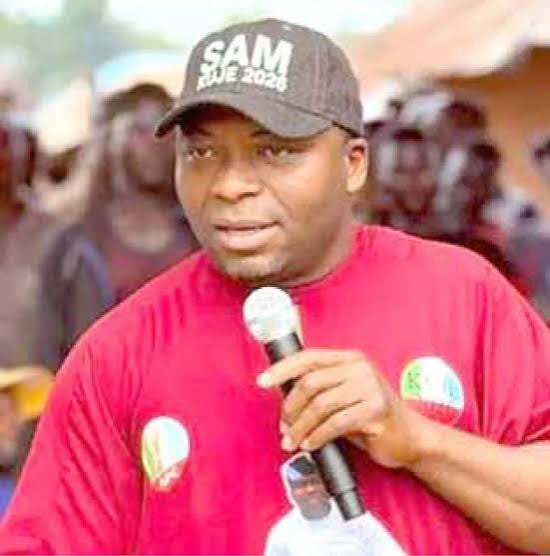
_By Sam Agogo_
Nigeria’s democracy was designed to be straightforward: citizens cast their votes freely, and the nation accepts the outcome. Yet that principle is increasingly undermined by a culture of threats and ultimatums — a culture where political loyalty is demanded not through persuasion but through intimidation.The most recent flashpoint erupted in Kuje Area Council of the Federal Capital Territory. Samuel Danjuma Shekwolo, the council chairman, told party loyalists that residents who had benefited from projects under President Bola Tinubu and FCT Minister Nyesom Wike had no business voting against the ruling All Progressives Congress (APC). His words were blunt: “It’s either you are doing APC or leave the area council.”The backlash was swift. Amnesty International Nigeria condemned the statement as a direct attack on freedom of association. The African Democratic Congress demanded his arrest. Christian advocacy groups urged the church and security agencies to intervene, while the Conference of Nigeria Political Parties warned that democracy itself was at risk if officials could dictate how citizens voted. Shekwolo’s office later claimed his remarks were taken out of context, but the video left little room for reinterpretation. For ordinary residents, “leave the area council” was not a metaphor — it was a threat.This tactic is not new. Across centuries and continents, powerful figures have weaponized housing, land, and belonging to coerce political loyalty. In 19th-century Britain, landlords ordered tenant farmers to vote as instructed, with eviction as the penalty for defiance. In the American South after the Civil War, white planters evicted Black sharecroppers who dared to vote Republican. In 1960 Tennessee, hundreds of Black families were forced into “tent cities” after registering to vote. In Zimbabwe, ruling party officials leaned on village chiefs who controlled communal land, warning rural communities that suspected opposition voters would be stripped of farmland and exiled.Nigeria’s own record of political threats is long. Just days before Shekwolo’s remarks, Senator Francis Fadahunsi of Osun East told an APC campaign crowd that opposition Accord Party members should be killed. He later claimed his words were metaphorical, but residents reported being warned by thugs to vote a certain way or stay away from polling stations altogether. A viral video showed a woman nicknamed “Arugba,” flanked by armed men, warning voters that the finger used to vote against the APC would not make it home intact. These were not isolated hotheads — they were part of a coordinated pattern of intimidation. Bolaji Abdullahi, spokesman for the ADC, connected these threats directly to Shekwolo’s remarks, arguing that when a senator can threaten violence and face no consequences, it teaches every lesser official that intimidation carries no cost. He traced the culture back to President Tinubu’s remark to Catholic bishops that “all is fair in politics,” suggesting that such words from the nation’s leader function as instructions for those who owe him their positions.Lagos has its own history of political intimidation. In 2015, Oba of Lagos Rilwan Akiolu told Igbo community leaders that anyone who voted against his preferred candidate would “die inside the lagoon.” Four years later, Oluremi Tinubu warned that Lagos’s deities would chase out politically difficult Igbo residents. In 2024, an anonymous group issued a 30-day ultimatum ordering Igbo residents to vacate Lagos or face mass protests under the slogan “Igbo Must Go.” Unlike earlier threats, this one was swiftly condemned by Governor Babajide Sanwo-Olu and the pan-Yoruba group Afenifere. The contrast was striking: when threats came from anonymous actors, authorities repudiated them; when they came from powerful officeholders, silence or excuses followed.The pulpit and the minaret have not been spared. Clerics have framed election outcomes as religious conquests, warning Christians who reject Muslim-Muslim political arrangements to leave Nigeria. Islamic leadership bodies have since urged imams to avoid turning mosques into campaign platforms. Meanwhile, pastors issuing prophecies about politicians have been criticized for worsening ethnic and political tensions.Nigerians familiar with Jamaica’s history of “garrison politics” have sounded alarms. In Jamaica, party-aligned strongmen controlled entire communities, deciding who could live where based on political allegiance. Housing, safety, and voting became entangled, and the country paid dearly for allowing political tribalism to run unchecked. Nigeria is not Jamaica, but the warning is clear: once a nation normalizes the idea that where you live depends on how you vote, undoing that system becomes nearly impossible.The structure of these threats is identical to banditry. When armed groups demand levies or threaten to burn villages, the nation calls it banditry. When politicians, monarchs, or clerics demand votes under threat of eviction or exclusion, the weapon is different but the demand is the same: comply, or suffer. The difference lies in consequences. Bandits are hunted. Politicians are questioned, then released.Ordinary Nigerians ask for little: the right to vote freely, to live where they have built their lives, to worship according to conscience, and to wake up without fear of answering to a chairman, senator, king, or cleric. Every time a powerful man reduces that promise to an ultimatum, he admits he cannot win on merit and has reached for fear instead. Nigeria has a name for men who secure obedience only by threatening what cannot be replaced. History shows such men have always existed, in every country, wearing whatever uniform their era provides. Nigeria’s tragedy is that too many of them now stand at podiums, wielding impunity instead of accountability.
*For comments, reflections and further conversation, email samuelagogo4one@yahoo.com or call +2348055847364.*