
Opinion
Datti Baba-Ahmed’s Allegations Demand Answers, Not Silence

_By Sam Agogo_
Politics in Nigeria has always been a theater of drama, intrigue, and suspicion. But every so often, a remark pierces through the noise and forces us to confront uncomfortable truths about our democracy.

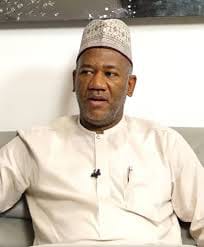
Senator Yusuf Datti Baba-Ahmed, the former Labour Party vice-presidential candidate who contested alongside Peter Obi in the 2023 general election and a former senator, recently did exactly that in an interview on Channels Television’s Mic On podcast hosted by Seun Okinbaloye.
His claims — about spiritual influences and alleged disappearances near Nigeria’s borders during elections — may sound sensational, even conspiratorial. Yet they raise questions too serious to be dismissed with laughter or partisan insults.This is not a defense of Baba-Ahmed. It is a defense of Nigeria’s democracy.
And democracy, fragile as ours remains, cannot afford silence when allegations touch on its very foundation: the sanctity of the vote and the safety of citizens.In the interview aired on September 5, 2026, Baba-Ahmed suggested that certain political choices may have been influenced by spiritual advice. He went further, asking rhetorically about “friends in those countries,”
what business brings them across Nigeria’s borders, and why, in his account, people go missing near border communities on election day. On the surface, these remarks sound like political theater.
But beneath them lies a serious charge: that Nigeria’s electoral process may be compromised by foreign influence and that citizens may be unsafe during elections in border regions.
If true, these would represent one of the gravest threats to electoral integrity in Nigeria’s history.
If false, they deserve to be formally clarified so that citizens are not left to draw their own conclusions from viral podcast clips.It must be said plainly: Baba-Ahmed offered no evidence. No documents, no witnesses, no police reports.
He did not name the spiritual figures he referenced, nor identify the border communities where disappearances allegedly occur. Several commentators have dismissed his remarks as unsubstantiated, noting that genuine intelligence about cross-border interference should be submitted through formal petitions, not podcasts. That criticism is fair. But it does not close the matter.
Nigeria’s electoral history already carries scars of irregularities along porous borders. Election observers have long warned of ballot materials crossing boundaries, foreign nationals allegedly voting, and unusual activity in border towns. Against that backdrop, even unsubstantiated claims deserve a response — not silence.Silence, in fact, is the most dangerous option.
When a former vice-presidential candidate suggests that citizens vanish near border communities on election day, the Department of State Services, the police, and the Immigration Service cannot simply shrug.
Their refusal to speak leaves the public to fill the vacuum with suspicion, rumor, and ethnic tension. In a fragile democracy, that is a recipe for mistrust.
The spiritual allegation may sound like gossip, but it touches on another uncomfortable truth: Nigerians have long debated the role of spirituality in politics.
If senior officials are guided by spiritual advisers in ways that intersect with elections, the public deserves clarity. If the claim is baseless, then let it be clarified with facts, not dismissed with insults.
And here lies a deeper layer that Baba-Ahmed himself hinted at but refused to fully disclose. At one point in the interview, he told Seun Okinbaloye not to push him to say certain things. That hesitation raises its own questions: what does he know about the borders that the public does not? Could it be that some spiritual figures carry out rituals at the borders, burying objects or conducting activities that intertwine with political events?
Are there practices that, while not directly tied to any one official, reflect longstanding traditions of spiritual manipulation in border communities? Baba-Ahmed’s reluctance to elaborate suggests that his allegations may not have been aimed squarely at individuals, but at a broader phenomenon — one he unconsciously mentioned, one that remains hidden from public view. If such practices exist, they deserve investigation, not dismissal.Nigeria’s northern borders are notoriously porous. Communities straddle boundaries with Niger, Chad, and Cameroon, often sharing ethnic and cultural ties that blur the line between citizen and foreigner.
During elections, observers have documented irregularities: ballot papers appearing across borders, allegations of foreign nationals voting, and sudden surges in voter numbers in border towns.
These are not figments of imagination; they are recorded vulnerabilities. That is why Baba-Ahmed’s allegations, however unsubstantiated, resonate. They tap into existing fears.
They remind Nigerians of past irregularities. And they demand answers from institutions tasked with safeguarding democracy.The DSS, the police, and the Immigration Service exist to protect Nigeria’s sovereignty and citizens. INEC’s security desk exists to safeguard elections.
When allegations touch on their core responsibilities, silence is dereliction. Nigerians deserve either an investigation with public findings or a formal rebuttal grounded in evidence. Neither has happened. This is not about politics.
It is about trust. Without trust, elections lose legitimacy. And without legitimacy, democracy collapses.Some commentators argue that Baba-Ahmed’s remarks should be ignored as the mutterings of a defeated politician. That is shortsighted. Treating his claims with caution is different from refusing to investigate them.
Dismissal breeds suspicion. Investigation breeds trust. Nigeria’s democracy is too fragile to rely on dismissal. It requires transparency, accountability, and responsiveness. When allegations arise, institutions must respond.
Not to dignify the accuser, but to protect the system.Nigeria’s electoral history is littered with allegations of irregularities. From ballot stuffing to voter intimidation, from ghost voters to cross-border interference, the system has faced repeated challenges. Each time, silence from institutions has fueled suspicion. Each time, lack of transparency has eroded trust.
The lesson is clear: silence is not an option. Institutions must speak. They must investigate. They must reassure citizens that democracy is safe.At stake is not Baba-Ahmed’s reputation.
At stake is Nigeria’s democracy. If citizens believe elections are compromised, they lose faith in the system. If they lose faith, they disengage. And disengagement is the death of democracy. That is why allegations, however unsubstantiated, must be addressed.
Not to vindicate the accuser, but to protect the system.Nigeria’s security agencies must act. They must investigate Baba-Ahmed’s claims. They must publish findings. They must reassure citizens. If the claims are false, they must be clarified with evidence. If true, they must be addressed with urgency. Silence is not neutrality. Silence is abdication.
And in the battle for public trust, abdication is defeat.Baba-Ahmed’s allegations may be speculative. They may be unsubstantiated. But they touch on vulnerabilities that Nigerians already fear. They demand answers. Not from politicians trading insults. Not from commentators dismissing claims.
But from institutions tasked with safeguarding democracy. Nigeria’s democracy is fragile. It cannot afford silence. It cannot afford dismissal.
It demands transparency. It demands accountability. It demands answers.Until the DSS, police, Immigration, and INEC speak clearly, the matter remains unresolved — an open question hanging over Nigeria’s democracy, believed by some, dismissed by others, and investigated by no one.📩
*For reflections and further conversation, contact samuelagogo4one@yahoo.com or +2348055847364.*