
Opinion
COBRA’S WORST NIGHTMARE: Inside the Secretary Bird’s Lightning-Fast Kill Strike

_By Sam Agogo_
Across the open grasslands of Africa, a tall, long-legged bird strides through the vegetation with the calm confidence of a man out for an evening walk.
Its head is crowned with elegant black plumes, and its eyes seem softened by long lashes. To the casual observer, it may appear almost comical. To a snake, rodent or grasshopper, however, it is a relentless predator and often the last thing they will ever see.
Meet the Secretary Bird, one of the world’s most extraordinary birds of prey and one of Africa’s most threatened wildlife species.

Known scientifically as Sagittarius serpentarius, the Secretary Bird belongs to the raptor family, making it a relative of eagles, hawks and kites. Yet it stands apart from them all. It is the sole surviving member of the family Sagittariidae, an ancient lineage with no close living relatives anywhere on Earth.
Standing about four feet tall with a wingspan reaching nearly two metres and weighing between two and four kilogrammes, the Secretary Bird is instantly recognizable. Its most remarkable feature, however, is not its striking appearance but its extraordinarily long legs, the longest of any bird of prey.

Unlike eagles that hunt from the sky, the Secretary Bird is a ground hunter. It spends much of its day walking through grasslands and savannas, covering distances of up to 30 kilometres while scanning the ground for movement.
Once prey is spotted, the deadly performance begins.
Scientists have recorded the bird’s killing strike at roughly fifteen thousandths of a second. Delivering a force estimated to be about five times its own body weight, the Secretary Bird unleashes a crushing kick capable of killing small animals instantly.
When confronting more dangerous prey such as venomous snakes, it repeatedly stamps with astonishing speed and precision until the threat is neutralized.
The strategy is highly effective. Its long legs keep its body safely beyond the reach of fangs, while tough scales provide additional protection. Cobras, puff adders and even mambas regularly feature on its menu.
The bird’s appetite extends well beyond snakes. It feeds on insects, rodents, hares, lizards, eggs, young birds and even small tortoises. In some regions, Secretary Birds have been observed following grass fires, seizing animals that flee ahead of the flames.
Its unusual name has intrigued people for centuries. One popular theory suggests that the long black feathers at the back of its head reminded early European settlers of the quill pens that secretaries once tucked behind their ears. Another theory traces the name to an Arabic phrase meaning “hunter bird.” Whatever its true origin, the name has endured.
The Secretary Bird inhabits much of sub-Saharan Africa, stretching from Senegal in the west to Somalia and Ethiopia in the east, and southward to South Africa’s Cape region. In Nigeria, it is found mainly in the northern savanna zones where open landscapes allow it to hunt effectively.
Dense forests are unsuitable for the species. The bird requires open country where it can walk freely and detect movement from a distance.
Although capable of powerful flight, the Secretary Bird spends most of its life on the ground. At dusk, it retreats to the crowns of acacia trees to roost. These same trees often host its enormous nests, sprawling platforms of sticks that may exceed two metres in diameter.
Secretary Birds typically form lifelong pair bonds. Their courtship displays include soaring flights, aerial chases and loud calling. A nesting pair may return to the same nest year after year, continually expanding and reinforcing it.
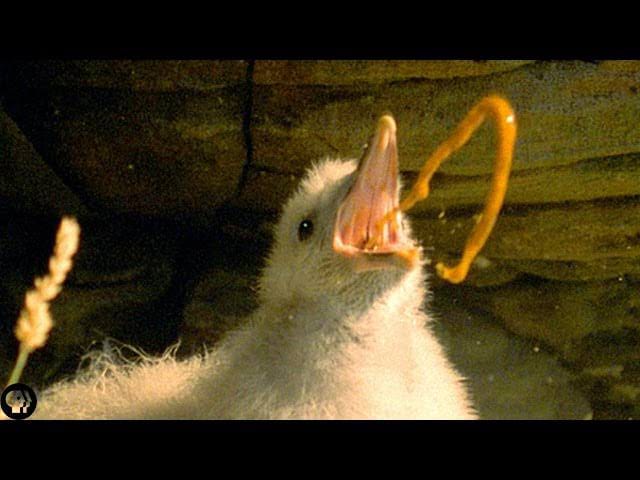
The female usually lays two or three eggs, which are incubated for about 45 days. The male assists by bringing food while the female performs most of the incubation duties. Newly hatched chicks are helpless and depend entirely on their parents.
Life is precarious for young Secretary Birds. Chicks occasionally fall from their lofty nests, and survival rates are low. In many cases, only one or two offspring from a clutch eventually reach adulthood.
Despite its formidable hunting abilities, the Secretary Bird faces a far more dangerous enemy: human activity.
In recent years, conservationists have raised serious alarm over the species’ decline. Across Africa, grasslands are being converted to farmland, degraded by overgrazing or lost to expanding settlements. Power lines, roads, poisoning, trapping and illegal wildlife trade have further reduced populations.
The species reproduces slowly, making recovery difficult when numbers fall.
The loss of the Secretary Bird would have consequences beyond conservation. By consuming large numbers of rodents and venomous snakes, it provides a valuable ecological service to farmers and rural communities.
The bird is also deeply embedded in African heritage. It appears on the national symbols of both South Africa and Sudan, representing vigilance, strength and protection.
Conservationists insist the species can still be saved. Protecting grasslands, preserving nesting trees, reducing poisoning incidents, making power infrastructure safer for wildlife and strengthening enforcement against illegal trapping could help reverse its decline.
Ultimately, the future of the Secretary Bird will depend on how Africa values and protects its remaining wild landscapes.
A bird capable of facing down a cobra with fearless precision deserves better than to disappear through neglect.
For comments, reflections and further conversation:
Email: samuelagogo4one@yahoo.com
Phone: +2348055847364