
Business and Economy
Tinubu’s Policies Creating Investment Opportunities in Nigeria’s Ports – Dantsoho.

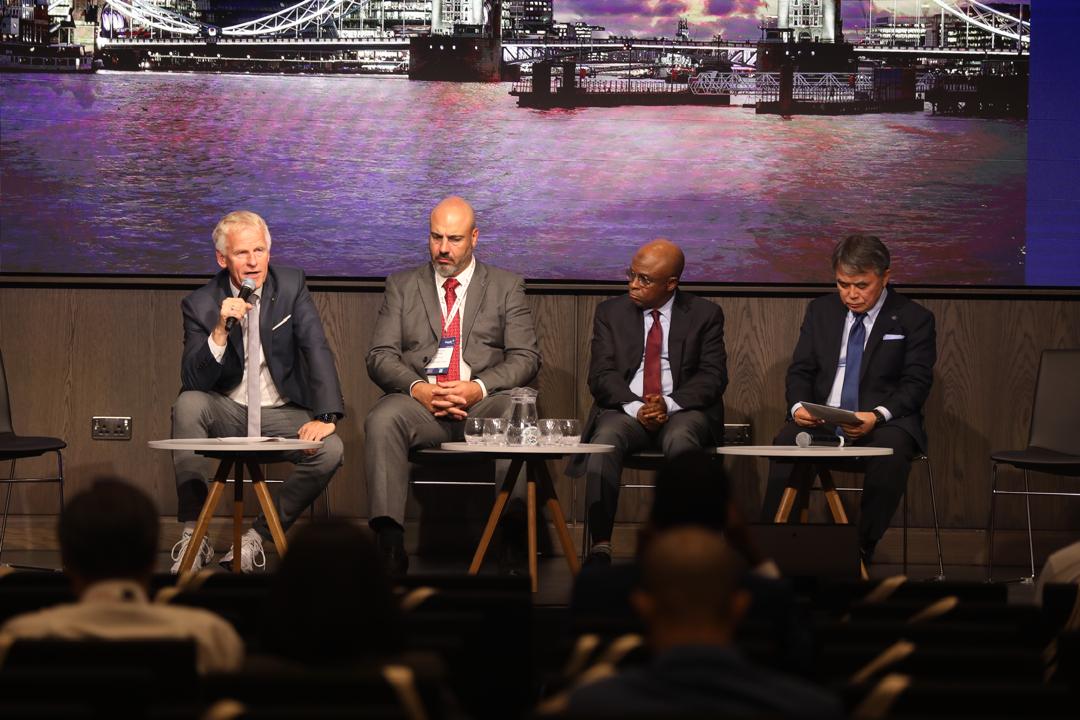
The Managing Director of the Nigerian Ports Authority (NPA), Dr Abubakar Dantsoho, on Tuesday showcased President Bola Ahmed Tinubu’s maritime policies and Nigeria’s positioning as Africa’s largest economy seeking global investment at the ongoing World Ports Conference in London.
He affirmed that the pace of growth and development in the country’s ports reflects the enormous investment opportunities available to investors, adding that the administration of President Bola Ahmed Tinubu has introduced policies designed to create an investment-friendly environment.
Addressing a select group of maritime investors from across the globe at the conference, the NPA Managing Director identified Nigeria’s huge population, urbanisation and infrastructural gaps in the ports sector as attractive opportunities for investment in maritime and related industries.
Dr Dantsoho, who is the Vice-President of the International Association of Ports & Harbours (IAPH) and Chairman of the Port Management Association of West and Central Africa (PMAWCA), told investors that Africa’s untapped resources make the continent an attractive destination for port investment and development.
He said governments alone cannot finance the development of bigger or deeper seaports and other similar projects, stressing the need for investors to take advantage of the available opportunities across the continent.

The NPA boss said: “Nigeria at independence in 1960 had a population of 45 million people. Today, about 60 years later, there are more than 260 million people. The investment needed in ports to meet this expansion and growth can only happen if the requisite private investment is attracted and retained, which is what President Tinubu has created the enabling atmosphere for investors to thrive.
“In Nigeria, we identified that infrastructure gap, especially in our ports’ development, and we realised that we must do something quickly, both in terms of the capacity to receive bigger vessels for import and also the capacity to move higher numbers of cargo for export.

“Also, again, it is important to note that the development, growth or expansion in the area of infrastructure is capital-intensive. So, the governments in both West Africa and generally in Africa have realised that the government cannot fund the development of bigger or deeper seaports, hence the need for your investment to move speedily into Africa.”
Dr Dantsoho further affirmed that Nigeria has the highest population in Africa, noting that the country’s rapid growth should be a major consideration for investors.
He said: “Nigeria has the highest population in Africa. So, the speed of growth is something that really should concern us. For example, in Nigeria, only recently, about three years ago, we commissioned the first deep-sea port in Nigeria, which is called Lekki Deep Sea Port. It was funded by the Chinese government in relationship with China Harbour, and the expenditure cost us $1.6 billion to build Lekki in Lagos.
“But as of today, just about three years later, the capacity of the new deep-sea port, that is Lekki, has been exhausted. So, which means that clearly, we need more capacity to be able to contain the volumes.
“And for us as Port Authority, we are happy that we are capturing more of the cargo, the volumes are going up, because that is the only way that we can also increase our value, the revenue that we expect to make from these transactions.
“So generally, this is the picture of not only Nigeria but also West African countries, starting from Cotonou in Benin Republic, up to Togo, Seme, up to Ghana, up to Abidjan, that is Côte d’Ivoire, which are close to Nigeria.
“Also, however, it is important to say that now, in terms of traffic, most of the cargo that comes to West Africa definitely ends in the Nigerian market. And that’s for obvious reasons.
The population of Ghana is 34 million. The population of Côte d’Ivoire is 32 million. The population of Togo is 9 million. The population of Benin Republic is 14 million. So, most of the cargoes that come, mostly from China in this case, will end up in the Nigerian market.”