
Life Style
Wedding Cancelled, Dreams Shattered: Bride Speaks Out

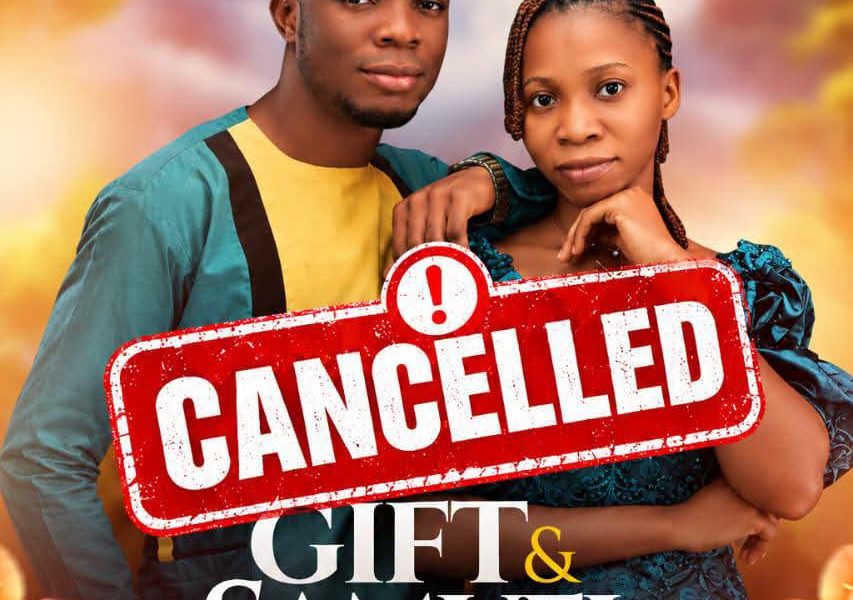
For Gift Oriaku, September 19, 2026, was supposed to be the day everything came together. Instead, the wedding she had long looked forward to was cancelled.
She woke up to a date that remained on the calendar but no longer carried the future she had attached to it.
Barely 24 hours earlier, Samuel Isaac Ogbonnaya, the man she expected to marry, had publicly announced that the wedding would no longer hold. In a Facebook statement, he said
“irreconcilable developments” had arisen and apologised to relatives, friends and guests affected by the cancellation.
The timing made Gift Oriaku’s situation particularly painful.
A wedding cancelled months in advance is difficult enough. But when it happens a day before the ceremony, preparations are usually already complete.
Guests may have begun travelling, clothes may have been sewn, while food, photography, decorations and accommodation may already have been paid for. Families may have announced the union, and the bride may have spent months anticipating the moment she would become a wife.
Then, suddenly, there was no wedding.
For Gift, there was also the added burden of public exposure.

The breakdown was no longer a private matter between two people, as her former groom had announced the cancellation publicly. Within hours, their names and photographs were circulating across social media and news platforms.
Every phone call could mean another explanation, while every message of sympathy could also serve as another reminder of what had happened.
Her subsequent decision to speak publicly suggests that she wanted her own account to be heard alongside the groom’s brief announcement.
Reports on her response indicate that she rejected narratives that portrayed the dispute mainly as being about material expectations. Instead, she pointed to communication failures and disagreements over major decisions concerning their proposed marriage.
That distinction is significant.
There could be heartbreak, disappointment, embarrassment, anger and even relief in such a situation — sometimes all at once. However, without Gift Oriaku explicitly identifying those emotions, they remain possibilities rather than conclusions.
Perhaps the most striking picture is a simple one: a woman reaching the morning that was supposed to be her wedding day and discovering that the meaning of the date had changed overnight.
The hall could be cancelled. The programme could be abandoned. Guests could turn around.
But expectations built over months do not disappear within 24 hours.
Beyond the viral posts and arguments over who was responsible lies a more personal reality: two people who had been preparing to become husband and wife are now publicly explaining why they never made it to the altar.