
Governance
ITF Holds 2nd National Sector Skills Councils’ Meeting Tasks Stakeholders On Industry -led And Sustainable Sector Development

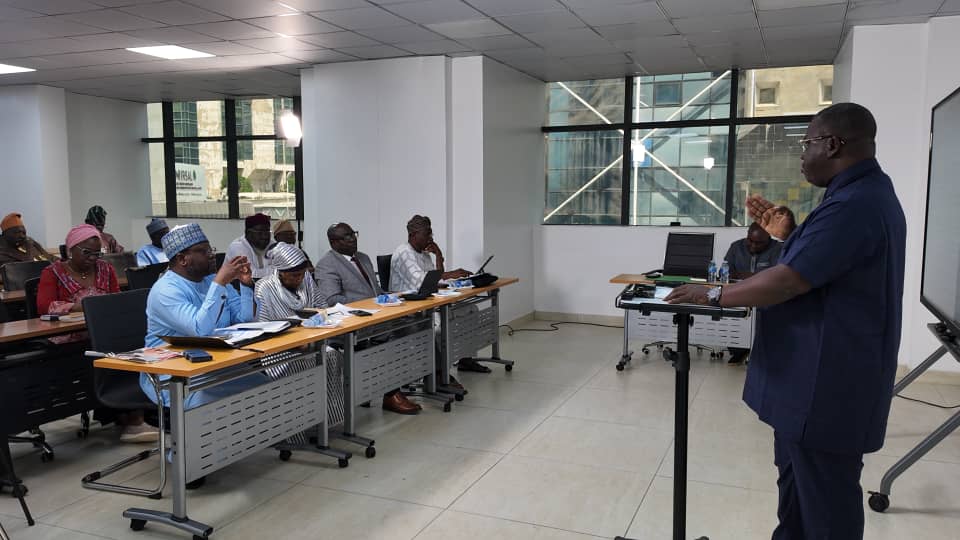
In its continuous efforts towards repositioning Nigeria’s Sector Skills Councils, the Industrial Training Fund, ITF, has held the second edition of its National Sector Skills Councils’ Meeting in Abuja.
The meeting with the theme ” From Assessment To Action: Advancing The Transition To Industry -led And Sustainable Sector Skills Councils’ was held at the ITF Skills House in Abuja and has German Society for International Cooperation, GIZ , an International Observer in attendance.
Declaring the meeting open, the Director General of Industrial Training Fund, ITF, Dr. Afiz Oluwatoyin Ogun said ITF would continue to initiate an important conversation on the need to strengthen the relevance, governance, industry participation and sustainability of Sector Skills Councils.
Dr. Afiz Oluwatoyin Ogun stated that stakeholders at the maiden edition of the meeting agreed on a baseline assessment process to establish a clearer understanding of current capacities, challenges and opportunities of existing SSCs.

“Today, we move from assessment to action and the objective is not change for its own sake, nor is it to diminish the contributions of existing Councils but we rather, seek to build on the structures and experience already available, address identified gaps and establish a credible pathway towards stronger, genuinely industry-led and sustainable Sector Skills Councils” the ITF Boss explained
According to him, for this transition to succeed, industry must have meaningful ownership while employers and industry associations must define skills priorities, shape occupational standards, support workplace learning and contribute to sustainable financing.

He therefore called on training institutions, government and development partners to play complementary roles within a coordinated national skills ecosystem.
In his words “The baseline assessment is therefore a tool for informed decision-making, not an end in itself and I expect our deliberations to translate evidence into realistic transition pathways, clear responsibilities, measurable milestones and practical support requirements”.
Dr. Afiz Oluwatoyin Ogun also encouraged every delegate at the meeting to approach the process with openness, candour and a shared commitment to Nigeria’s industrial development.
” We must be ambitious in our objectives, but pragmatic and inclusive in our implementation and
ITF remains committed to facilitating this process and working with relevant stakeholders to strengthen the connection between skills development, industry demand, employability and productivity” He pointed out
He emphasized the need for participants at the meeting to identify what needs to happen next, who is responsible, and within what timeframe.
Presentation were made by Representatives from the Hospitality and Tourism Sector Skills Council , Creative Media Sector Skills Council, Building Sector Skills Council, Automotive Sector Skills Council , Oil and Gas Sector Skills Council, Power Sector Skills Council, Care, Education and Training Sector Skills Council, Agriculture Sector Skills Council , Traditional Medicine Sector Skills Council and Geriatric Skills
In their separate remarks, some Representatives of the Sector Skills Councils, Dr. Bukola Dosumun from Care, Education and Training, Dr. Samson Opaoluwah from Building and Me Nnaemeka Ude-Emeh from Oil and Gas commended the Industrial Training Fund for its efforts towards repositioning Nigeria’s Sector Skills Councils.
They therefore stressed the need for the support of all stakeholders towards actualizing ITF’s objectives towards ensuring national industrial and economic development through the nation’s Sector Skills Councils.
Also speaking at the meeting, an Exoert from GIZ, Mr Jonathan Osadolor identified employers reflective training as key towards actualizing the aims and objectives of Sector Skills Councils.
Mr Jonathan Osadolor therefore promised the Organization’s capacity and technical support to ITF towards repositioning Nigeria’s Sector Skills Councils for national industrial and economic development.