
Business and Economy
Abuja Motor Fair: FG Moves to Strengthen Nigeria’s Automotive Industry.

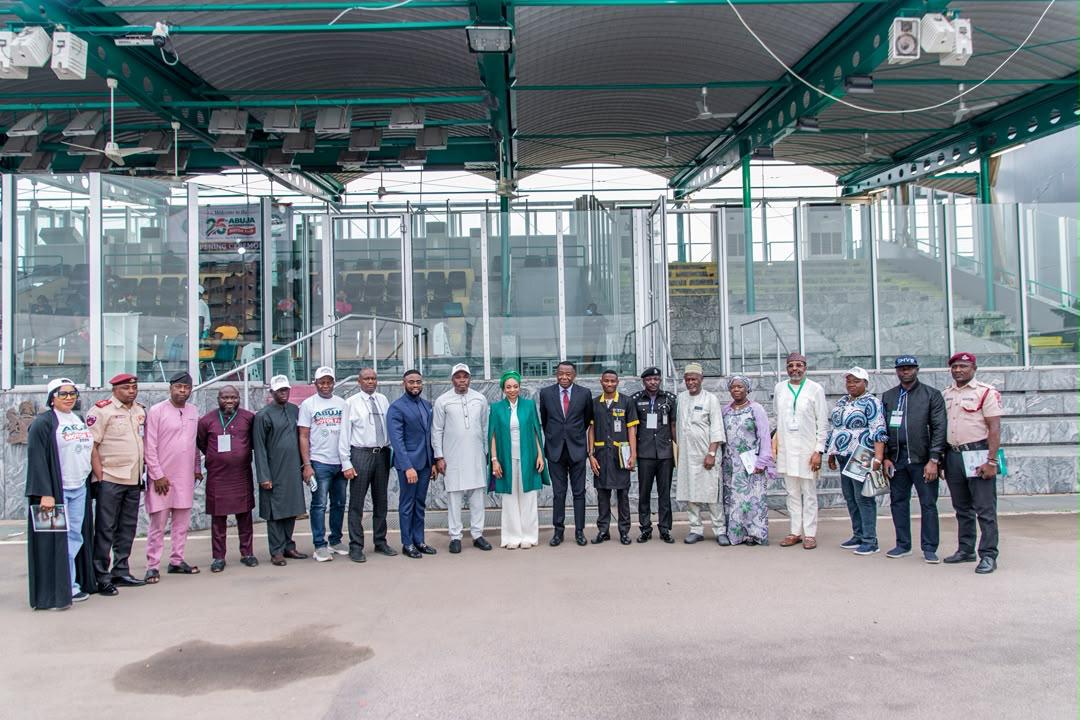
The 26th Abuja International Motor Fair has commenced with the Federal Government promising to partner with other African countries towards the growth and development of Nigeria’s automotive industry.
The Minister of Industry, Trade and Investment, Dr Jumoke Oduwole, made the promise while declaring open the 26th Abuja International Motor Fair in Abuja, organised by the National Automotive Design and Development Council (NADDC) in collaboration with a private organisation.
Dr Jumoke Oduwole described the nation’s automotive industry as key to actualising the Renewed Hope Agenda of President Bola Tinubu’s administration, particularly in the area of the Nigeria First Policy.
While commending NADDC for organising the annual motor fair, Dr Oduwole called for increased investment in Nigeria’s automotive sector to boost the country’s Gross Domestic Product (GDP).
Earlier, the Director General of the National Automotive Design and Development Council, NADDC, Mr Oluwemimo Osanipin, reiterated the Council’s commitment to repositioning the nation’s automotive industry for improved performance.
According to Mr Oluwemimo Osanipin, NADDC has put in place various modalities to enable Nigeria’s automotive industry contribute meaningfully to national economic development.
The NADDC Director General therefore advised Nigerians to develop keen interest in patronising Made-in-Nigeria vehicles, adding that the nation’s Automotive Policy would soon be reviewed to further enhance the growth of the sector.
He said, “For over two decades, this fair has served as the heart of West Africa’s automotive conversation—a living space where innovation meets policy, where engineering meets enterprise, and where Nigeria’s industrial future is put on full display right here at Eagle Square. Standing here today, one cannot help but reflect on the breathtaking evolution of the global automotive landscape.”
In his words, “Today, the quiet whisper of an Electric Vehicle—the complete silence of an EV drivetrain—can unleash that exact same power, that exact same speed, and extraordinary performance, all without a single drop of fuel or a puff of emission. Not so long ago, these technologies belonged to futuristic magazines, concept showcases, or sci-fi screens watched from afar. They were luxuries reserved for distant markets, out of reach for the everyday Nigerian.”
“What was once only seen through a TV screen is now brought right here, closer to home, onto Nigerian soil—for Nigerians to touch, to test, to feel, and to own. This transformation is the very essence of why the National Automotive Design and Development Council exists. Building a vibrant, self-sustaining local automotive industry is not an abstract economic goal.”
Mr Oluwemimo Osanipin said NADDC was building an industry where modern, reliable and clean vehicles are assembled by Nigerians, for Nigerians.
He added, “Every vehicle parked on this floor today represents a potential for local craftsmanship, skilled youth, domestic capacity, and economic empowerment. When a mass transit bus, a CNG-powered commercial van, or an electric car rolls off an assembly line in Lagos, Nnewi, or Kaduna, it creates direct jobs for our technicians, engineers, and spare parts manufacturers.”
“More importantly, it directly impacts the lives of ordinary citizens by driving down transport costs, increasing safety, and keeping our economy moving. This event is organised for you—the Nigerian, the fleet operator, the small business owner, the commuter, and the aspiring entrepreneur.”
He said the vehicles showcased across the grounds represented the best of what the nation’s automotive industry had to offer, including modern engineering tailored to Nigerian roads, climate and economic realities.
“As you walk through these displays over the next four days, do not just look at machines. Look at the future of Nigerian industrialisation. Look at our commitment to alternative energy, local component development, technical training, and sustainable mobility.
“Together, through public policy, private enterprise, and local patronage, we are steering Nigeria towards an auto industry that belongs to us, works for us, and builds prosperity for generations to come,” the NADDC boss added.