
Education
ASUU has warned that Nigerian universities may face another industrial crisis if the Federal Government fails to fully implement the 2025 agreement

By Dooshima Terkura, Makurdi
The Academic Staff Union of Universities (ASUU), Nsukka Zone, has warned that continued delay by the Federal Government in fully implementing the 2025 ASUU/Federal Government Agreement could lead to another round of industrial unrest in Nigerian universities.
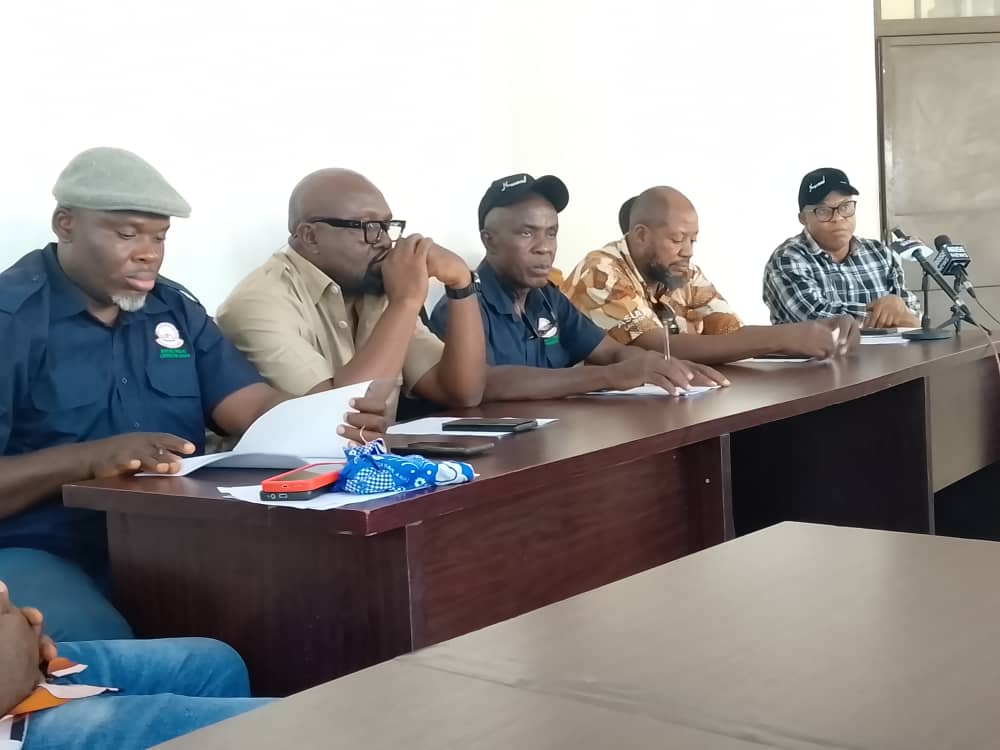
The warning was issued on Thursday by the Zonal Coordinator of the union, Christian Opata, during a press conference held at the premises of Rev. Fr. Moses Orshio Adasu University, Makurdi (MOAUM), formerly Benue State University (BSU).
Opata, who addressed journalists alongside former Zonal Coordinator Ralph Amokaha and other union leaders, accused the government of neglecting important aspects of the agreement reached earlier this year.
The union, made up of lecturers from eight universities including Benue State University Makurdi (BSU), Federal University of Agriculture Makurdi (FUAM), Enugu State University of Science and Technology (ESUT), Federal University of Health Sciences Otukpo (FUSHO), Kogi State University Anyigba (KSU), Federal University Lokoja (FUL), Federal University Wukari (FUW), and the University of Nigeria Nsukka (UNN), said the Federal Government had yet to inaugurate the Implementation Monitoring Committee expected to oversee compliance with the agreement.
ASUU also criticised the handling of the proposed National Research and Innovation Development Fund, alleging that the union was excluded despite being a signatory to the agreement.
According to the union, the agreement stipulates that at least one percent of Nigeria’s Gross Domestic Product should be dedicated to research and innovation funding.
The union further expressed dissatisfaction over the failure to incorporate allowances such as Consolidated Tools Allowance, Earned Academic Allowance, and Professorial Allowance into the Consolidated Academic Staff Salary Structure. It noted that inadequate funding had made implementation difficult in many universities.
Opata stated that while some universities were funding implementation through their Internally Generated Revenue (IGR), others were borrowing funds, while several institutions had not implemented the provisions at all.
ASUU also raised concerns over unresolved welfare matters, including unpaid salary arrears, withheld salaries from the 2022 ASUU strike, promotion arrears, pension remittances, and salary shortfalls linked to the Integrated Payroll and Personnel Information System (IPPIS).
The union further accused some governing councils and university administrations of interfering excessively in university affairs, pointing to developments at Benue State University as an example.
It also condemned what it described as questionable appointments and promotions to professorial positions in certain institutions, disclosing that four such cases were currently under investigation at the Federal University Lokoja.
Speaking on the welfare of retired lecturers, ASUU described delays in the payment of pensions and gratuities as unacceptable. The union cited the case of late Professor Targema Iorvaa of Benue State University, who allegedly died without receiving his retirement benefits, noting that such situations discourage commitment and hard work.
ASUU called on stakeholders in the education sector to prevail on both the federal and state governments to fully implement the 2025 agreement in order to prevent further disruption in the university system.
Also speaking, the National Investment Officer of ASUU, Celestine Aguoru, said the Federal Government had failed to fulfil its promise to begin implementation five months after the agreed timeline.
Aguoru disclosed that the union would hold an emergency meeting in the first week of June to determine its next course of action.
He lamented that many universities had resorted to borrowing funds to meet implementation demands, adding that several institutions could no longer sustain the situation.
According to him, many universities had indicated they might be forced to shut down due to financial challenges.
He urged Nigerians to hold the government responsible should universities eventually be closed again, stressing that ASUU does not embark on strikes willingly.
“Our children do not need to remain at home or roam the streets. We do not like strikes; we only resort to them as a last option. The government should be held responsible if ASUU goes on strike,” he said.
Aguoru appealed to the general public to intervene and urge the government to prevent the situation from escalating, adding that ASUU remains committed to keeping universities operational.