
Opinion
Bribery claims, denials and contradictions: Nigerians deserve the full truth.

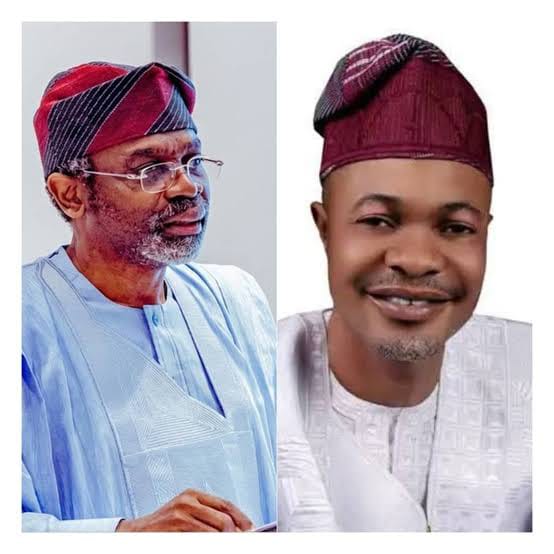
A bribery allegation involving the Office of the Chief of Staff to President Bola Tinubu has sparked serious concerns about the extent to which a government can absolve one of its own officials without an independent investigation.
Prince Adeniyi Adeyemi, who identifies himself as the Director-General of the Presidential Foreign Intervention Promotion Council, alleges that Chief of Staff Femi Gbajabiamila received N400 million through an intermediary, with an additional N200 million still outstanding. He further claims that Gbajabiamila demanded 48 per cent of a proposed N27.4 billion take-off grant intended for the council.
The Presidency has strongly denied the allegations, insisting that the council does not exist, that Adeyemi never held any government appointment, and that he is a fraud suspect currently facing an eight-count forgery charge before the Federal High Court in Abuja.
These opposing claims have raised difficult questions. The Presidential Foreign Intervention Promotion Council appeared in the 2026 Appropriation Act with a budgetary allocation of N1.3 billion, prompting many to ask how an organisation now described as fictitious found its way into the national budget. It is also on record that the Office of the Chief of Staff petitioned the Police and the Department of State Services (DSS) in October last year regarding the same Adeyemi it now says it barely recognised.
Rather than allowing constitutionally empowered anti-corruption agencies such as the ICPC or EFCC to investigate the matter and establish the facts, the Presidency has largely relied on public statements issued through its spokesman.
Another issue that has attracted attention concerns office accommodation. By Adeyemi’s account, the council operated from an office on the second floor of the Federal Secretariat Complex, Phase III, Abuja—a federal facility not ordinarily allocated to private individuals. If Adeyemi had no official connection to government, questions naturally arise over who authorised the office allocation and under what documentation. Critics argue that it is difficult to reconcile claims that he was unknown to government while simultaneously operating from a government office.
Senior lawyer Femi Falana has publicly maintained that the Presidency lacks the constitutional authority to clear anyone facing corruption allegations, insisting that such matters fall within the jurisdiction of law enforcement and anti-graft agencies. Adding to the controversy, letters purportedly issued by Senate and House of Representatives committees requesting oversight visits to the council have circulated on social media. Although their authenticity has not been confirmed, some observers believe the Presidency’s swift attempt to shape the public narrative before either chamber could respond has fuelled further scepticism.
The controversy also recalls earlier concerns about access to the Presidency. Months before Adeyemi’s allegations surfaced, Senator Ali Ndume, former Senate Chief Whip, told Arise News that some presidential aides allegedly demanded payments from visitors before arranging meetings with President Tinubu. Ndume, who lost his leadership position in 2024 following disagreements with the ruling party, described a system in which even senior lawmakers struggled to secure direct access to the President.
Similarly, Gbajabiamila’s name has previously surfaced in online discussions. Commentaries that have resurfaced this week refer to allegations from May 2024 involving retired Major General Barry Ndiomu, the former Interim Administrator of the Presidential Amnesty Programme before Dennis Otuaro’s appointment. Those claims, which originated from an online commentary platform and were never tested in court, suggested a financial arrangement linked to Ndiomu’s tenure. Neither allegation has been established as fact, and both men have remained largely silent. The references are mentioned only because many Nigerians have connected them to the present controversy while calling for an independent investigation that would benefit all parties, including the Presidency.
Attention has also focused on Adeyemi’s legal representation. Human rights lawyer Femi Falana has agreed to lead his defence, a development many consider noteworthy given that both Falana and Gbajabiamila are prominent Yoruba figures. Falana has questioned how a council allegedly described as non-existent secured a budget allocation and maintained accounts domiciled with the Central Bank of Nigeria if it had no legal standing.
There are also unresolved questions surrounding Dolapo Babatunde Tanimola, whom Adeyemi identifies as the intermediary in the alleged transaction. Tanimola reportedly died in a hotel fire in Abuja in October last year. Adeyemi has also alleged that he survived an attack along the Abuja-Kaduna Expressway during the same period. While these claims remain unverified, their seriousness underscores the need for proper investigation rather than outright dismissal. If there are genuine concerns about Adeyemi’s safety, the relevant security agencies should provide the necessary protection while investigations proceed.
At the same time, fairness demands scrutiny of every aspect of the allegations. By his own account, Adeyemi claims to have paid N400 million through an intermediary and intended to pay an additional N200 million. Under the Corrupt Practices and Other Related Offences Act, both offering and receiving bribes constitute criminal offences. While presenting himself as a whistleblower may entitle him to be heard, it does not remove any potential legal liability. A credible investigation should therefore examine not only the allegations against Gbajabiamila but also the source and circumstances of the funds Adeyemi claims to have paid.
Ultimately, what this controversy requires is neither louder accusations nor stronger denials. It calls for an independent investigation by agencies legally empowered to establish the facts, free from influence by the Presidency, the accuser or any interested party. Until such a process is concluded, every individual involved remains entitled to the presumption of innocence, while Nigerians deserve facts established through due process rather than conclusions reached in advance.
For comments, reflections and further conversation on this piece, kindly reach the writer via email at samuelagogo4one@yahoo.com.