
Agriculture
GAVmed Pushes Public-Private Partnership to Strengthen Poultry Disease Surveillance

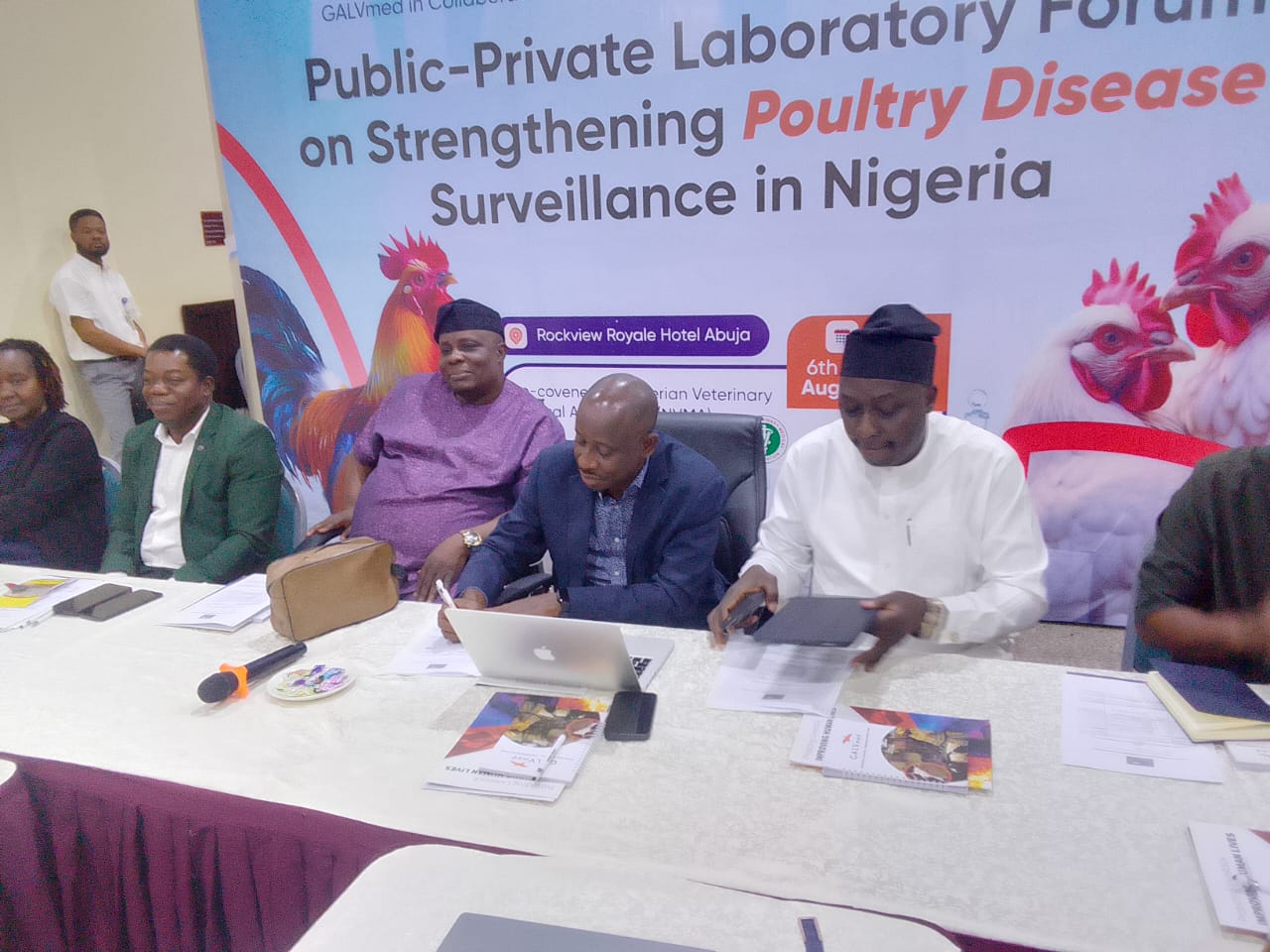
Stakeholders in Nigeria’s livestock sector have called for the integration of private veterinary laboratories into the country’s animal disease surveillance system to improve disease detection, strengthen reporting and enhance preparedness for disease outbreaks.


The call was made on Thursday in Abuja during a stakeholders’ meeting on strengthening Nigeria’s veterinary laboratory network.

Director of Infectious and Transboundary Animal Diseases at the National Veterinary Research Institute (NVRI), Professor Clement Meseko, said effective disease surveillance can only be achieved through collaboration among all actors within the veterinary laboratory ecosystem. He explained that although NVRI serves as the national reference laboratory, it is far removed from grassroots communities where critical surveillance data are generated. He said stronger partnerships with state, local government and private veterinary laboratories would ensure that disease information from the grassroots is captured, reported promptly and integrated into the national surveillance system.
Meseko noted that private laboratories are often closer to livestock farmers and can play a vital role in collecting samples and reporting suspected outbreaks before they reach state and national reference laboratories. He added that integrating surveillance data from both public and private laboratories would provide Nigeria with stronger evidence for planning and controlling infectious diseases. He also urged the government to strengthen and incentivise private laboratories, saying such support would expand access to quality disease surveillance data and benefit the country.
Country Manager of the Global Alliance for Livestock Veterinary Medicines (GALVmed) Nigeria, Moses Arokoyo, identified poor reporting and fragmented data collection as major weaknesses in Nigeria’s animal disease surveillance system. He said disease outbreaks and incidents often go undocumented, making it difficult to identify patterns for predicting and responding to emergencies. According to him, harmonising data from public and private laboratories would significantly improve Nigeria’s preparedness for disease outbreaks.
Arokoyo disclosed that GALVmed is supporting efforts to integrate reporting through the National Animal Disease Information Service (NADIS) to ensure that data from both public and private laboratories are harmonised and centralised. He stressed that the organisation is committed to helping Nigeria build a robust disease reporting system, adding that the country can no longer afford to operate in silos.
President of the Veterinary Council of Nigeria, Matthew Adamu, called on the government to strengthen veterinary laboratory infrastructure at the state and local government levels. While acknowledging NVRI’s position as Nigeria’s foremost reference laboratory and its international recognition by the World Organisation for Animal Health, he said major gaps still exist at the sub-national level. He urged the government to equip veterinary teaching hospitals and state laboratories while investing in personnel recruitment, training and retraining to meet international standards.
The stakeholders maintained that stronger collaboration among government institutions, veterinary teaching hospitals and private laboratories would improve disease surveillance, support early detection of outbreaks and strengthen Nigeria’s livestock health system.
Chief Veterinary Officer of Nigeria, Dr. Samuel Anzaku, represented by Dr. Adeniyi Adedoyin, also called for an urgent change in attitude towards disease data reporting. He warned that fragmentation and under-reporting continue to undermine Nigeria’s ability to control poultry diseases. Recalling that the issue had been raised several years ago, he questioned why teaching hospitals, public laboratories and private laboratories still maintain separate datasets instead of reporting through the National Animal Disease Information System (NADIS), as required under the Animal Disease Control Act.
He explained that the law mandates State Directors of Veterinary Services to collect disease data from veterinary teaching hospitals and private practitioners for integration into NADIS. However, he lamented that under-reporting has persisted for the past decade despite the existing legal framework. According to him, the goal is to generate processed information that can be integrated into the national system rather than merely collecting raw data. He noted that while the human health and pharmaceutical sectors have harmonised their surveillance systems, the veterinary sector continues to lag behind.
Also speaking, Director General of the Poultry Association of Nigeria (PAN), Dr. Onallo Akpa, called for greater investment in research and laboratory capacity to tackle Newcastle Disease and other endemic poultry diseases affecting the industry. He described poultry as the most organised sub-sector of Nigeria’s livestock industry and a major contributor to employment, empowerment and national economic development.
Akpa urged participants to move beyond discussions and focus on practical research and laboratory-based solutions. He tasked stakeholders at the two-day meeting with identifying existing gaps and developing strategies to reduce the prevalence of poultry diseases and minimise their economic impact on Nigeria’s livestock sector.