
General News
“We are not asking for shortcuts”—Aisha Abdullahi Adamu speaks for a generation ready to lead, not wait.

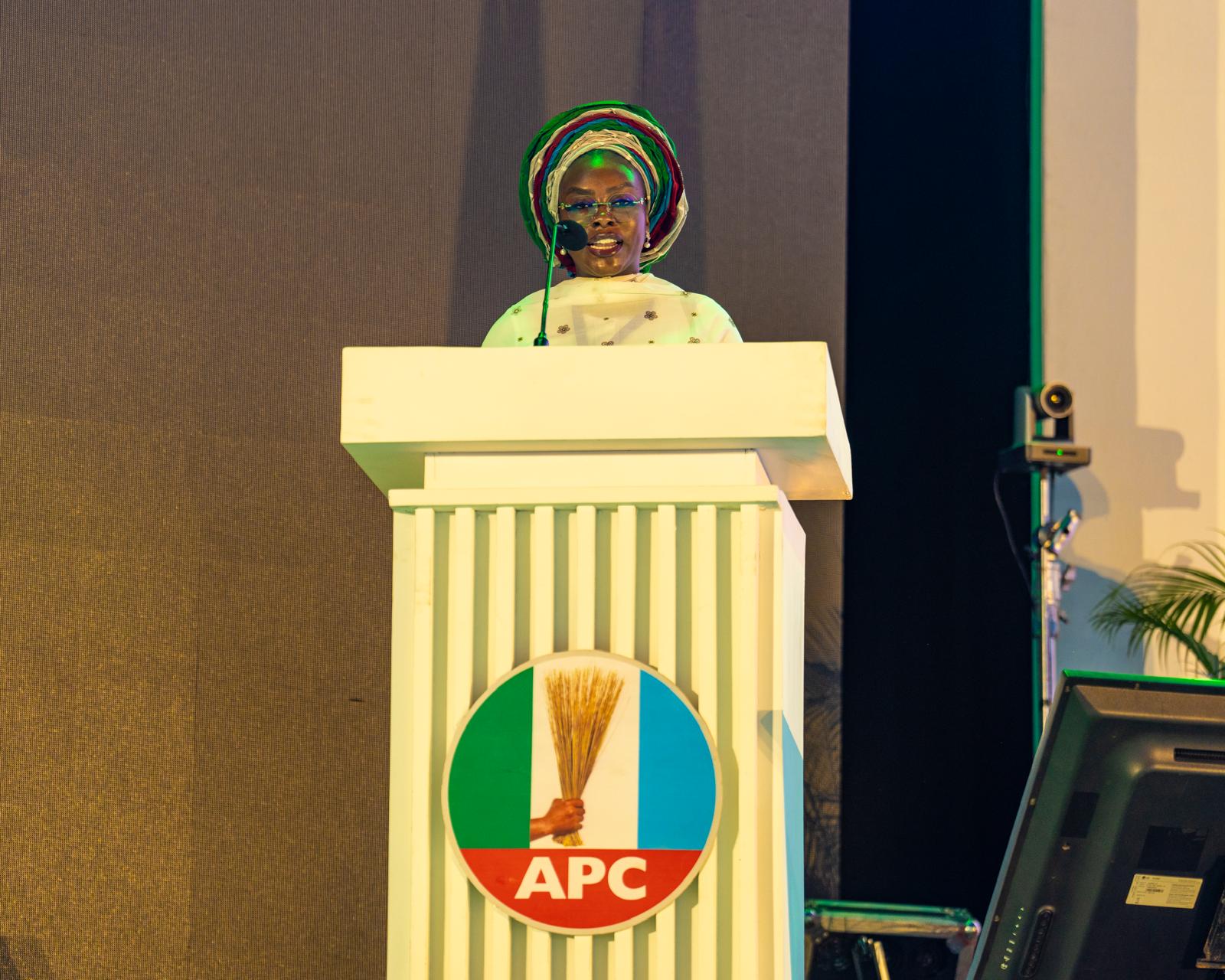
Aisha Abdullahi Adamu: The Youth Voice That Commanded the APC Stage
In what has rapidly emerged as one of the defining moments of the All Progressives Congress (APC) National Convention, Aisha Abdullahi Adamu delivered a powerful and emotionally compelling goodwill message, firmly establishing herself as one of the most influential youth voices in Nigeria’s political space today.
Speaking in her capacity as Youth Representative, Aisha went beyond a ceremonial duty, capturing the spirit and concerns of an entire generation.
With remarkable clarity, composure, and conviction, she expressed the aspirations, frustrations, and determination of young Nigerians in a way that resonated across the hall. Her widely quoted statement, “We are not asking for shortcuts. We are asking for opportunity. And give us the opportunity, and we will not disappoint this nation,” drew resounding applause and has since gained traction across media and political discussions.
Blending optimism with a strong sense of responsibility, Aisha portrayed Nigerian youth not as passive recipients but as active drivers of national development. She highlighted resilience, innovation, and the urgent need for inclusion, while reaffirming alignment with the leadership of Bola Ahmed Tinubu.
“Across our cities and villages, young Nigerians are not idle. They are building, creating, working, and striving,” she stated, challenging outdated perceptions and redefining the narrative around the nation’s youth.
She also underscored the role of the APC in advancing youth participation through intentional policies, broader access, and greater inclusion in governance and economic opportunities, presenting the party as a vehicle for both continuity and renewal.
Observers noted that her delivery stood out not because of theatrics, but due to its calm authority and emotional depth—qualities that resonated with both senior party leaders and younger delegates.
Her recognition of youth mobilisation efforts, including those championed by Seyi Tinubu, reinforced a central message: that organised and empowered youth are vital to stability, progress, and the long-term sustainability of Nigeria’s political and economic future.
Concluding with the powerful declaration, “Nigeria is not retreating. Nigeria is rising,” Aisha left a lasting impression that extended well beyond the convention hall, signaling the rise of a new generation prepared not just to participate, but to lead.
As post-convention discussions continue, one thing remains evident: Aisha Abdullahi Adamu did more than speak for the youth—she positioned herself as a defining voice shaping Nigeria’s future.
MATHEW AYOOLA