
International
Hormuz Tensions Rise: Strait of Hormuz faces near shutdown as Iran tightens control over global oil flow.

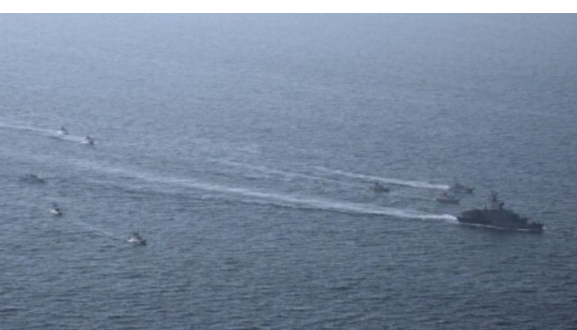
GREATRIBUNETVNEWS – The Strait of Hormuz has slowed to near paralysis, with vessel movement dropping to less than 10 percent of its usual volume despite an existing ceasefire between the United States and Iran. Iran continues to assert dominance, instructing ships to remain within its territorial waters.
Key Issues:
– “Iran must open the strait without conditions.” – ADNOC CEO
– Traffic Disruption: Only seven ships transited the strait within 24 hours, compared to the usual 140.
– Oil Prices: Physical crude grades have surged to new all-time highs following a 20 percent cut in global supply.
– Naval Mines Risk: The Islamic Revolutionary Guard Corps (IRGC) has directed vessels to pass through Iranian-controlled waters near Larak Island.
– Backlog: Hundreds of oil tankers remain stranded, with clearing operations expected to exceed two weeks.
Ships are now required to enter the strait north of Larak Island and exit south of it, under coordination with the IRGC navy, according to Tasnim. Maritime security firm Ambrey warned that vessels lacking Iranian authorization—especially those linked to Israel and the U.S.—face heightened risks.
“Even vessels with apparent clearance have been turned back mid-journey in recent weeks,” the advisory stated.
Tolls and Cryptocurrency Concerns
Reports indicate that Iran may introduce transit tolls, with some estimates placing the fee at $2 million per vessel. Ship-tracking data shows that several vessels have already diverted around Larak Island.
Western governments have rejected the idea of paying such fees.
An Indian-flagged LPG tanker, Pine Gas, recently navigated the alternative route around Larak Island without paying tolls or being boarded by the IRGC, according to its chief officer, Sohan Lal, who spoke with Reuters.
The International Maritime Organization (IMO) emphasized that no global agreement permits tolls for passage through international straits, warning that such a move would set a dangerous precedent.
Further reports suggest Iran may demand payments in cryptocurrency to maintain its control over the strait during the two-week ceasefire, according to statements attributed to Hamid Hosseini of Iran’s Oil, Gas and Petrochemical Products Exporters’ Union.
Meanwhile, Japanese shipping giant Mitsui O.S.K. Lines has successfully navigated three tankers out of the strait in recent days. The firm is awaiting further direction from the Japanese government on how to operate during the ceasefire, its CEO Jotaro Tamura told Reuters.
India has also granted waivers allowing two Iranian cargo shipments—including LPG used for cooking—to enter its ports, as the country grapples with one of its worst gas shortages in decades and has introduced rationing measures.
The United States recently issued a temporary waiver on Iranian oil exports, set to expire on April 19, in an effort to stabilize global supply and ease rising fuel costs.
Since February 28, at least 23 Iranian-flagged tankers have reached Asia, maintaining pre-conflict shipment levels, according to U.S.-based advocacy group United Against Nuclear Iran (UANI), which tracks Iranian maritime activity.
The ongoing disruption has driven global oil prices to record highs, sending shockwaves across international energy markets.
WITH ADDITIONAL REPORT FROM REUTERS