
International
Bruno Lafont jailed as court finds Lafarge guilty of financing jihadists in Syria.

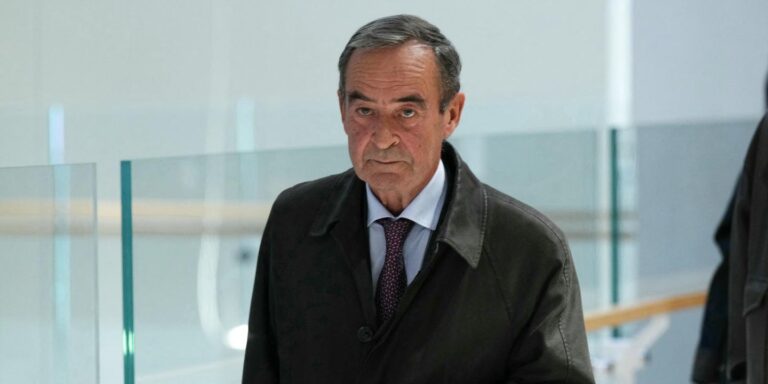
A court in Paris on Monday found cement giant Lafarge, now owned by Switzerland’s Holcim, guilty of financing jihadist groups, including the Islamic State, to sustain operations at its plant in northern Syria during the civil war.
The company’s former CEO, Bruno Lafont, was sentenced to six years in prison, while former deputy managing director Christian Herrault received a five-year sentence.
The court determined that Lafarge, through its subsidiary Lafarge Cement Syria (LCS), paid nearly €5.6 million between 2013 and 2014 to jihadist groups and intermediaries. These payments enabled the company to keep its Jalabiya plant running amid the conflict.
According to presiding judge Isabelle Prevost-Desprez, the funding—primarily directed to the Islamic State—played a significant role in helping the group secure control over Syria’s natural resources and finance terrorist activities both regionally and internationally, including in Europe. She described the relationship as a “genuine commercial partnership” and emphasized the seriousness of the offences, noting that the payments were never disclosed.
Lafarge completed construction of its $680 million plant in Jalabiya in 2010, just before the Syrian civil war erupted in 2011 following unrest against former President Bashar al-Assad. While most multinational firms exited Syria by 2012, Lafarge maintained operations, withdrawing expatriate staff but keeping local employees until September 2014, when Islamic State fighters took over the facility.
During 2013 and 2014, LCS reportedly paid intermediaries to secure access to raw materials, ensure safe passage for trucks, and maintain staff mobility. Payments were made not only to the Islamic State but also to other groups, including Jabhat al-Nusra.
The case involves Lafarge, its former CEO, several ex-staff members, and Syrian intermediaries. All eight former employees charged were found guilty of financing terrorism.
France’s national counter-terrorism prosecutor’s office argued that the company acted with “a single aim: profit,” seeking the maximum fine of €1.12 million alongside asset confiscation worth €30 million.
During proceedings, Herrault defended the decision to keep the factory operational, citing concern for local employees. He argued that abandoning the site could have left workers vulnerable.
The ruling follows a 2022 case in the United States where Lafarge admitted to supporting terrorist organisations and agreed to pay a $778 million fine—the first time a corporation faced such charges.
Holcim, which acquired Lafarge in 2015, has maintained it had no knowledge of the Syria-related dealings.
Meanwhile, a separate case involving allegations of complicity in crimes against humanity is still ongoing.
The Islamic State’s self-declared “caliphate” across parts of Syria and Iraq was eventually dismantled in 2019 by Kurdish-led forces backed by U.S. airstrikes.
Investigations into Lafarge’s activities began in France in 2017 following media revelations and complaints filed in 2016, including one from the finance ministry over suspected violations of economic sanctions and others from NGOs and former employees alleging terrorism financing.