
International
Trump dispatches envoys to Pakistan as Iran insists on indirect negotiations amid fragile ceasefire

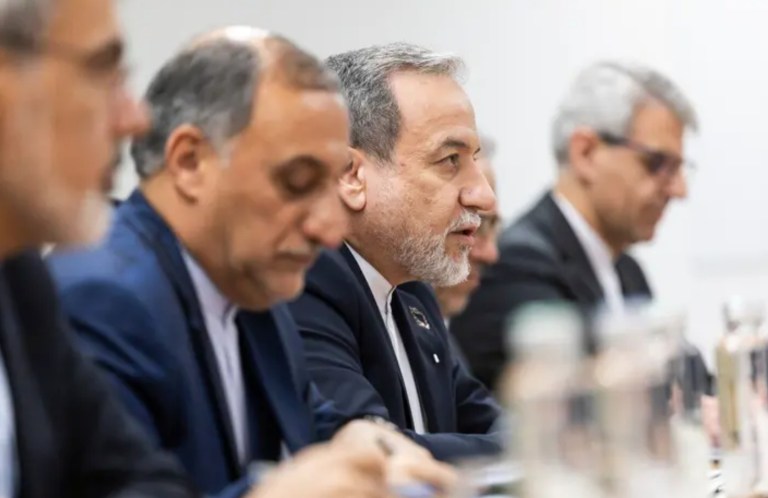
U.S. envoys are set to arrive in Pakistan on Saturday in a renewed effort to revive ceasefire negotiations with Tehran, even as Iran has ruled out direct talks with American officials. This comes as Iran’s top diplomat landed in Islamabad.
The latest diplomatic push follows an indefinite ceasefire that has largely halted hostilities, though economic pressures continue to rise due to disruptions in global energy shipments caused by the closure of the Strait of Hormuz.
Pakistan works to get US and Iran back to the negotiating table
Pakistan has been actively working to bring both U.S. and Iranian representatives back to negotiations. Earlier this week, President Donald Trump announced an indefinite extension of the ceasefire with Iran, honoring Islamabad’s request to allow more time for diplomatic engagement.
On Friday, the White House confirmed that Trump would send Steve Witkoff and Jared Kushner to meet Iran’s Foreign Minister Abbas Araghchi. However, shortly after Araghchi’s arrival in Islamabad, his ministry stated that any discussions would be conducted indirectly, with Pakistani officials relaying messages between both sides.
Previously, Araghchi and the U.S. envoys held several hours of indirect discussions in Geneva on February 27 regarding Tehran’s nuclear program, but no agreement was reached. The following day, Israel and the United States launched military action against Iran.
White House Press Secretary Karoline Leavitt told Fox News that Trump had chosen to send Witkoff and Kushner to Pakistan “to hear the Iranians out.” She added that there had been some progress from Iran in recent days, though she did not provide specifics.
Trump extends the Jones Act waiver for 90 days
Separately, the White House announced that Trump has extended the Jones Act waiver for another 90 days, allowing foreign vessels easier access to transport oil and natural gas.
The waiver, initially introduced in March for 60 days, was aimed at stabilizing energy markets and facilitating shipments to the U.S. after the effective closure of the Strait of Hormuz — a crucial route that carries about one-fifth of the world’s oil during peacetime.
Iran has maintained control over traffic in the strait and reportedly attacked three ships earlier in the week. Meanwhile, the U.S. continues its blockade of Iranian ports, with Trump ordering military forces to take decisive action against small boats suspected of deploying mines.
Following the announcement, Brent crude oil prices declined slightly, fluctuating between $103 and over $107 per barrel — still nearly 50% higher than levels recorded on February 28, when the conflict began.
The disruption in shipments through the strait has also impacted global maritime trade, including traffic through the Panama Canal.
A growing toll even as ceasefires hold
Since the conflict began, at least 3,375 people have been killed in Iran, along with more than 2,490 in Lebanon, where clashes between Israel and the Iran-backed Hezbollah escalated shortly after the war started, according to officials.
Additionally, 23 deaths have been reported in Israel and more than a dozen in Gulf Arab countries. Casualties also include 15 Israeli soldiers in Lebanon and 13 U.S. service members across the region.
The United Nations peacekeeping mission in southern Lebanon has also suffered losses. UNIFIL confirmed that an Indonesian peacekeeper died from injuries sustained in a March 29 attack, bringing the total number of peacekeepers killed since the conflict began to six — four Indonesians and two French.
Tensions linger in Lebanon despite extended truce
Tensions remain high in Lebanon despite a ceasefire extension announced by Trump, under which Israel and Lebanon agreed to prolong the truce by three weeks. Hezbollah has not been directly involved in the U.S.-brokered negotiations.
Israeli Prime Minister Benjamin Netanyahu described the development as part of “a process to achieve a historic peace between Israel and Lebanon.”
Earlier, Israel’s military urged residents of the southern Lebanese village of Deir Aames to evacuate, accusing Hezbollah of using the area to launch attacks. The Israeli army also reported intercepting a drone over Lebanon after Hezbollah launched a surface-to-air missile.
Hezbollah, on its part, claimed it had shot down an Israeli drone near the southern port city of Tyre using a surface-to-air missile.
**[AP