
Judiciary
Court Fixes May 26 As Jonathan Seeks Dismissal Of 2027 Eligibility Case

By Admin
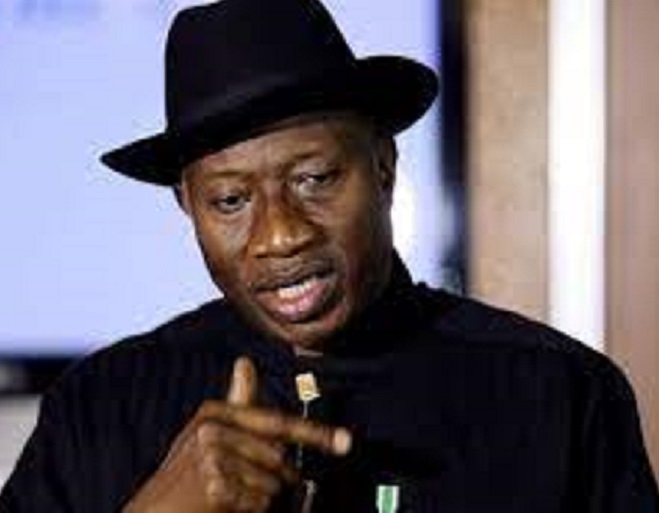
Former President Goodluck Jonathan and the Attorney General of the Federation and Minister of Justice, Lateef Fagbemi, have urged a Federal High Court in Abuja to dismiss a suit seeking to bar Jonathan from contesting the 2027 presidential election.
Justice Peter Lifu, who is presiding over the matter, fixed May 26, 2026, for a composite judgment, which will also include a ruling on an application filed by the plaintiff, Abuja-based lawyer Johnmary Jideobi, requesting the judge to recuse himself from the case.
In the originating summons, Jideobi asked the court to determine whether, based on the combined provisions of Sections 1(1), (2) and (3), and 137(3) of the 1999 Constitution, Jonathan is eligible under any circumstances to contest for the office of President of the Federal Republic of Nigeria.
The plaintiff argued that Jonathan had already exhausted the constitutional limit for the presidency after completing the tenure of late President Umaru Musa Yar’Adua and subsequently serving another full term following the 2011 election.
In an affidavit supporting the suit, Emmanuel Agida, who deposed on behalf of Jideobi, stated that Jonathan first took the oath of office as president on May 6, 2010, after Yar’Adua’s death, and again on May 29, 2011, following his election victory.
On Monday, May 18, 2026, Jideobi filed an application asking Justice Lifu to withdraw from the matter over alleged bias. He claimed the court reduced the initial 14 days granted to respond to Jonathan’s counter-affidavit and preliminary objection.
Counsel to Jonathan, Chris Uche, SAN, however, asked the court to dismiss the suit and award N50 million costs against the plaintiff, arguing that the former president’s counter-affidavit and preliminary objection adequately addressed all issues raised.
Uche also referenced earlier judgments in suits filed by Andy Solomon and Cyracus Njoku against Jonathan, which he said were dismissed outright.
He further argued that the amendment to Section 137(3) of the Constitution, which disqualifies anyone who has taken the oath of office more than twice from contesting the same office, could not be applied retroactively to Jonathan, who contested the 2015 election before the amendment came into effect.
According to him, the plaintiff was attempting to use litigation as a political tool to prevent Jonathan from contesting, despite constitutional provisions permitting qualified Nigerians to seek elective office. He maintained that Jideobi lacked the locus standi to institute the suit and that no cause of action had arisen.
Uche also argued that to establish locus standi, the plaintiff must demonstrate how the matter directly affected him and prove he was a registered voter with an interest in who governs the country.
Also speaking before the court, the Director of Civil Litigation and Public Law at the Federal Ministry of Justice, Dr. Maimuna Lamin Shiru, urged the court to dismiss the suit in its entirety.
However, counsel to the plaintiff, Ndubuisi Ukpai, argued that being a registered voter was not a requirement for filing the suit and urged the court to reject the objections and counter-affidavit filed by Jonathan and the Federal Ministry of Justice.