
General News
₦34tn Import Waivers Raise Revenue Concerns, Senate Cracks Down on Absent Agencies

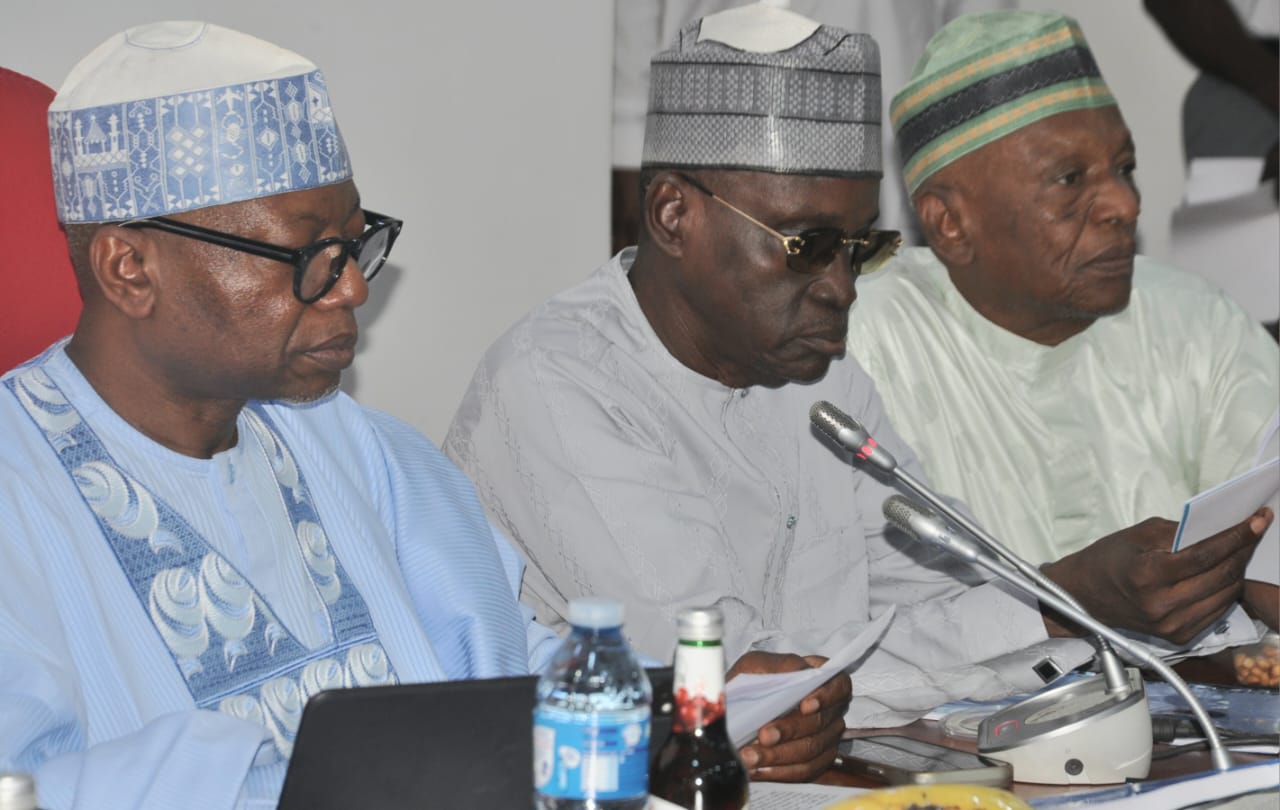
The Comptroller-General of the Nigeria Customs Service (NCS), Bashir Adewale Adeniyi, has disclosed that the value of Import Duty Exemption Certificate (IDEC) approvals on selected imported goods and equipment rose to ₦34 trillion in 2025. The exemption policy, which began in March 2020, has significantly affected Customs’ revenue generation.
Adeniyi made the disclosure on Monday during an investigative session of the Senate Committee on Finance with revenue-generating agencies. At the same session, the committee threatened to sanction the heads of the Nigerian Civil Aviation Authority (NCAA), Small and Medium Enterprises Development Agency of Nigeria (SMEDAN), Industrial Training Fund (ITF), Federal Medical Centre (FMC) Jabi, and other agencies for failing to appear before it.
The Customs boss explained that government policies have continued to influence the agency’s revenue performance, either positively or negatively. According to him, the Nigeria Customs Service would have generated much higher revenue over the years if not for certain government policies and other external factors.
He identified the Import Duty Exemption Certificate (IDEC) policy introduced in March 2020 as one of the major factors limiting Customs revenue. Adeniyi stated that IDEC approvals reached about ₦34 trillion in 2025, with about 60 percent covering duty exemptions for military hardware procurement due to Nigeria’s security challenges.
He added that other government-backed duty waivers covered the importation of Compressed Natural Gas (CNG), electric and hybrid vehicles, healthcare equipment and medical supplies, industrial machinery and manufacturing inputs, as well as food import intervention programmes.
Adeniyi, however, stressed that fiscal policy should not be viewed only from the standpoint of revenue generation but also as a tool for achieving wider economic and social objectives. He recommended that government strengthen monitoring mechanisms to ensure beneficiaries of duty waivers deliver the expected outcomes, including lower prices, increased production and improved access to healthcare.
Speaking further, the Customs CG disclosed that out of the agency’s ₦11.04 trillion revenue target for 2026, it had generated ₦4.5 trillion as of June 30, leaving about ₦7 trillion to meet the annual target.
Also speaking at the session, Bello Gulmare, Deputy Director of Monitoring and Evaluation at the Fiscal Responsibility Commission (FRC), alleged that the Nigeria Customs Service had an outstanding liability of ₦8.9 billion from 2019 for the non-remittance of operating surplus into the Consolidated Revenue Fund (CRF). The claim was strongly rejected by the Customs Service.
The FRC also alleged that the Corporate Affairs Commission (CAC) had outstanding non-remitted operating surplus amounting to ₦13.9 billion between 2023 and 2025. However, the Registrar-General of CAC, Hussaini Ishaq Magaji, said the commission was gradually settling the outstanding obligations.
Chairman of the Senate Committee on Finance, Senator Sani Musa (Niger East), directed the CAC, the FRC and the committee to hold a reconciliation meeting to determine the actual outstanding liabilities. He instructed that a detailed report of the meeting be submitted within two weeks ahead of another engagement with the CAC.
Senator Musa also warned that the heads of agencies including the NCAA, ITF, SMEDAN and FMC Jabi, who failed to attend the hearing, must appear at the committee’s next sitting or face severe sanctions under the Senate’s rules.