
General News
Beyond the Ballot: IPC Urges Nigerians to Verify Electoral Information Before Sharing

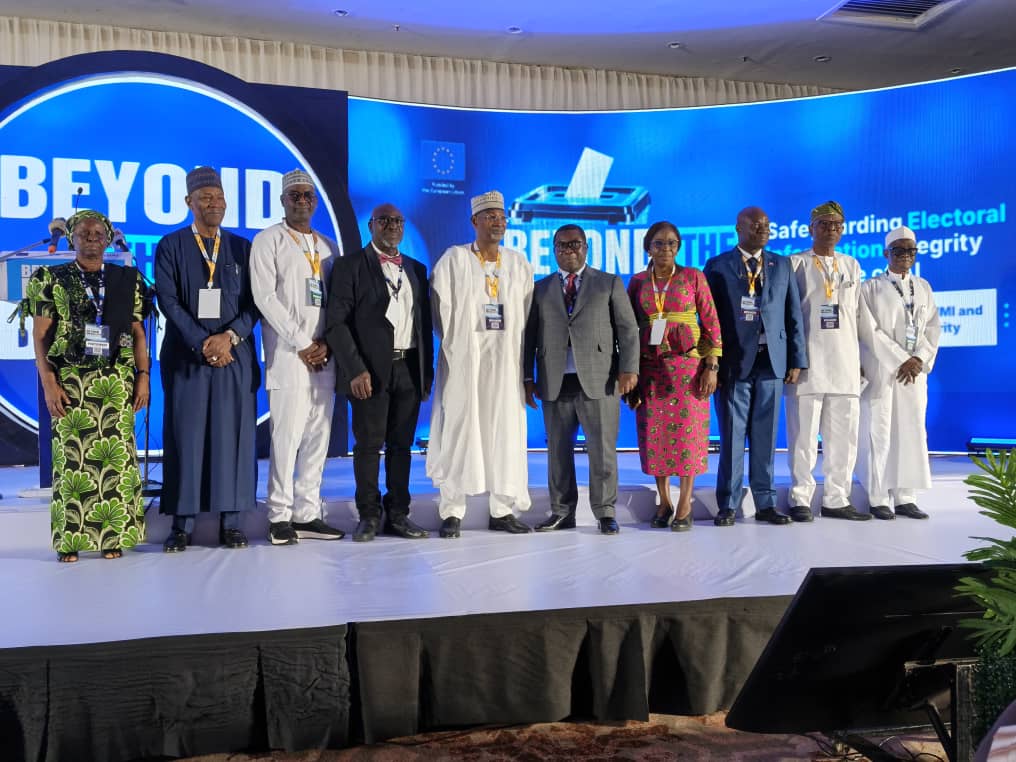
Ahead of the 2027 general elections, a national summit on Artificial Intelligence (AI) and electoral information integrity, tagged “Beyond the Ballot,” has been held in Abuja, with a call on Nigerians to verify electoral information before sharing, believing or amplifying it.
The Executive Director of the International Press Centre (IPC), Dr Lanre Arogundade, who made the call in Abuja, warned that the spread of false and misleading electoral information could undermine national peace, security and unity, while eroding public confidence in the electoral process.
Dr Arogundade said the summit was organised to sensitise Nigerians on the importance of safeguarding electoral information integrity in the age of Artificial Intelligence and understanding the dangers of Foreign Information Manipulation and Interference (FIMI), particularly as political activities gather momentum ahead of the 2027 elections.
He observed that the increasing use of social media as a source of political information, alongside AI-generated content, had made the electoral process more vulnerable to manipulation.

He noted that misinformation and propaganda could influence voters to make uninformed electoral choices, including supporting candidates based on fabricated information rather than their competence, credibility and capacity to deliver good governance.
Citing findings from the 2023 general elections, he disclosed that 63 percent of presidential and National Assembly claims reviewed by the Nigeria Fact-Checkers’ Coalition were entirely false, while false claims reportedly reached a second digital platform within an average of 11 minutes.

He explained that the two-day summit was being organised in collaboration with CEMESO, International IDEA and DAI, with funding from the European Union.
The summit attracted over 300 participants drawn from INEC, security agencies, political parties, media organisations, technology platforms, telecommunications operators, fact-checking organisations, civil society groups and academia to develop a coordinated response to electoral information threats.
Declaring the summit open, the Minister of Information and National Orientation, Dr Mohammed Idris, represented by Dr Dili Ezuga, described the gathering as timely and urged journalists and other Nigerians to exercise due diligence by verifying information before sharing or amplifying it.
Dr Idris said democracy could not thrive when misinformation travelled faster than the truth, stressing that technology alone could not guarantee electoral fairness without responsible journalism and collective vigilance against false information.
According to him, the integrity of the 2027 elections would be a shared responsibility, requiring journalists and well-meaning Nigerians to verify every piece of information before sharing, believing or amplifying it.
Earlier, the Chairman of the Independent National Electoral Commission (INEC), Prof. Joash Amupitan, SAN, who spoke on institutional preparedness and trustworthy electoral communication, assured Nigerians that the Commission was committed to conducting credible elections in 2027.
Prof. Amupitan warned that electoral threats had moved beyond physical interference at polling units to digital platforms, where deepfakes, synthetic media, automated misinformation and Foreign Information Manipulation and Interference could undermine elections long before voting commenced.
He explained that although Artificial Intelligence was not inherently a threat to democracy and could improve electoral administration, its misuse had made it easier for malicious actors to produce fabricated audio recordings, manipulated videos, forged electoral documents and misleading announcements capable of triggering confusion and civil unrest.
He called for a coordinated response involving the media, civil society, technology companies, telecommunications providers, fact-checkers and security agencies to safeguard the integrity of the 2027 elections.
The INEC chairman emphasised that efforts to combat electoral misinformation must not become an avenue for censorship, suppression of political dissent or violation of citizens’ rights, including freedom of expression, media freedom and privacy.
He assured that INEC was strengthening its capacity to detect deepfakes, verify suspicious media and issue timely clarifications through digital and traditional communication channels.
He also disclosed that the Commission had an existing Memorandum of Understanding with TikTok and was seeking stronger collaboration with other social media platforms.
Also speaking, former INEC Chairman, Prof. Attahiru Jega, acknowledged Artificial Intelligence as a useful tool for improving efficiency but stressed the need for the electoral commission to strengthen its preparedness against deepfakes and deliberate information manipulation by individuals and groups pursuing ulterior motives.
During a panel discussion on understanding FIMI, moderated by the Director of the Centre for Journalism and New Media Studies, Bayero University, Kano, Prof. Umaru Pate, highlighted the need for stronger institutional preparedness and public awareness to prevent information manipulation capable of compromising a credible, free and fair electoral process.
Prof. Pate cautioned against institutional vulnerabilities that could create opportunities for foreign information manipulation and interference. He called for effective communication that reduces uncertainty while maintaining value, velocity, volume and validity.
On AI governance, the Founder of Rise Network, Dr Toyosi Akerele-Ogunsiji, argued that Nigeria’s capacity to regulate Artificial Intelligence remained limited because the country did not own the technology, noting that the use of AI did not automatically translate into ownership.
She, however, advocated the introduction of Artificial Intelligence as a compulsory general core course in tertiary institutions to equip students with the knowledge needed to understand and responsibly engage with emerging technologies.
Dr Akerele-Ogunsiji also called for the inclusion of individuals involved in developing and manipulating information algorithms, alongside lawmakers, in discussions on AI governance, saying their participation would help deepen understanding of the consequences of their actions and inactions on society.
Most of the speakers at the summit called for the strict monitoring and humanisation of AI applications, warning against the dangers of synthetic audio, voice cloning and deepfake videos.