
General News
“Your Sacrifices Are Not in Vain,” Tinubu Assures Nigerians in Third Anniversary Address

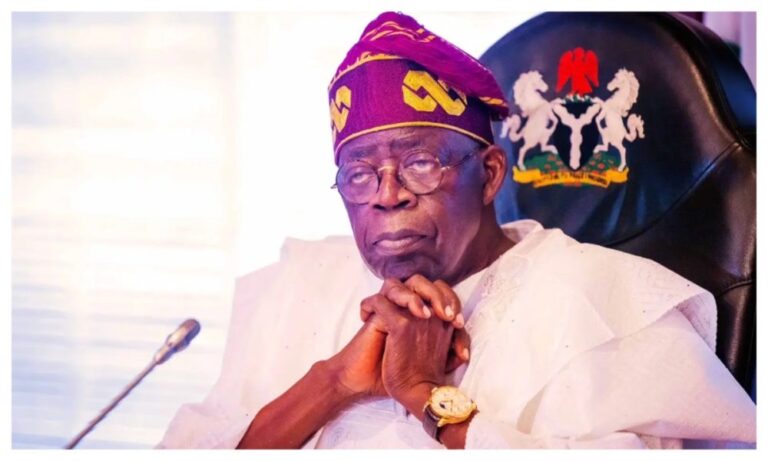
Full Text: President Tinubu’s Administration Third Anniversary Speech
Abuja, Nigeria – May 29, 2026
President Bola Ahmed Tinubu has addressed Nigerians on the third anniversary of his administration, highlighting the economic reforms, infrastructure development, security efforts, and social intervention programmes undertaken since assuming office in 2023.
In his nationwide address, the President acknowledged the economic and structural challenges his administration inherited, including fuel subsidy payments, exchange-rate distortions, rising debt-servicing costs, insecurity, energy constraints, and declining public confidence in institutions.
According to him, Nigeria was spending as much as ₦18.4 billion daily on petrol subsidies, amounting to over ₦4 trillion in 2022, while multiple exchange rate windows caused significant economic distortions and losses estimated at over ₦8 trillion within three years.
President Tinubu stated that his administration took difficult but necessary decisions to stabilise the economy and prevent deeper fiscal and economic crises, noting that leadership required courage in the face of challenging realities.
He admitted that the reforms triggered a high cost of living and placed pressure on Nigerians, businesses, and workers, but assured citizens that the sacrifices were beginning to yield positive results.
The President said Nigeria’s economy is now more competitive and better positioned for sustainable growth, with improved public finances and increased investor confidence. He noted that the stock market had witnessed significant growth, with the All Share Index rising from 53,000 in 2023 to 250,000 in 2026, while market capitalisation increased from ₦30 trillion to ₦160 trillion.
Tinubu also highlighted ongoing infrastructure projects across the country, including the Lagos-Calabar Coastal Highway, Sokoto-Badagry Super Highway, Abuja-Kaduna-Zaria-Kano Road, East-West Road, and several rural access roads. He said over 2,700 kilometres of highways and major roads are currently under construction, reconstruction, or rehabilitation.
On rail transportation, the President said modernisation projects are ongoing to improve connectivity, logistics, and economic integration nationwide.
In the oil and gas sector, Tinubu revealed that reforms introduced by his administration had attracted fresh investments from international oil companies, while the $5 billion NLNG Train 7 project was nearing completion to boost production capacity and exports.
He added that local refining capacity had improved Nigeria’s energy security, with large-scale and modular refineries helping to reduce dependence on imported petroleum products and conserve foreign exchange.
Speaking on the power sector, Tinubu said his administration was addressing longstanding issues of debt and underinvestment through transmission expansion, renewable energy investments, and efforts to strengthen the national grid.
According to him, improving electricity supply remains central to industrial growth, job creation, and economic development.
The President further disclosed that agricultural interventions had supported millions of farmers through improved seedlings, fertilisers, mechanisation, irrigation, and better access to financing and markets.
On education, Tinubu said the Nigerian Education Loan Fund had provided over 1.5 million students with access to higher education, disbursing more than ₦282 billion in student loans.
He also said the Renewed Hope Housing Programme and Federal Housing Authority projects were delivering more than 10,000 housing units across 14 states and the Federal Capital Territory, while creating over 300,000 jobs.
Tinubu noted that healthcare services were also being improved through the revitalisation of primary healthcare centres and expanded health insurance coverage for vulnerable Nigerians.
The President stated that the telecommunications sector was gradually recovering from years of operational pressures, with telecom operators expanding networks, increasing investments, and widening digital access nationwide.
Addressing Nigerian youths, Tinubu described them as the engine of the nation’s future, assuring them that government was investing in digital skills, technical education, innovation, enterprise support, and student financing.
On security, the President said security agencies and the Armed Forces had intensified operations against terrorists, kidnappers, oil thieves, bandits, and other criminal elements. While acknowledging that challenges remained, he said many communities and highways were becoming safer.
Tinubu reiterated his administration’s commitment to improving intelligence, surveillance, logistics, and inter-agency collaboration to strengthen national security.
He said although the government had not solved every challenge facing the country, the foundation for recovery had been laid, adding that efforts were ongoing to reduce food and transportation costs and create more opportunities for employment and enterprise growth.
The President urged Nigerians to remain united and hopeful, stressing that national renewal required collective sacrifice, resilience, and commitment.
According to him, Nigeria’s diversity remains a source of strength, and every citizen, regardless of region, religion, or background, must feel included and valued.
Tinubu called on citizens to reject division and cynicism while working together toward building a secure, prosperous, inclusive, and globally respected nation.
He expressed optimism about Nigeria’s future, saying the country would emerge stronger, more united, and more prosperous despite present challenges.
The President concluded by urging Nigerians to continue believing in the promise of the nation and prayed for God’s blessings upon the Federal Republic of Nigeria.