
General News
Kalu Backs Court Expansion, Youth Training, and SEDC Accountability in Senate Push

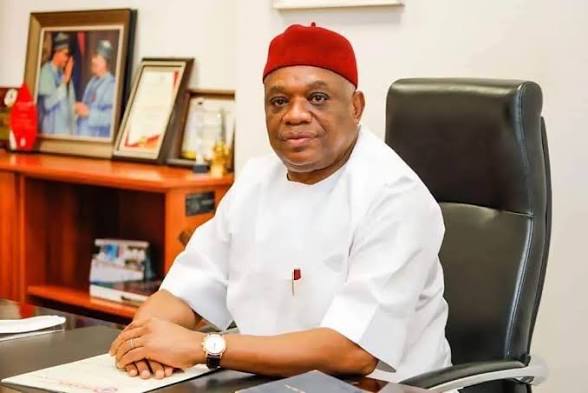
By Dr. Violet Akifagbowo
Senator Orji Uzor Kalu spoke forcefully on June 10, 2026, as the Senate passed two bills for second reading aimed at fixing Nigeria’s slow courts. “Justice delayed is justice denied,” Kalu told his colleagues during plenary. On that premise, he lent his voice and support to the legislation designed to strengthen the judiciary and make justice more reachable for ordinary Nigerians.
The first bill proposes to increase the number of Federal High Court judges from 70 to 90. The second seeks to raise the number of Court of Appeal justices from 70 to 110. Kalu said these reforms are not just numbers on paper. They are meant to ease the heavy burden on the courts, cut down years of delay in cases, and give citizens faster access to justice. He argued that when files pile up and people wait endlessly for rulings, the system fails. Adding more judges, according to him, will spread the workload so cases move quicker and Nigerians can trust that the courts will hear them.
As lawmakers, Kalu said, they have a duty to equip national institutions to meet the needs of a growing country. He pledged to keep supporting legislative efforts that promote efficiency, accountability, and the rule of law. For him, a strong judiciary is the backbone of democracy. Without it, every other promise of development loses meaning.
While the Senate debated judicial reform in Abuja, Kalu had his focus also, on Abia North and the young people there. In another foray, he said his commitment remains creating global opportunities for youths and constituents through education, training, capacity building, and international exposure. Human capital, he noted, is the real foundation for sustainable growth and long-term prosperity.
Right now, three young people from Abia North are gaining that exposure abroad. Alaezi Onyekwere John from Bende, Ume Benedicth Ukaha from Ohafia, and Egbulam Ikechukwu Emmanuel from Isuikwuato are taking part in the Advanced Training on Green Finance and Financial Supervision for Belt and Road Initiative partner countries in China. Kalu explained that green finance is about funding projects that protect the environment while creating jobs and wealth. He said when young people from his district learn how global money works and how to supervise it, they can return home with skills that open new doors for the region.
That is not the only effort. Kalu said several other youths from Abia North are pursuing Doctoral and Master’s degrees through different international scholarship platforms. Many more continue to benefit from educational and professional development programs facilitated through his interventions over the years. He believes training minds is more lasting than any single project. A young man who earns a Master’s abroad and comes back to start a business, or a young woman who learns green finance and advises local firms, multiplies value for the entire community. That, he said, is how hope becomes real.
“Keep Hope Alive,” Kalu urged, stressing that hope must be backed by action. Scholarships, training, and exposure are actions. They tell a young person in Bende or Arochukwu that where they were born does not limit where they can go.
Kalu also chaired an interactive oversight session of the Senate Committee on the South East Development Commission, SEDC. The Commission’s leadership, led by Managing Director and Chief Executive Officer Hon. Mark Okoye, appeared before the committee. Kalu said oversight is a constitutional responsibility and cannot be ignored after budgets are approved.
During the session, the committee requested comprehensive documentation covering the Commission’s finances, programs, procurement processes, budget implementation, staff records, and compliance with the Federal Character Principle. Kalu insisted that accountability, transparency, and prudent management of public resources must remain paramount. He said the people of the South East deserve to know how money meant for their development is spent. Every contract, every project, every naira must have a clear record.
Hon. Okoye and his team undertook to provide detailed records of expenditures and other requested documents at the next sitting. Kalu welcomed that commitment, saying that when institutions open their books, citizens begin to trust the process again.
Kalu linked the three issues together. A fair judiciary protects investment and gives people confidence in the system. Skilled youths drive the economy and bring new ideas. Transparent development agencies deliver roads, health centers, and jobs that people can see. He said Nigerians are tired of promises without delivery. They want results they can touch.
He assured that he will continue to push on all fronts. In the Senate chamber, he will support laws that strengthen institutions and speed up justice. In Abia North, he will keep opening doors for young people to learn and compete globally. Through oversight, he will keep asking tough questions so public resources are not wasted. For Kalu, that is the work of representation. It is about making institutions work, building people, and guarding public money. That, he said, is how a nation moves forward.
•Akifagbowo writes from Australia