
General News
Girls Shouldn’t Miss School Because of Periods – AHF, Nasarawa Govt Battle Menstrual Poverty, Stigma

From Dooshima Terkura, Makurdi
Worried by the growing impact of period poverty and menstrual stigma on the wellbeing and education of young girls, Aids Healthcare Foundation (AHF) Nigeria and the Nasarawa State Government have intensified calls for action to ensure girls can manage menstruation safely, confidently and without shame.

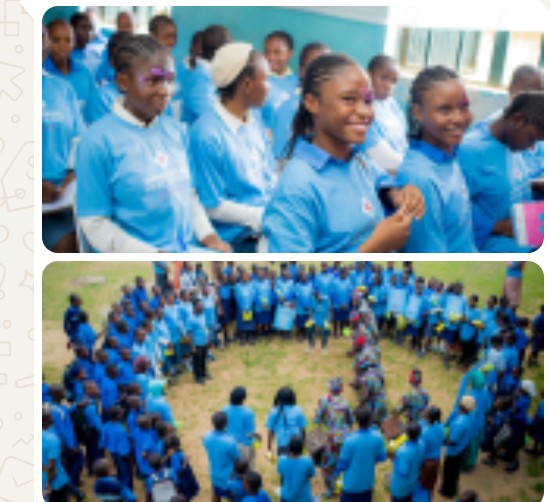
They made the call during the 2026 World Menstrual Health Day campaign held in Keffi, where government officials, educators, health workers and students gathered to demand better menstrual hygiene support, access to sanitary products and stronger public awareness.
The programme, organized by AIDS Healthcare Foundation (AHF) Nigeria in collaboration with the Nasarawa State Ministry of Women Affairs and Humanitarian Services, featured menstrual health education, advocacy sessions and distribution of sanitary pads to students.

Speakers at the event warned that silence, poverty and cultural misconceptions surrounding menstruation have continued to force many girls out of classrooms and expose them to health risks.
AHF Nigeria disclosed that nearly 500 million people globally still struggle with period poverty, lacking access to sanitary materials, hygiene facilities and accurate menstrual health information.

Halima Aliyu Omaku, Gender Focal Person at the Nasarawa State Ministry of Women Affairs and Humanitarian Services, said menstruation remains heavily stigmatized despite affecting millions of women and girls worldwide.
According to her, many girls continue to suffer discrimination and embarrassment simply because society refuses to openly discuss menstrual health.
“This programme is important because many people still cannot openly talk about menstruation. We need to break the harmful beliefs and stigma attached to it,” she said.
Omaku, who reflected on her own experience growing up without menstrual education, urged participants to become advocates for change in their communities.
She also emphasized that boys must be included in menstrual health education to help end bullying and discrimination against girls.
“You are lucky to have access to this knowledge. In our time, we did not have such opportunities. Use it wisely and help others,” she told the students.
Also speaking, the Gender and Human Rights Focal Person at the Nasarawa State AIDS Control Agency (NASACA), Safiya Ibrahim Yahuzu, said many students admitted they were hearing basic menstrual hygiene information for the first time.
She stressed the need for sustained campaigns in schools to combat myths and ignorance surrounding menstruation.
“Hygiene is very important for young girls. Girls must learn how to properly take care of themselves during menstruation,” Yahuzu stated.
In a practical move to address affordability challenges, Angelina Kigbu of the Education Area Office in Keffi announced plans to establish menstrual hygiene clubs where girls would be trained to produce reusable sanitary pads.
She said reusable pads would provide a cheaper and more sustainable alternative for girls who cannot afford disposable sanitary products.
“If girls learn to make reusable pads, they can teach others and expand awareness. Many students do not know this is possible,” Kigbu explained.
The students, while appreciating the initiative, appealed for more government intervention to support menstrual hygiene in schools.
One of the students, Victoria Samson called for the provision of toilets and free sanitary pads in schools, saying many girls still struggle to access basic hygiene materials.
Another student, Catherine Ogogi, said the programme exposed participants to proper menstrual hygiene practices and reusable sanitary pads, while urging authorities to intensify efforts against menstrual myths and misinformation.
Health professionals at the event also provided practical guidance on menstrual care. Dr. Sunday Emmanuel, an ART clinician with AHF Nigeria, said the campaign was aimed at equipping young people with accurate reproductive health information and eliminating misconceptions around menstruation.
He called for stronger government partnership with AHF through continuous school sensitization, media engagement and community outreach programmes adding that there was need for coordinated action from government, schools and civil society groups to ensure that no girl is denied dignity, education or confidence because of her period.
Deborah Samuel Mamman of AHF Nigeria advised girls to change sanitary pads every six to eight hours, wash their hands regularly and maintain proper hygiene during menstruation.