
General News
Benue community embraces policing, youth empowerment to fight insecurity

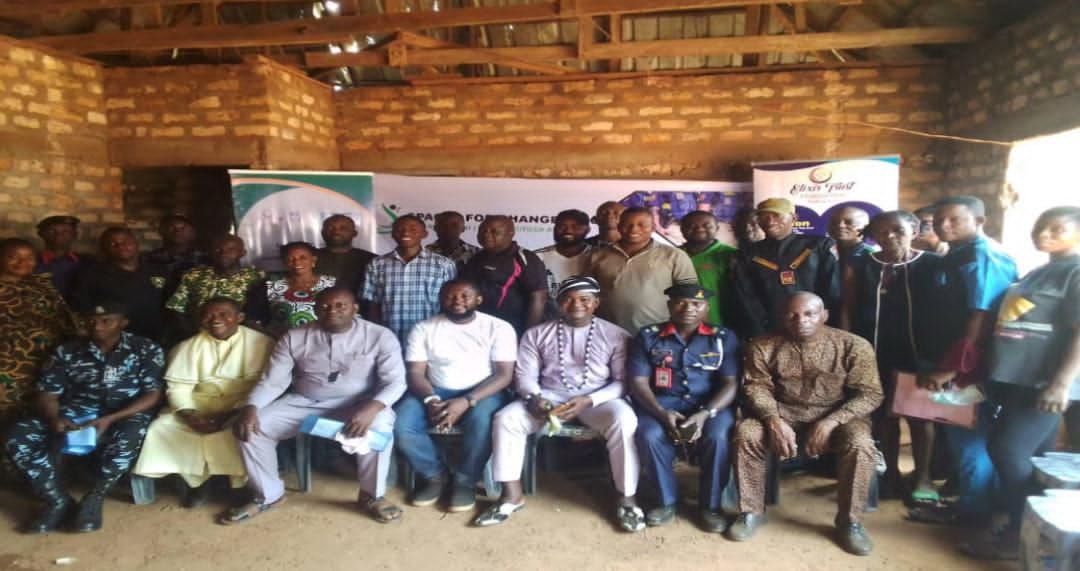
From Dooshima Terkura, Makurdi
For years, insecurity in Naka, headquarters of Gwer West Local Government Area of Benue State, was largely discussed in terms of attacks, arrests and police interventions.

Today, a different conversation is taking shape. Across the community, residents are increasingly becoming part of the security process, sitting with police officers and other stakeholders to identify threats, share information and seek solutions before problems escalate.
The change may appear gradual, but for a community that has experienced armed robbery, burglary, kidnapping, farmer-herder tensions and attacks on farming settlements, it marks an important departure from the traditional approach to public safety.

At the heart of the transformation is the Divisional Community Policing Committee, DCPC, Naka, established under the People-Centered Public Safety, PCPS, initiative of the Security and Rights Opportunity, SRO, Project.
The project is being implemented by Spaces for Change, S4C, in partnership with Elixir Trust Foundation, ETF, with support from Open Society Foundations, OSF.

The initiative is based on a simple recognition, security cannot be effectively achieved by the police or other government agencies alone.
With residents spread across streets, farms and settlements, members of the community are often the first to notice unusual movements, emerging disputes, suspicious activities or other warning signs.
The DCPC has therefore created a formal platform for such information to reach the appropriate authorities. Traditional rulers, community leaders, farmers, youths, women, religious leaders, civil society organisations, persons with disabilities, internally displaced persons and police representatives are brought together at regular meetings to discuss the security situation in their communities.
At the monthly meetings, residents are encouraged to speak openly about their concerns while police representatives provide feedback and explore possible responses.
Kidnapping, armed robbery, burglary, suspicious movements, farmer-herder disputes, cultism, drug abuse and other criminal activities have emerged as some of the issues requiring attention.
The meetings are also helping to promote an early-warning culture, with residents encouraged to report information that could assist security agencies in preventing attacks rather than waiting until violence occurs. For many residents, the most important change is the opportunity to have a direct channel through which their concerns can be heard.
For the police, the arrangement provides an additional source of information from people with intimate knowledge of the communities they live in. The intervention has equally placed emphasis on restoring confidence between residents and security agencies.
In pursuit of stronger institutional support, the project team visited the Commissioner of Police, Benue State Command, where it presented concerns from the community and advocated greater support for community policing.
A separate engagement with the Divisional Police Officer of Naka Division further strengthened the relationship between the police and the community structure.
But the project did not stop at security meetings. Recognising that young people are critical to the future of the community, the organisers introduced another avenue for engagement and that is football.
The Community Peace Cup was designed to bring youths together, promote peaceful coexistence and create a positive outlet for their energy and talents.
For a community where young people could otherwise be exposed to idleness, drug abuse, cultism and other negative influences, the tournament provided an alternative.
The competition ended with Shining Stars FC defeating their opponents to emerge winners after a final against Nagi 11 FC.
Yet, beyond the excitement of the final and the presentation of the trophy, the tournament served a broader purpose. It brought youths from different backgrounds together, encouraged friendship and created an opportunity to communicate messages about peace, responsible citizenship and public safety.
The organisers believe the initiative demonstrates that crime prevention can take different forms. A football pitch, just like a community meeting, can become a space for building trust, strengthening relationships and preventing young people from becoming vulnerable to criminal influences.
The emerging model in Naka therefore combines dialogue, information sharing, youth engagement and collaboration with security agencies. Rather than waiting for security threats to become emergencies, stakeholders are being encouraged to identify warning signs and address them early.
According to the project organisers, the intervention has contributed to stronger police-community relations, improved information sharing, greater youth participation in peacebuilding and increased community ownership of public safety.
However, stakeholders acknowledge that sustaining the progress will require continued commitment. They are advocating regular DCPC meetings, better logistical support, training for committee members in conflict prevention, intelligence gathering and mediation, as well as greater involvement of women and young people.
They also want local government authorities, traditional institutions, security agencies, civil society organisations and community groups to deepen their collaboration.
For Naka, the emerging lesson is that security is not only about the men and women in uniform. It is also about the farmer who reports a suspicious movement, the traditional ruler who notices an emerging dispute, the youth leader who mobilises young people for peace, and the community member who chooses to speak before a small problem becomes a major crisis.
The challenge now is to sustain that spirit of participation. If the momentum continues, Naka could offer a practical example of how communities facing insecurity can move from simply reacting to threats to actively preventing them