
General News
Minister Urges Green, Sustainable Investment in Critical Minerals

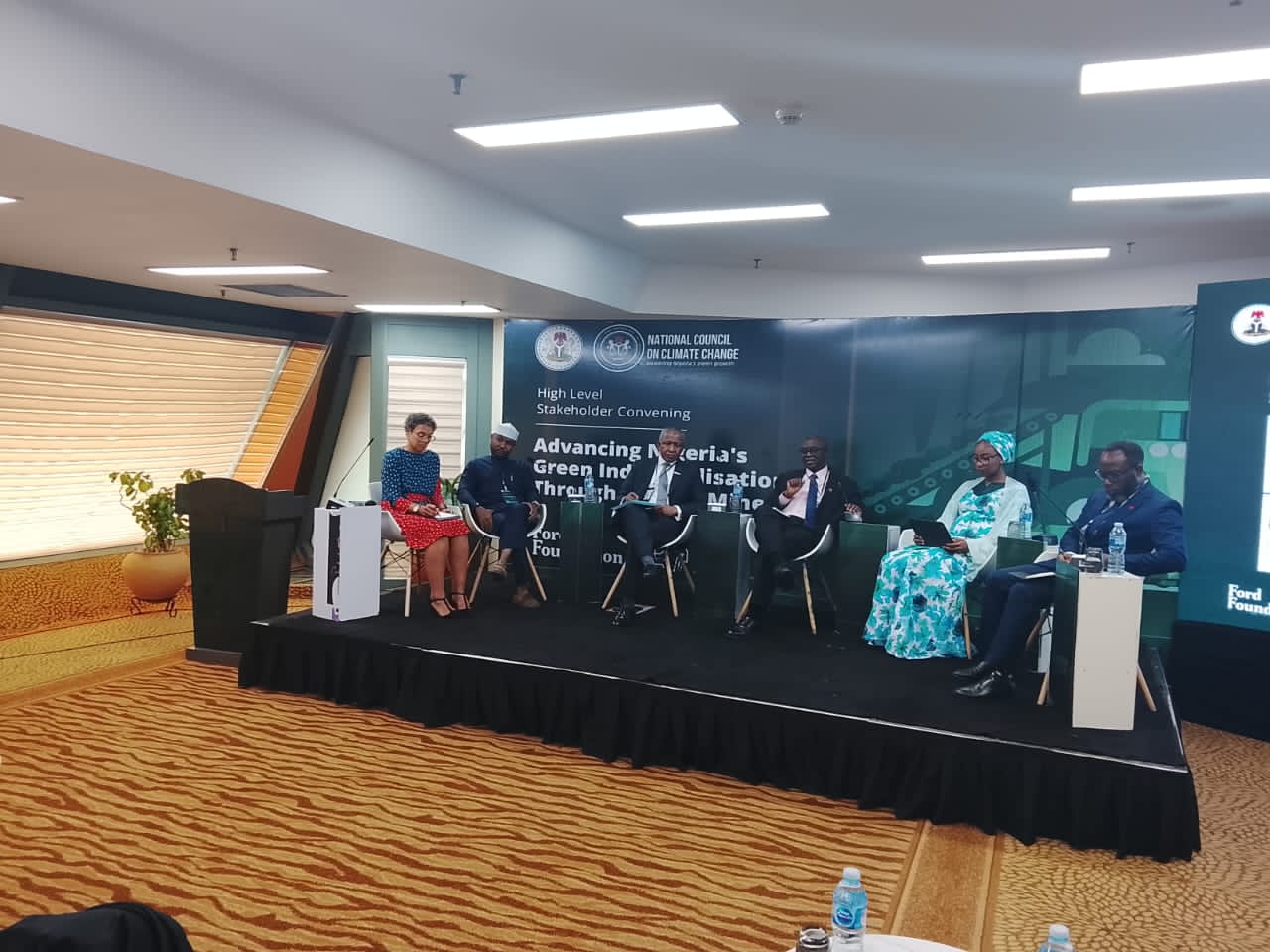
The Minister of Environment, Malam Abubakar Lawal, has stressed the need for environmentally friendly and sustainable investment in Nigeria’s critical minerals sector.
Lawal made the submission on Tuesday in Abuja at a stakeholders’ conference on green industrialisation, organised by the Africa Policy Research Institute (APRI) in partnership with the National Council on Climate Change and the Ford Foundation.
The conference, themed “Advancing Nigeria’s Green Industrialisation through Critical Minerals,” brought together stakeholders from government, industry, academia, development institutions and communities.
Represented by the Director of Climate at the Ministry, Dr Iniobong Abiola-Awe, the minister said Nigeria was entering a defining period in its economic and environmental history, driven by unprecedented global demand for critical minerals as the world transitioned to clean energy and low-carbon technologies.
According to him, critical minerals are no longer just commodities but strategic assets for green industrialisation.
He said Nigeria needed to use its resources as a foundation for sustainable industrialisation, domestic value addition, job creation, technology development and inclusive growth.
Lawal said the country’s critical minerals agenda must avoid a repeat of exporting raw materials and importing finished products, stressing that green industrialisation must not be pursued at the expense of environmental degradation.

He said Nigeria welcomed critical minerals investment, but such investments must be responsible, sustainable and aligned with national development and environmental objectives.
The minister said the country should attract investors willing to contribute capital, technology, skills, innovation, local value addition and high environmental and social standards.
He emphasised that economic development and environmental protection were not competing objectives, but must advance together.
Lawal said the ministry was committed to ensuring that the expansion of critical mineral development was guided by strong environmental governance.
He cited the Environmental Impact Assessment Act of 2024, which provides for environmental standards, pollution control, biodiversity safeguards, mining rehabilitation and compliance monitoring for projects in the sector.
He said environmental and social impact assessment should be regarded as a planning instrument to help government and investors identify risks, avoid impacts, improve project designs and ensure sustainability throughout the project lifecycle.
“The government will continue to strengthen environmental monitoring, compliance and enforcement, while promoting responsible mining practices, resource efficiency and rehabilitation of degraded lands.”
The minister said environmental governance must be integrated into Nigeria’s critical minerals agenda from exploration, extraction and processing through transportation, manufacturing, recycling and mine closure.
He added that the country’s emerging critical minerals investment agenda must align with national climate goals, as well as green finance and sustainability criteria.
“The investment agenda should also include pollution prevention, resource efficiency, climate mitigation and resilience, biodiversity protection and social safeguards,” he said.
Lawal assured that the ministry remained committed to working with relevant stakeholders to build a critical mineral economy that is environmentally responsible, economically transformative, socially inclusive and nationally beneficial.
The conference also featured panel sessions with expert presentations.